
 Spanish

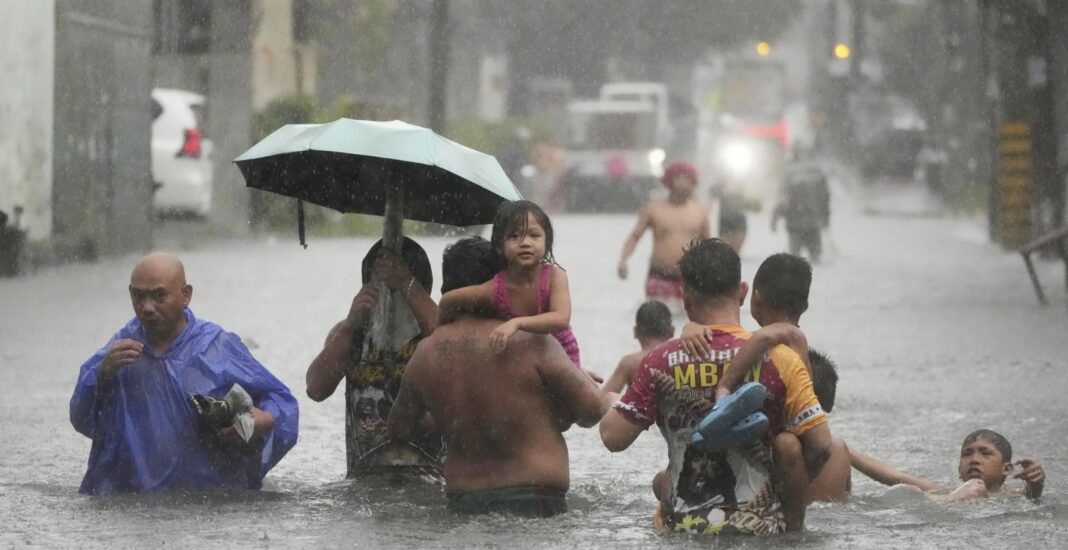
The Philippines ordered preemptive evacuations and the closure of government offices and schools in Manila on Thursday due to the advance of severe tropical storm Bualoi, which could become a typhoon before hitting the northern coast of the archipelago on Friday, days after super typhoon Ragasa left a dozen dead in the country.
The governor of the northeastern province of Camarines Sur, Luis Raymund Villafuerte Jr., ordered the evacuation of citizens residing in areas at risk of flooding due to Typhoon Opong, as it is known in the archipelago, according to local media Inquirer.
The presidential palace also decreed the closure of government offices and schools on Friday in Manila and other provinces where Bualoi is expected to pass, according to a statement.
Parts of the northern island of Luzon and the central region of Visayas were placed on the third alert level, out of five, due to the advance of a cyclone that already has wind gusts of up to 135 kilometers per hour and is located 225 kilometers east of the country, according to the Philippine meteorological agency (Pagasa).
Bualoi "could reach typhoon category before landfall" on Friday morning in the Bicol region, PAGASA warned, before continuing inland affecting the capital before continuing its advance towards southern China.
The severe tropical storm will reach the archipelago after the super typhoon Ragasa hit the north of the country last Monday, causing at least a dozen deaths and 17 injuries among thousands of evacuees.
Typhoons are recurring phenomena in Southeast Asia, when the warm waters of the Pacific Ocean favor the formation of cyclones, and countries like the Philippines are hit each year by around twenty of these tropical storms, especially in the rainy season, which usually begins in June and ends in November or December.
The archipelago is also mired in a wave of outrage over corruption in millionaire flood control projects, designed to protect citizens from the effects of typhoons and floods and supposedly completed, but in reality non-existent or of low quality.





