
 Spanish


Madrid.- The earthquake registered in the Russian peninsula of Kamchatka, with a magnitude of 8.8 and at a depth of 20.7 kilometers, is the eighth largest earthquake recorded in the world, surpassed this century by the one that occurred in Tohoku (Japan) in 2011, which reached 9.1.
These are data collected from the official channels of the Institute of Geosciences (IGEO), a joint center dependent on the Spanish National Research Council (CSIC) and the Complutense University of Madrid, which is providing details about the earthquake that occurred in Russia and the tsunami that has already impacted some countries and is moving across the Pacific Ocean.
The IGEO has specified in one of its posts on the social network X that for a tsunami to occur, the fault must have a vertical movement, "so with this reverse fault mechanism it was to be expected that it would occur", and in another post it has detailed the "focal mechanism" of the earthquake and that the event corresponds to the "compressive movement, expected", located in the area of Pacific subduction against the North American plate.Read more: Tsunami alert in the Pacific Ocean after a strong earthquake on the east coast of Russia
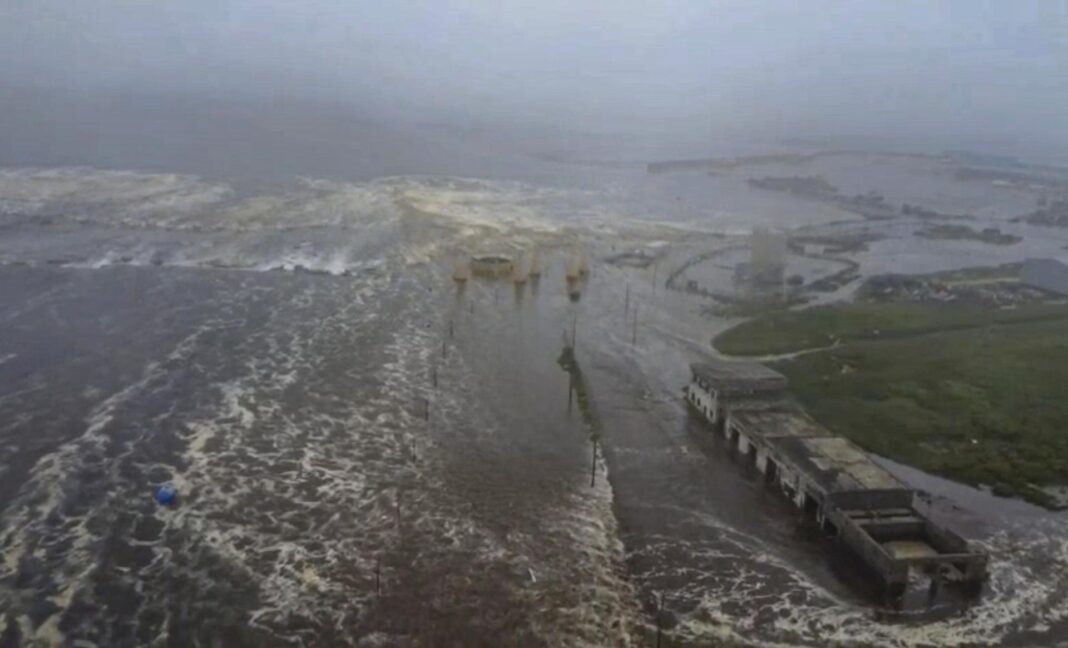
This geographical research institute has also published several images showing a modeling of the tsunami after the earthquake and the foreseeable behavior it will have during the next few hours. Also, the Spanish National Geographic Institute (IGN), dependent on the Ministry of Transport and Sustainable Mobility, is offering information through its official channels about the earthquake that occurred in the far east of Russia and the subsequent aftershocks that are occurring, which are reflected in the "viewer" of distant earthquakes of this organization. Seismologist John Townend, professor of Geophysics at Victoria University in Wellington (New Zealand), has emphasized that the 8.8 magnitude earthquake that occurred near Kamchatka is the largest recorded in the world -this century- since the 9.1 magnitude Tohoku earthquake in 2011. Townend, in statements provided to the media by the Science Media Center (SMC), an independent office that collects resources that contribute to understanding the scope of many scientific events or discoveries, has specified that the earthquake took place in the subduction zone under the Kamchatka Peninsula, where the Pacific plate moves towards the west-northwest about 75 millimeters each year. This plate, he explained, is being forced under the Okhotsk plate, which forms the east of Siberia and the Kamchatka Peninsula and which, according to some studies, is considered part of the North American plate. Given the magnitude and location of the earthquake, and based on preliminary seismological observations, it is likely that it involved a displacement of more than 10 meters in an area of approximately 150 by 400 kilometers, although further analysis will be necessary in the coming hours to confirm it, this seismologist has pointed out. Today's earthquake was preceded on July 20 by a 7.4 magnitude earthquake, which is now recognized as an "anticipated aftershock", he specified. The depth, magnitude, and characteristics of the fault in today's earthquake have combined to generate a tsunami that has already affected nearby coasts and Japan, and will continue to have effects throughout the Pacific over the next few hours. The seismologist has reported that today's earthquake released approximately 30 times more energy than the 7.8 magnitude Kaikoura (New Zealand) earthquake in 2016, and approximately three times less energy than the 9.1 magnitude Tohoku earthquake. Caroline Orchiston, director of the Centre for Sustainability at the University of Otago (New Zealand), has also pointed out that according to the United States Geological Survey, the area has a relatively small population, so damage or injury to local people and property is not expected to be too serious. The coasts of the Pacific Northwest of the United States and Alaska are under a tsunami advisory, with waves of less than 30 centimeters expected in some northern areas, and in Crescent City (a promontory on the Oregon coast) with the highest waves forecast, up to 1.5 meters, this expert explained in statements provided by the SMC.So far, 10 aftershocks above magnitude 5 have already been recorded, with the largest being 6.9, which shows that large-magnitude earthquakes generate aftershock sequences that begin immediately, and some of these can be damaging in themselves, this expert has clarified.
In their opinion, and from the perspective of the local population, the experience of this earthquake will be aggravated in the coming weeks, months, and even years by subsequent seismic activity, which can have a significant psychosocial impact.





