Wednesday, May 20, 2026

An Ariane 6 rocket launches two new Galileo system satellites from Guiana.

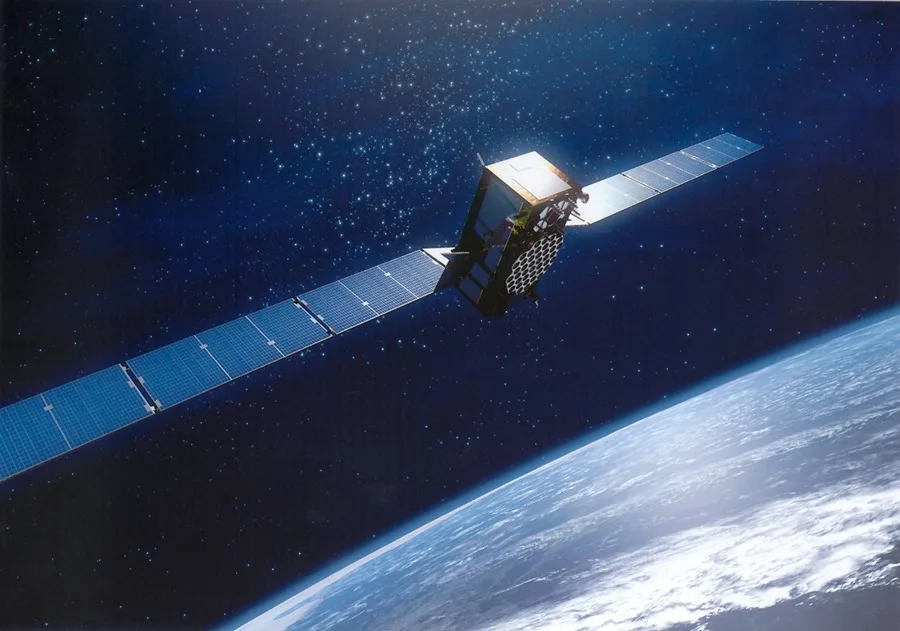
Science Writing- An Ariane 6 rocket from the European Space Agency (ESA) has taken off from the spaceport in French Guiana with two new satellites on board that will join the Galileo constellation and provide greater robustness to the European navigation program, which serves more than half of the world's population. At 5:01 (GMT), as scheduled, the rocket took off with the two satellites ('Sat 33' and 'Sat 34'), which thus began a journey that will take them, if all phases are successfully completed during the next few hours, to an orbit located about 23,000 kilometers from the Earth's surface.

The Galileo Constellation

The more than thirty satellites that make up the Galileo constellation allow the precise positioning of billions of users through their mobile phones, vehicles or other devices, although they are also key to air or maritime traffic, for thousands of critical infrastructures or for emergency and rescue services. Today's launch was the fourteenth launch of operational Galileo satellites (a test one was launched in 2005), a program that began in 2011, and today's launch took place for the first time aboard an Ariane 6 rocket, the new European launcher designed to ensure Europe's autonomous access to space and capable of competing with those developed by major space companies, as it can carry very heavy payloads, of up to 12 tons.

The Launch

Just four minutes after takeoff, the launch surpassed two of the most critical phases, when the capsule where the two satellites are attached separated from the booster and two minutes after the fairing, and just a few seconds later one of the engines that will propel the spacecraft to their orbit was turned on, although they must still separate and follow their trajectory alone. Almost five hours passed until the two satellites separated and reached the orbit in which they will operate for the next few years, in which they have been activated and where the first tests have been carried out to evaluate their performance and verify that none of their components has been damaged due to the harsh conditions of the launch. Following the successful separation of the satellites, the remains of the Ariane 6 rocket, which carried them to their position in space, have been moved to a stable 'graveyard' orbit, located at a great distance from the satellites that are operational and serving Earth. In the coming days, more tests and calibrations of 'Sat 33' and 'Sat 34' will begin, which will last for several months, before the two join the constellation already formed in space by more than thirty satellites of the Galileo program.

One of the most emblematic EU programs

The system, considered the most accurate in the world, is one of the EU's most emblematic programs and is funded by the European Commission, and since its creation at the beginning of the century, the European Space Agency has led its design, development, and qualification, in addition to contracting the launches that have taken place to date. The Galileo program has a very direct impact on numerous daily activities of millions of citizens around the world, as it facilitates navigation in urban environments, is integrated into driving assistance systems, and has proven its usefulness in sectors such as agriculture, emergencies, or logistical operations, as well as in air and maritime navigation. About five hours after takeoff, and when the first tests that have reported the good health of the two satellites were completed, those responsible for the control center of the European spaceport in Kourou declared the success of the launch, which has been received with applause in the room and then began an event organized by the European Commission in Brussels, which has begun with a prolonged applause for those responsible for the mission.

Spaniards in the project

The program has involved numerous Spanish companies in the aerospace sector, including GMV, which leads the development of the control segment that keeps the constellation operational 24 hours a day and has valued that today's launch represents a step forward for European technological autonomy and also comes at a "key" moment, as some of the first satellites are nearing the end of their useful life and the new ones will allow maintaining the same services offered by the Galileo program. Today's launch was also one of the last three launches of first-generation 'Galileo' satellites, after which the project will move on to second-generation spacecraft that will offer new capabilities, greater precision, and greater robustness against interference and cyber threats. Several representatives from ESA and the Ariane group who were present have spoken today during the launch broadcast - which lasted almost six hours - and have valued the milestone that it represents for the EU and the European Space Agency, as the new heavy-lift launcher guarantees Europe's strategic autonomy and access to space, as well as the importance and significance of the Galileo program in the current geopolitical context.

In the spotlight

  • aplicacion - banner 300px

  • banner altices 300x250 junio 2025

Explore more

Error en el proceso de traducción

Error en el proceso de traducción Error en el proceso de traducción Error en el proceso de traducción Error en el proceso de traducción Error en el proceso de traducción Error en el proceso de traducción Error en el proceso de traducción Error en el proceso de traducción Error en el proceso de traducción Error […]

Error en el proceso de traducción

Error en el proceso de traducción Error en el proceso de traducción Error en el proceso de traducción Error en el proceso de traducción Error en el proceso de traducción Error en el proceso de traducción Error en el proceso de traducción Error en el proceso de traducción Error en el proceso de traducción Error […]

They identify a spiral galaxy 53 million light-years away and discover a black hole at its center

The NASA and ESA's Hubble Space Telescope has revealed with unprecedented precision the structure of NGC 3137, a spiral galaxy located 53 million light-years away. This observation, built from six different color bands, offers a key perspective to understand the development and life cycle of stars. According to NASA, NGC 3137 is located in the […]

Apple will pay $250 million to settle a lawsuit over misleading advertising of its AI

New York.- The tech giant Apple agreed to pay 250 million dollars to settle a class action lawsuit in the United States that accused the company of misleading advertising by exaggerating the artificial intelligence (AI) capabilities of its iPhone 15 and 16 devices. The lawsuit, filed in a federal court in San Francisco, alleged that […]

Error en el proceso de traducción

Error en el proceso de traducción Error en el proceso de traducción Error en el proceso de traducción Error en el proceso de traducción Error en el proceso de traducción Error en el proceso de traducción Error en el proceso de traducción Error en el proceso de traducción The Hyodol and Dasomi have motion sensors […]

Elon Musk, the richest man in the world, says he was "a fool" for funding OpenAI

Los Ángeles.- Elon Musk, the richest man in the world, said this Wednesday in the trial against OpenAI that he was “a fool” to fund the foundation of the technology company, which he sued for changing its initial non-profit mission. «I was a fool who provided them with free funding to create a ‘startup’… I […]