
 Spanish

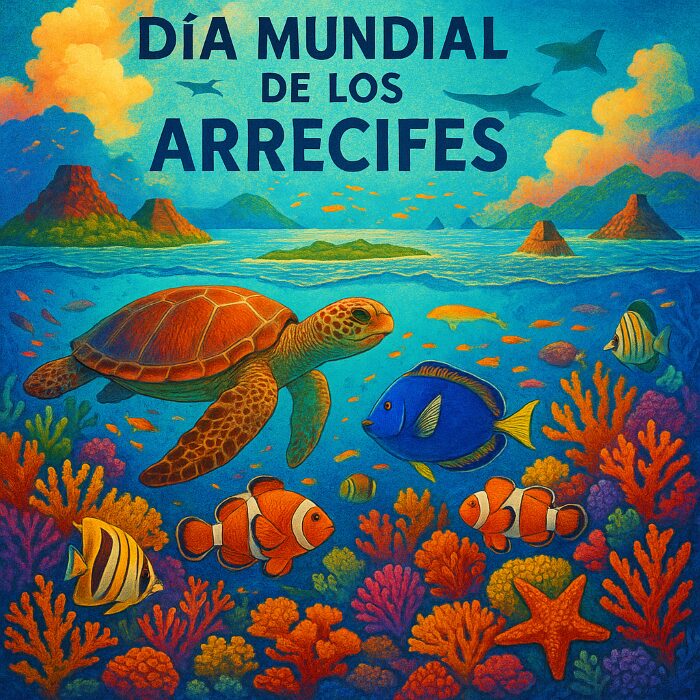

Every June 1st, World Reef Day is celebrated, a key date to raise awareness about the vital importance of these underwater ecosystems, considered among the most biodiverse on the planet. Known as the "lungs of the ocean" and "nurseries of the sea", coral reefs provide food, coastal protection, tourism income, and ecological balance to millions of people around the world.
What are coral reefs?
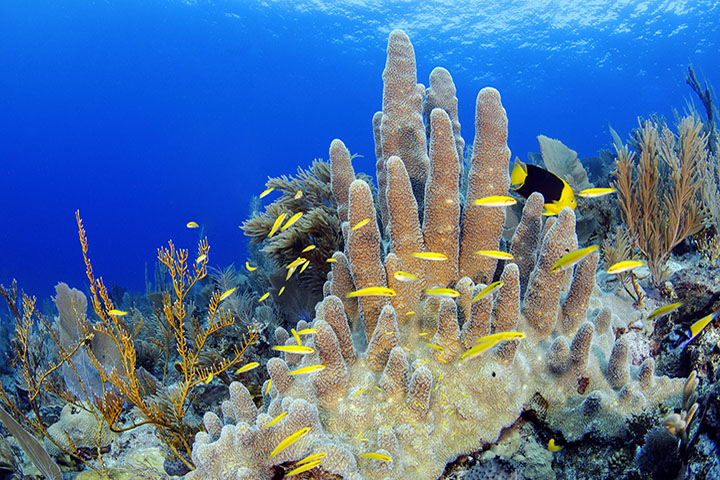
Reefs are underwater structures formed by colonies of tiny organisms called coral polyps, which secrete calcium carbonate and create a solid habitat where thousands of marine species coexist. Despite occupying less than 1% of the seabed, they are home to nearly 25% of all marine species, according to data from the United Nations Environment Programme (UNEP).
Alarming Figures
- More than 50% of the world's coral reefs have disappeared or are severely degraded, indicates a report from the Australian Institute of Marine Science (AIMS).
- If urgent measures are not taken, 90% of the reefs could disappear by 2050, according to predictions by the IPCC (Intergovernmental Panel on Climate Change).
- Coral bleaching, caused by ocean warming, has affected 93% of the Great Barrier Reef, the world's largest reef, in recent years.
Where are the world's largest reefs?
- Great Barrier Reef (Australia)
With over 2,300 km in length, it is visible from space. World Heritage Site since 1981. - Mesoamerican Reef System (Caribbean)
It extends over 1,000 km from Mexico to Honduras. It is vital for fishing and tourism in Central America. - Red Sea Reef (Egypt, Sudan, Saudi Arabia)
Notable for its resistance to global warming thanks to its heat-adapted corals. - New Caledonia Reefs (South Pacific)
The second largest continuous system on the planet, protected as a Biosphere Reserve.
Why are they important?
- Coastal protection: They dissipate up to 97% of wave energy, reducing the impact of hurricanes and coastal erosion.
- Economic sustenance: More than 500 million people depend directly on them for their food, employment, or housing.
- Biodiversity: They are habitat for thousands of fish, mollusks, sponges, and microorganisms essential for marine balance.
How can we protect them?
- Reduce carbon emissions: It is the most urgent and global measure.
- Promote responsible ecotourism: Do not touch or step on corals, use biodegradable sunscreens.
- Protect marine areas: Expand conservation zones and patrol against illegal fishing.
- Support coral restoration: Initiatives such as coral nurseries and transplants are increasingly common and effective.
- Education and awareness: Inform coastal communities and consumers about their vital role.
According to the UN, 70% of the world's coral reefs are threatened. Global warming, overfishing, and other factors put these ecosystems at risk.
According to estimates from the Marine Ecosystems Division, attached to the UN Environment Programme, the planet could lose the world's living coral reefs by the year 2050. This is an alarming figure, which requires urgent action by nations for their preservation.Coral reefs are among the most biologically productive ecosystems in the world, as well as one of the most biodiverse. They are home to one in four species found in the oceans; and they also give the world's economy approximately 375 billion dollars a year.
That sum comes mainly from recreation, coastal protection services, and food production. In addition, many of the income in local communities depends on this ecosystem for their subsistence and food security.






