
 Spanish

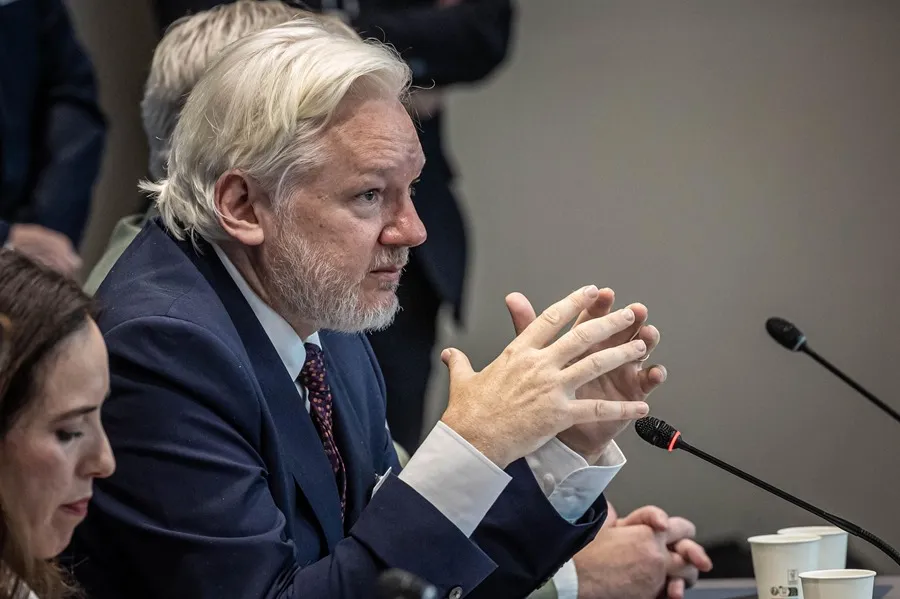
Madrid.- A judge of the Spanish National Court opened an oral trial against the owner of the Spanish company in charge of the security of the embassy of Ecuador in London, accused of spying on the founder of WikiLeaks, Julian Assange, during his asylum in that diplomatic legation.
For this defendant, David Morales, manager of the company Undercover Global (UC Global), the Prosecution is requesting 13 years and 6 months in prison for discovery and disclosure of secrets, bribery, and illegal possession of weapons, according to the indictment.
You may be interested in: Sentence of seven years against Elizabeth Silverio annulled; new trial ordered
For the other defendant, the head of operations at UC Global, Michel Wallemacq, the prosecution is seeking three and a half years in prison for the crime of discovery and disclosure of secrets. Last week, the request for a sentence that Assange himself requested for both of them was already made public - 20 years and 6 months in prison for Morales and 5 years for Wallemacq -, as well as that of others harmed by this alleged espionage, including the former president of Ecuador Rafael Correa. Once all the accusation writings have been presented, the judge, Santiago Pedraz, issued this Monday the order to open the oral trial, to which EFE also had access. In said ruling, the magistrate sets the civil liability for the two defendants and the company UC Global at 30,000 euros, and if they do not deposit this amount within ten days, their assets will be seized. According to the prosecutor in his indictment, between 2015 and 2018 the security of the Ecuadorian embassy in London was contracted with the Spanish company UC Global. In 2017, Morales continued, he constituted a small unit of workers whom he tasked with beginning to gather information within the embassy that would be collected by the operators who were physically there, all with the essential help of the other defendant. He also ordered the installation of new security cameras, which could record the audio of the confidential conversations that the activist had with his defense and his family, as well as with numerous personalities, but asked the operators that this new function remain hidden from view and from Assange himself. Among those affected by the alleged espionage machinery would be the Spanish lawyer and former judge Baltasar Garzón or the former presidents of Bolivia, Evo Morales; Ecuador, Rafael Correa; Argentina, Cristina Fernández de Kirchner; Brazil, Dilma Rousseff, and Uruguay, José Múgica. In addition to those illegal eavesdropping, UC Global employees at the embassy retained the phones of people who met with Assange and photographed them, including the SIM card, IMEI number and even messages, which affected several of his friends and recognized visitors, including the actress Pamela Anderson. After WikiLeaks leaked classified documents in the United States in 2010 and to evade arrest warrants issued against him - including one from Sweden for sexual abuse charges, which were later dropped - Assange took refuge in 2012 in the Ecuadorian embassy in London, where he remained until 2019. It was almost 14 years of legal odyssey for Assange - much of which he spent locked up in the Ecuadorian embassy in London - until he was finally released in December 2024.




