Spanish



How dynamic speed will work on this highway in Spain
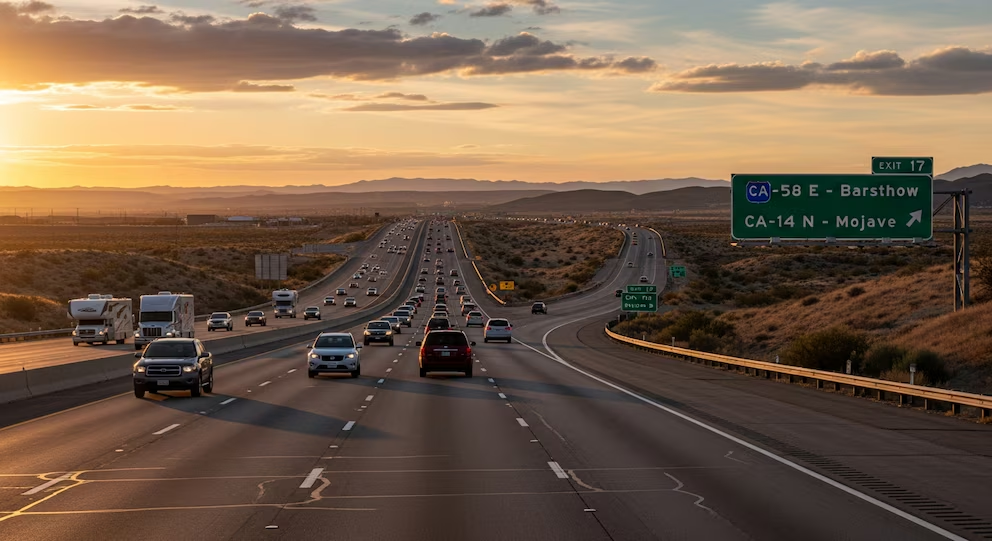
The new system, already operational on a 150-kilometer stretch near El Vendrell (Tarragona), uses AI to analyze multiple factors before deciding what the speed limit will be at any given moment.
The technology collects data on vehicle flow, weather conditions, visibility, incidents on the road, and time of day. With this information, the system determines whether it is safe to maintain, increase, or reduce the maximum permitted speed.We recommend reading:The Cold War comes to the internet with the new digital Iron Curtain
Unlike static limits, which remain unchanged except in very specific cases such as construction, dynamic limits can change several times in the same day. The adjustment is automatic and is immediately reflected on the variable electronic panels installed along the affected section. Thus, drivers receive the maximum permitted speed in real time, eliminating any uncertainty.What Drivers Should Keep in Mind
For AP-7 users, this change means that there is no longer a single fixed number to hold on to. The maximum speed can vary in a matter of minutes, depending on the actual situation on the highway. For example, on days with little traffic and favorable weather conditions, the limit could be experimentally raised to 150 km/h, something that is being tested under supervision and only in very controlled contexts. In adverse situations —such as fog, heavy rain, accidents, roadworks or congestion— AI can reduce the maximum speed to 60 km/h in some sections. If a driver is driving at the standard speed of 120 km/h without paying attention to the dynamic signage, they could be committing a serious offense, by exceeding the temporarily permitted limit by more than 50%.The system is designed to continuously inform the driver, so that speed changes do not take those who respect the signs by surprise. According to the General Directorate of Traffic (DGT), the key is to pay attention to the variable signage and adapt driving to what it indicates at each moment.
In short, the AP-7 no longer has a single speed limit for the whole year: the permitted speed is now a variable that depends on both the external context and the DGT's own regulations in coordination with AI.Which other countries have adopted the same AI alternative?
The use of AI-managed dynamic speed systems is not exclusive to Spain. Countries like Germany and France have been using similar technologies for years to adapt speed limits to the changing reality of their highways. There, experience shows that drivers quickly adapt to variable signage and that the system helps reduce accidents, especially in areas of heavy traffic or changing weather conditions.
In Germany, reducing speed during peak hours has succeeded in decreasing accidents and maintaining traffic flow without the need to resort to lower fixed limits. In France, dynamic speed has been successfully implemented in high-risk sections, such as on roads with dangerous curves or in regions where the weather can change abruptly. In Spain, the general regulations currently maintain the generic limit of 120 km/h on highways, but the experience of the AP-7 will serve as a basis for possible extensions to other major arteries of the country.