
 Spanish

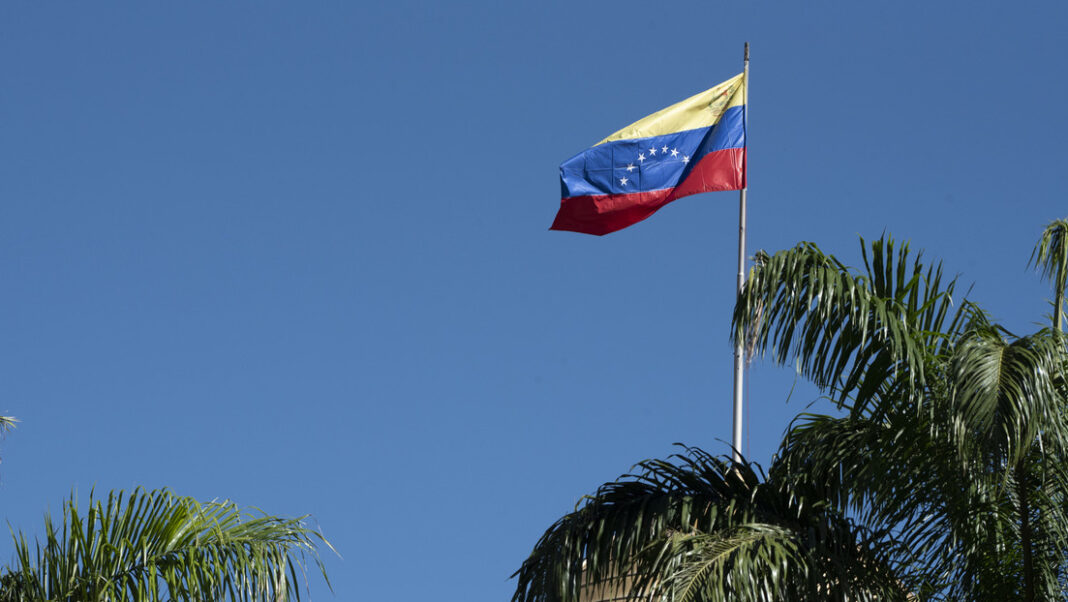

The president of the National Assembly of Venezuela and head of the Dialogue Processes, Jorge Rodríguez, warned on the night of this Sunday that the local extremist opposition is preparing a false flag provocation against the US Embassy in the Latin American country.
"We have warned the U.S. government of a serious threat, through a false flag operation prepared by extremist sectors of the local right," he wrote in a statement shared on his Telegram channel, specifying that "they are trying to place lethal explosives at the U.S. Embassy in Venezuela."
Rodríguez pointed out that a European Embassy has been informed about these events so that it can communicate the "seriousness" of this information to the US diplomatic staff.
"At the same time, we have reinforced security measures at the diplomatic headquarters, which our Government respects and protects," he concluded.
In August, international media reported on a U.S. military deployment in the southern Caribbean, supposedly to confront drug cartels. At the same time, U.S. Attorney General Pam Bondi doubled the reward for information leading to the arrest of the Venezuelan president under the accusation —never substantiated— of leading a "narcotrafficking cartel".
Following the U.S. military deployment, the foreign ministers of blocs such as the Community of Latin American and Caribbean States (Celac) and the Bolivarian Alliance for the Peoples of Our America (ALBA) have called for respect for the declaration of the region as a zone of peace.
Venezuelan President Nicolás Maduro claims his country is the victim of a "multiform war" orchestrated by the U.S. in order to bring about a "regime change".
Other regional leaders such as Miguel Díaz-Canel (Cuba), Luis Arce (Bolivia), and Gustavo Petro (Colombia), consider that there is no evidence to support the US accusation against Maduro, while the appetites of the North American country to dominate strategic resources present in the Western hemisphere are public.
For his part, U.S. President Donald Trump has hinted that Washington could carry out ground operations to stop drug trafficking in the country, as traffickers will be "forced to go by land" due to the U.S. offensive against alleged 'narco-boats' in the Caribbean.





