
 Spanish

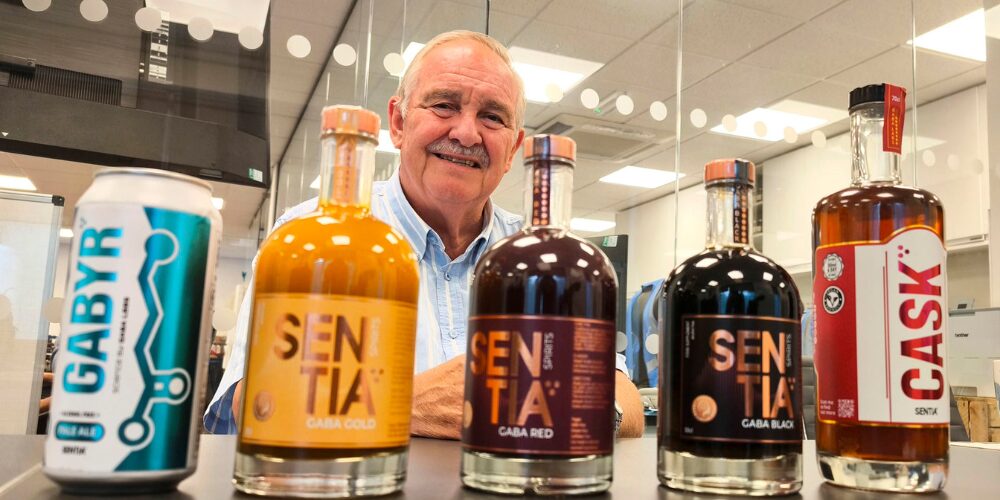
London.- A British laboratory has developed for the first time a non-alcoholic beer capable of producing the early effects of intoxication, colloquially known as being 'happy', suitable for social disinhibition and without leaving a hangover.
"It provides the same effects that people seek in a drink, relaxation, sociability, but with a much lower impact than alcohol," says neuroscientist David Nutt to EFE in his GABA Labs laboratory in the town of Hemel Hempstead, on the outskirts of London, where the drink is manufactured. Nutt, chief scientist at GABA Labs, investigated for years the behavior of alcohol in the brain and its chemicals, called neurotransmitters, and discovered that most of the effects that people want to obtain come from one in particular: gamma-aminobutyric acid or 'GABA'. Hence, he named his non-alcoholic beer, marketed under the SENTIA Spirits brand, 'GABYR'. Nutt's research documented that "the more alcohol you drink, the more you interact with other neurotransmitters", such as dopamine, endorphin, or glutamine, which "produce negative effects such as anger, aggression, addiction, withdrawal, and hangover". Based on these results, Nutt's laboratory has developed drinks over the last decade with the aim of "acting solely on the GABA receptor and avoiding all other effects of alcohol", ranging from beer to whiskey.Sober and Ephemeral
The concoctions are designed to mimic the time it takes for alcohol to be consumed and "in about five or ten minutes the drink reaches your brain, which is what people want," says Nutt.The after-effects don't last long; after about twenty minutes or half an hour after finishing the drink, one recovers from that feeling of greater relaxation and ease, without leaving any hangover or daze, perfect "for the first drink when you go to a party", he says. The expert refutes the term placebo. "We see people more smiling, more cheerful, they speak louder, similar to alcohol in that sense," and it is reflected in brain waves because "it increases brain energy," he comments. "Does it disinhibit you? Will you take photos doing silly things and send them to people you shouldn't? It doesn't 'intoxicate' you to the point of doing stupid things. It's designed to prevent that," he asserts. "What's important - Nutt continues - is that people don't use it as a loophole for driving.", as it wouldn't give a positive result in a breathalyzer test. "You should never drive if you are under any effect of relaxation," he warns.Then the effects are limited and "stabilize and no matter how much you drink", explains the neuroscientist.
Generational Change
In a society where the culture of alcohol consumption is part of everyday life, Nutt points out a recent trend change: "Young people are leaving it aside. The market is changing." The latest figures confirm this statement. Sales of alcoholic beverages in the UK fell by 10% between 2019 and 2023; and almost half of young people aged 18 to 34 have reduced their consumption due to health concerns.You may be interested in:Popular recommendation for the heat: plenty of water and beer
Furthermore, the trend shows that the sale of low-alcohol beverages has grown by 20% in 2024, according to the analytical firm IWSR, a world leader in data and information on alcoholic beverages. "We have this phenomenon in the UK called 'low or no' (alcohol)," says the neuroscientist. "Many young people are turning away from alcohol and turning to drinks like SENTIA, which are healthier, because they are health-conscious, but they can also relax them and they know that in the long run they will not damage their liver, heart, or brain." The social paradigm, he says, is in the process of changing: "It's not about being strong to drink and hurt yourself. It's absurd to drink and hurt yourself. It's about being sensible and taking care of your body with a low-alcohol drink."




