
 Spanish

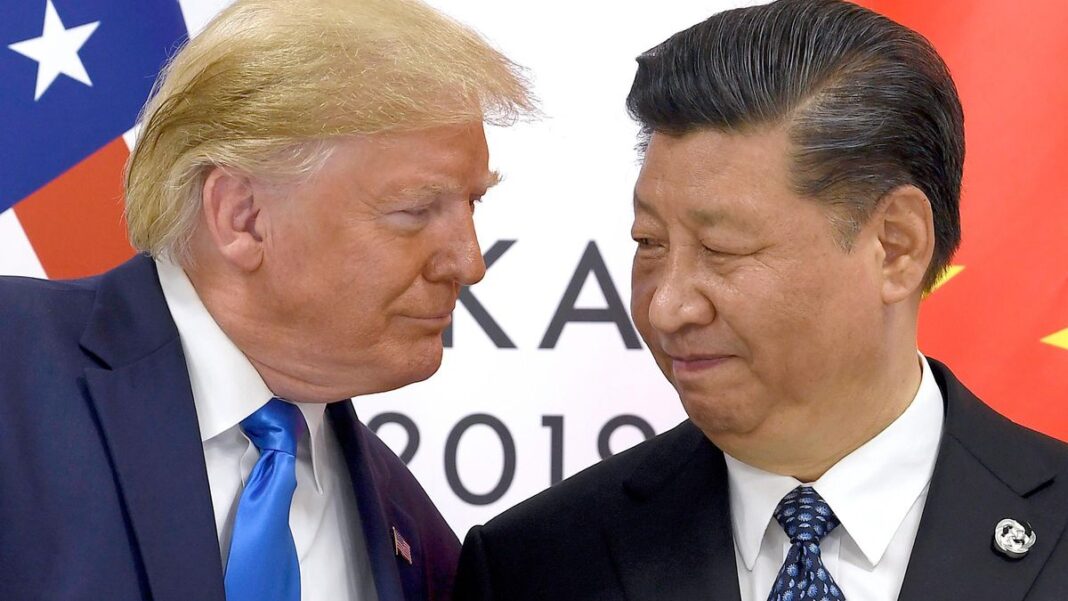

Washington.- The president of the United States, Donald Trump, announced this Friday that he will impose tariffs of 100% on China starting November 1, a country he accuses of having adopted an "extremely hostile" trade stance by wanting to impose controls on the export of rare earths.
Trump thus specified the threat made hours earlier, when he said he planned a "massive increase" in tariffs for Chinese products and stated that he no longer plans to meet with Chinese President Xi Jinping, as scheduled for the end of October in South Korea.
You may be interested in:Putin highlights Trump's efforts in the Middle East
Those statements had caused US stock markets to plummet, with falls exceeding 3% in the Dow Jones, the S&P 500, and the Nasdaq, reflecting investors' concern about the impact of tariffs and export controls on the US economy. According to Trump, China announced that in November it will impose massive export controls on all its products, including some it doesn't manufacture, "affecting all countries". In retaliation, the Republican continued, the United States will impose a 100% tariff on China starting November 1, or even earlier, in addition to the tariffs already in place. He also announced that he will impose export controls on Chinese software. Trump's announcement reflects the biggest disagreement with China since both powers agreed to a tariff truce to negotiate a reduction in tariffs, after the trade war exacerbated by Trump last April and which imposed tariffs on the Asian giant of up to 145%. Trump and Xi held a phone call on September 18 in which they approved a preliminary agreement to allow TikTok to continue operating in the United States and agreed to meet at the end of October in South Korea during the Asia-Pacific Economic Cooperation (APEC) leaders' summit.




