
 Spanish

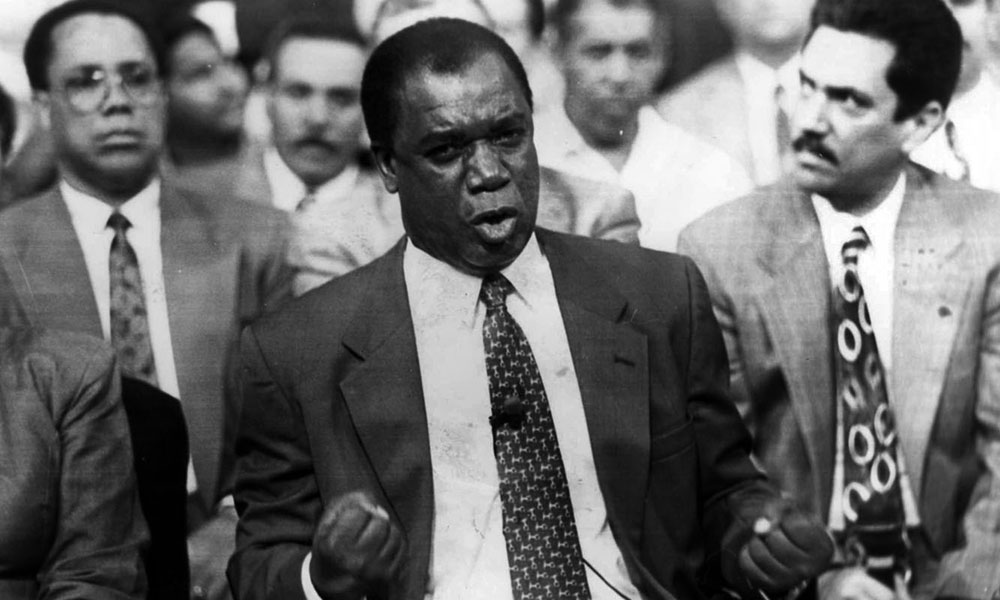

José Francisco Peña Gómez is considered one of the most influential political leaders of the 20th century in the Dominican Republic. Known as a defender of democracy and a great orator, Peña Gómez played a crucial role in the country's political history.
Origin and Academic Background
He was born on March 6, 1937 in the province of Valverde, Dominican Republic. The son of Haitian immigrants, he was adopted by a Dominican family who provided him with a home, a surname, and an education that would shape his future. From his childhood, he showed a great interest in knowledge, which would be key in his development as a political leader.
Peña Gómez stood out for his academic background. He studied Political Science at prestigious universities in the United States, such as Harvard and Michigan. In addition, he obtained his Doctorate in Juridical Sciences at the Universidad Autónoma de Santo Domingo (UASD) and in Constitutional Law and Political Science at the University of Sorbonne, in Paris. His education allowed him to consolidate himself as an intellectual committed to democracy and social justice.
Political Career and Leadership in the PRD
Peña Gómez began his political career under the influence of Juan Bosch, leader of the Dominican Revolutionary Party (PRD). However, in 1973, an internal dispute led to Bosch's departure from the party. Peña Gómez then took over the leadership of the PRD, leading it to victory in two presidential elections:
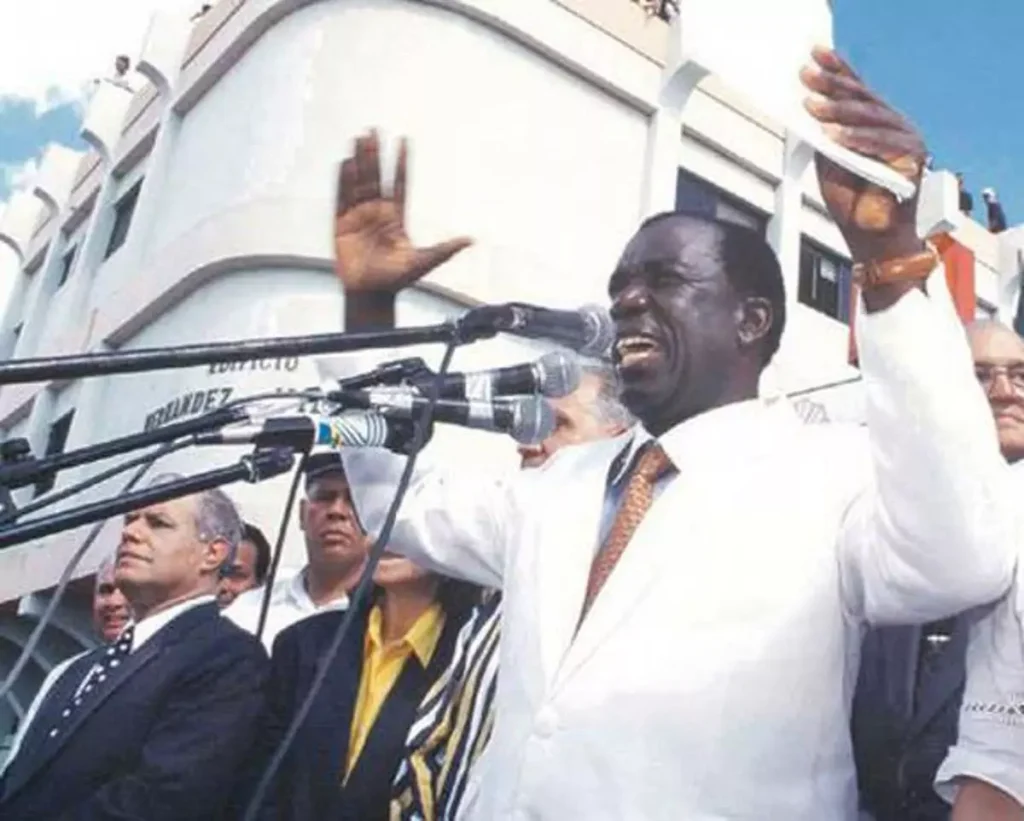
- 1978, with Antonio Guzmán as president.
- 1982, with Salvador Jorge Blanco at the head of the country.
Between 1982 and 1986, Peña Gómez also served as Mayor of Santo Domingo, standing out for his municipal management and commitment to the Dominican capital.
Presidential Attempts and Political Obstacles
Despite his popularity, Peña Gómez faced strong campaigns against him in his three attempts to reach the presidency in 1990, 1994, and 1996. These electoral processes were marked by dirty campaigns, discrimination, and political attacks, in which his opponents exploited his Haitian origin to discredit him.
In the 1994 elections, Peña Gómez denounced electoral fraud, which generated a political crisis in the country. National and international pressure forced President Joaquín Balaguer to call new elections in 1996.
In these elections, although Peña Gómez obtained a large number of votes, an alliance was formed between the Social Christian Reformist Party (PRSC) and the Dominican Liberation Party (PLD), which led to the victory of Leonel Fernández.
Illness and Death
While continuing his political struggle, Peña Gómez faced a personal battle against pancreatic cancer, a disease he suffered from for four years. Despite his declining health, he never stopped actively participating in Dominican politics.
He died on May 10 1998 due to a pulmonary edema, a few days before the congressional and municipal elections, in which he was again running for the position of Mayor of Santo Domingo. His death generated great commotion in the country, and his wake at the National Baseball Stadium brought together thousands of followers who paid tribute to him.
Legacy of José Francisco Peña Gómez
José Francisco Peña Gómez left an indelible legacy in the political history of the Dominican Republic. His commitment to democracy, education, and social welfare continues to be remembered by current generations. His influence endures in Dominican politics, being an inspiration for leaders and citizens who defend democratic values.
His party, the PRD, finally reached the presidency in the year 2000, with Hipólito Mejía as a candidate, thus fulfilling the dream that Peña Gómez pursued throughout his life.






