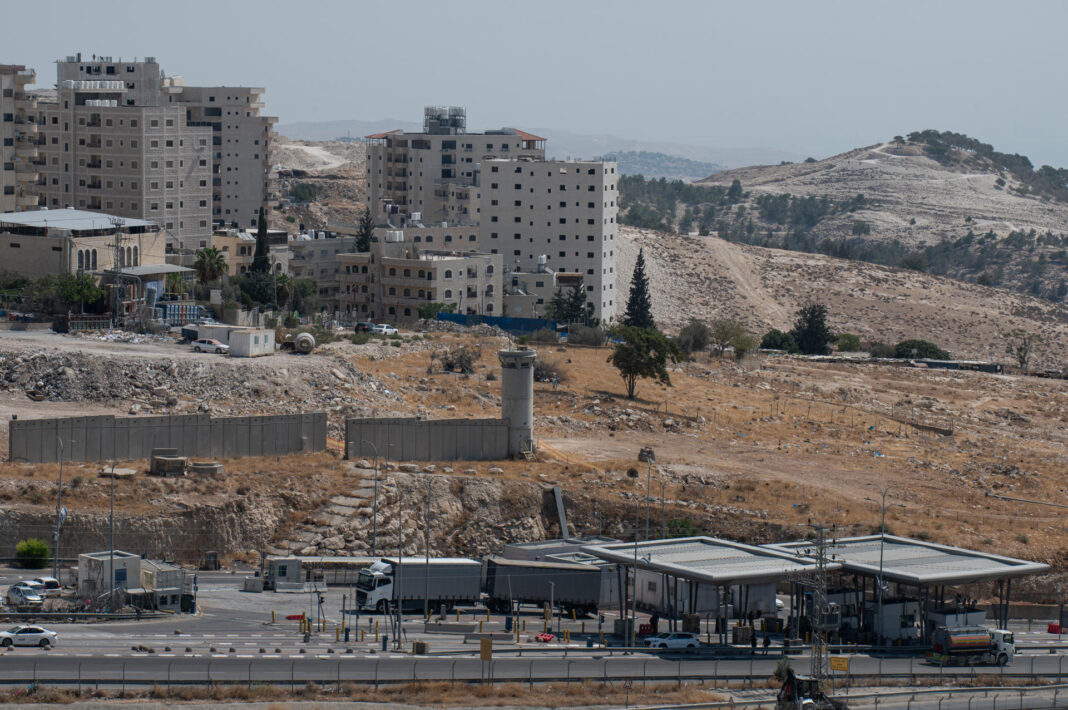
Jerusalem.- Israel definitively approved this Wednesday the controversial plan to expand the settlements next to East Jerusalem, in the area known as "E1", which would prevent access to the city from the occupied West Bank and would hinder the establishment of a contiguous Palestinian State.
In a statement, Finance Minister and settler
Israeli, Bezalel Smotrich, confirmed the decision of the Israeli Civil Administration and said that it "practically erases the illusion of the 'two States' and consolidates the control of the Jewish people over the heart of the Land of Israel".
"The Palestinian state is being erased from the table not with slogans, but with actions. Each settlement, each neighborhood, each dwelling is a new nail in the coffin of this dangerous idea," said one of the main drivers of the colonization of the occupied Palestinian territories.
With its decision, the Civil Administration - the Israeli governmental body that administers in the West Bank - approves the construction of 3,410 homes in E1, a 1,200-hectare area east of Jerusalem inhabited by several Palestinian Bedouin communities.
The land is part of the Israeli settlement of Maale Adumim, the third most populated in the occupied West Bank, with 40,000 inhabitants, and considered illegal under international law.
In addition, the project includes the construction of a new road that would separate Palestinian traffic from Israeli traffic, and would move the military control to enter East Jerusalem (the Palestinian part of the city, unilaterally annexed by Israel in 1980 and claimed by the Palestinians as the capital of their future State) up to 14 kilometers to the east.
"This is a conscious decision by Israel to implement an 'apartheid' regime. If the international community is serious about peace and a Palestinian state, it is urgent to take effective measures to prevent Israel from expelling Palestinians in the E1 zone," said Aviv Tatarsky, a researcher at the Israeli NGO Ir Amim.
For decades, Israeli authorities refused to approve the plan due to pressure from the international community, which fears that the expansion of settlements will prevent the establishment of a contiguous Palestinian state, with East Jerusalem as its capital.
However, after the arrival to power of Benjamin Netanyahu in 2022 at the head of an unprecedented coalition with the far-right, the main defenders of the colonization of the Palestinian territories, the Israeli government has approved an unprecedented number of new settlements and land confiscations.

 Spanish