
 Spanish

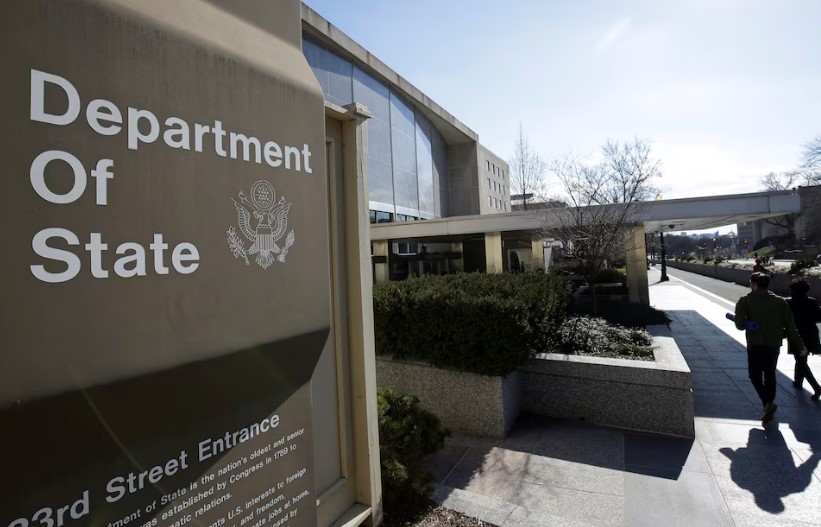

The U.S. State Department issued an unusual worldwide security alert after U.S. forces launched airstrikes against nuclear facilities in Iran, increasing fears of retaliation in the Middle East and other regions.
The warning, which calls on U.S. citizens to exercise extreme caution in their international travels, underscores the risk of possible demonstrations and attacks against U.S. interests abroad.
You may be interested in: Trump announces that the U.S. attacked three Iranian nuclear facilities
The message was officially disseminated on Sunday on the State Department website, where it was noted that the conflict between Israel and Iran has caused disruptions in air traffic and periodic closures of airspace in the region. As a result of these events, US diplomacy has raised its travel warnings and has begun to evacuate citizens in sensitive areas.
The trigger for this new escalation was the announcement by President Donald Trump, who confirmed that the US carried out precision strikes against Iranian nuclear facilities, including the Fordo, Natanz, and Isfahan sites, using B-2 bombers and Tomahawk missiles. This operation marked a direct and significant intervention, which has generated concern about the possible consequences for global security. From that moment on, the State Department doubled the number of emergency evacuation flights from Israel to Europe, and began the departure of non-essential personnel from the US embassy in Lebanon. The diplomatic headquarters in Beirut ordered the evacuation of family members and employees due to what it described as a “volatile and unpredictable security situation”. In parallel, specific warnings were issued for Americans in Saudi Arabia and Turkey, urging them to take extreme precautions. In Riyadh, authorities recommended limiting travel to military installations to a minimum, while in Turkey, consulate staff were instructed to maintain a low profile and avoid traveling to the consular district of Adana, which includes the Incirlik air base, key to NATO operations. According to internal documents cited by the AP agency, more than 7,900 U.S. citizens requested assistance to leave Israel, while more than 1,000 did so from Iran, where the U.S. has no direct diplomatic presence. On Saturday, 67 Americans were evacuated on two flights to Athens, although three other flights were canceled due to the closure of Israeli airspace. Six more flights to Greece, one to Rome and another to Cyprus are scheduled to depart on Monday. Furthermore, a cruise ship with more than 1,000 U.S. citizens, including hundreds of Jewish youths participating in an organized tour, arrived in Cyprus amid the evacuation. In Iraq, the withdrawal of non-essential personnel from the embassy in Baghdad and the consulate in Erbil continues, in a process that had already begun on June 12, before military operations began. The US embassy in Jerusalem had already begun evacuating citizens even before the attacks were confirmed. In neighboring countries, US diplomatic missions have been instructed to review their security levels and submit reports to the State Department before the weekend. The U.S. government's warning also refers to its official international travel information website, where citizens are advised to review specific alerts for each country before planning any travel. The possibility of direct or indirect retaliation against U.S. targets in countries with a military or diplomatic presence is once again a central concern of American foreign policy. In the midst of this crisis, the State Department emphasized the need for citizens in areas of tension to stay informed, avoid public gatherings, and follow the instructions of local and diplomatic authorities.




