
 Spanish

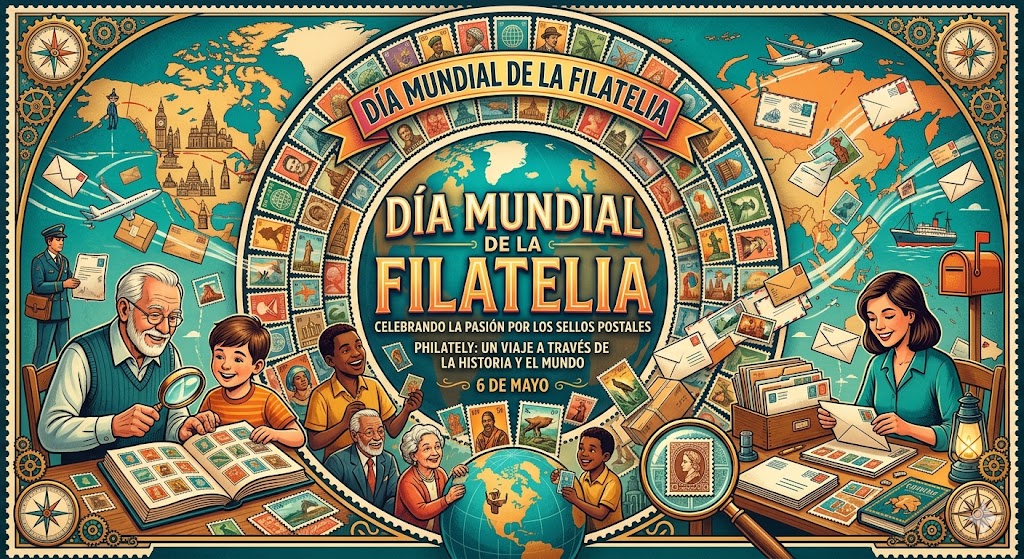

Every May 6th, World Philately Day is celebrated to commemorate the postage stamp as a system for franking correspondence.
Also, a tribute is paid to the collectors of stamps, postage stamps and postal seals (philatelists) who today keep this peculiar hobby alive.
What is Philately?
Philately is defined as the art of collecting, classifying, buying and/or selling stamps, envelopes and other postal documents, as well as the study of postal history. It comes from the Greek words Philos (which means lover, hobby, love) and Atelia (which means paid previously or in advance).
The Philatelist is the person in charge of carrying out this work. We recommend reading: The postage stamps are small pieces of paper printed with various motifs (effigies of people, landscapes, coins, among others) that are attached to letters and postal packages, for their certification or postage.How did this world day originate?
The creation of the World Philately Day arose in commemoration of the first stamp in postal history: the Penny Black. It was issued by Great Britain on May 1, 1840, and began circulating on May 6 of the same year.Also, this anniversary pays tribute to the creator of Philately, Rowland Hill.
Fun Facts About Philately
Here are some curious and interesting facts about Philately:- The word Philately originated thanks to a proposal by the French collector Georges Herpin, published in the newspaper Le Collectionneur de Timbres Poste on November 15, 1864.
- There are specialized catalogs to identify and classify postage stamps: Scott (United States), Michel (Germany), Yvert et Tellier (France), Stanley Gibbons (Great Britain), Edifil (Spain), Mello Teggia (Argentina).
- The first adhesive stamp samples were printed in Scotland by James Chalmers of Dundee, in the year 1834.
- Apart from the square and rectangular shapes of the stamps, there are hexagonal, octagonal and other irregular shaped stamps.






