 Spanish

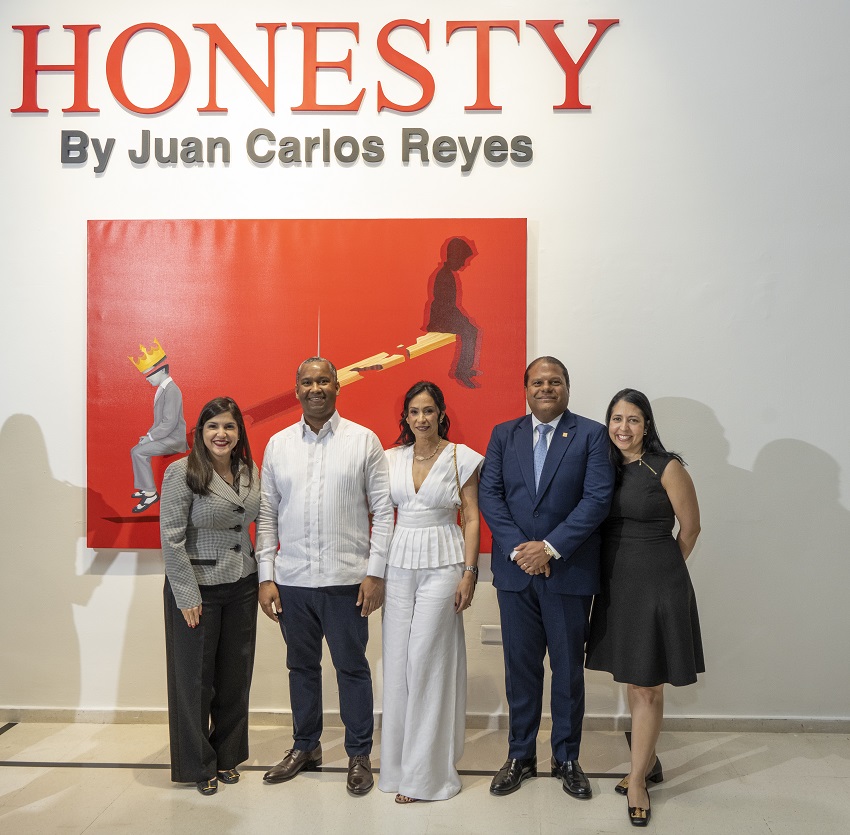

More than a sample, “Honesty” was a declaration of principles: a poetic and visual confrontation with the essential values of the human being in a contemporary context marked by banality and immediacy. Through a powerful symbolic language —blindfolded children, clocks, puppets, chess sets, toy airplanes, lollipops with thorns— the artist exposed with rawness and sensitivity the tensions between the ephemeral and the enduring, between manipulation and freedom.
During the opening ceremony, the artist expressed that “'Honesty' is an invitation to see beyond the works, connecting with the essence of each spectator through emotions. Allow the pieces to chart your path and make you feel the fullness that art offers.”
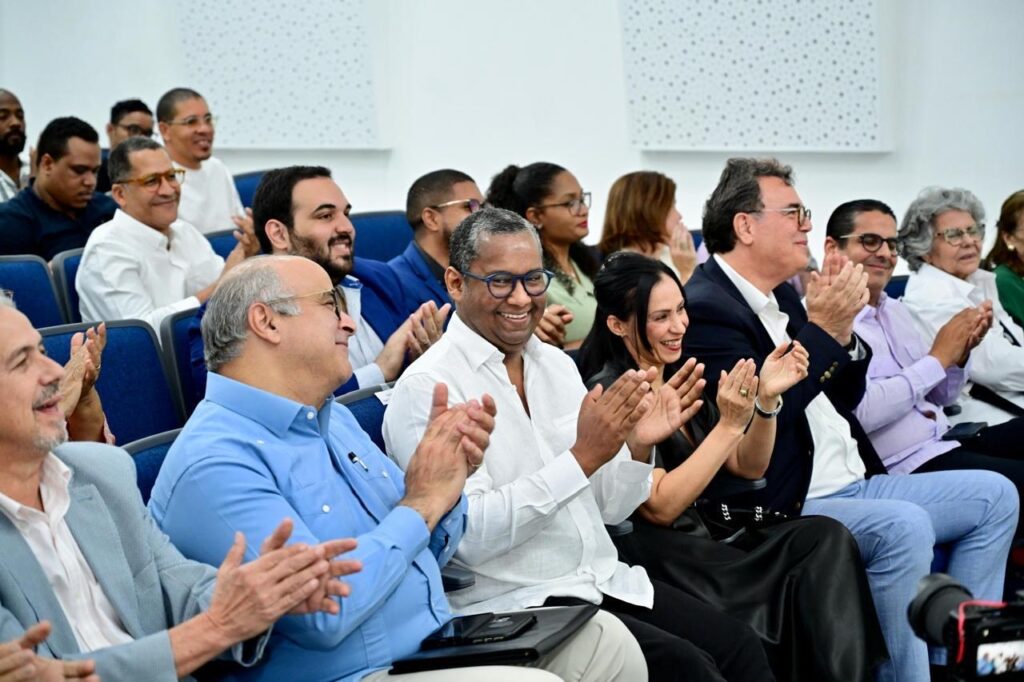
The event was attended by cultural authorities, art critics, collectors, students, and media. Art critic and curator Marianne de Tolentino defined the exhibition as a deserved culmination of Reyes's journey since his award in the "National Competition for Values," highlighting his technical evolution and thematic depth. The exhibition received the support of patron Ludwig García, manager and collector Edwin Espinal Matos, and the collaboration of collector Héctor José Rizek Sued, as well as the sponsorship of Banreservas, Artspace, Laboratorios LAM, Linesco, Arte San Ramón, El Catador, and Oliver Rum.An immersive reflection
The installation and three-dimensional sculptures expanded the conceptual proposal of the exhibition, becoming immersive scenarios that directly questioned the viewer, leading them to question their own relationship with honesty. The techniques and materials —transparent watercolors, a completely expressive charcoal, engraving marked by time— were not mere aesthetic choices, but vehicles of meaning that reinforced the central message: to look beyond the obvious, to recover the transparency of affections and to re-signify the act of telling the truth.
In the words of Edwin Espinal Matos, “it was not just a series of works, but a visual discourse loaded with meaning, an invitation to explore the essence of Juan Carlos Reyes' creation.”
With “Honesty,” the artist not only offered an exhibition, but a transformative experience that, from contemporary art, proposed an urgent and necessary reflection: honesty as resistance against the false, and as a bridge to reconnect with the essentially human.
Dialogues around the exhibition
On Thursday, March 13th, within the framework of the exhibition, the discussion "The Representation of Childhood and its Shadow in the Work of Juan Carlos Reyes" was presented, with the participation of art critic and curator Marianne de Tolentino and art historian and curator Paula Gómez Jorge. De Tolentino discussed the way in which Reyes articulates childhood scenes that oscillate between tenderness and unease, emphasizing the expressive use of color and gesture as a vehicle for multiple readings. For her part, Paula Gómez Jorge explored the shadow as a key conceptual resource, pointing out how the light-darkness duality in the artist's compositions opens dialogues about memory, the oneiric, and the absent. Both emphasized the work's ability to invite a plural reading, in which each piece becomes a mirror of emotions that transcend the pictorial surface.
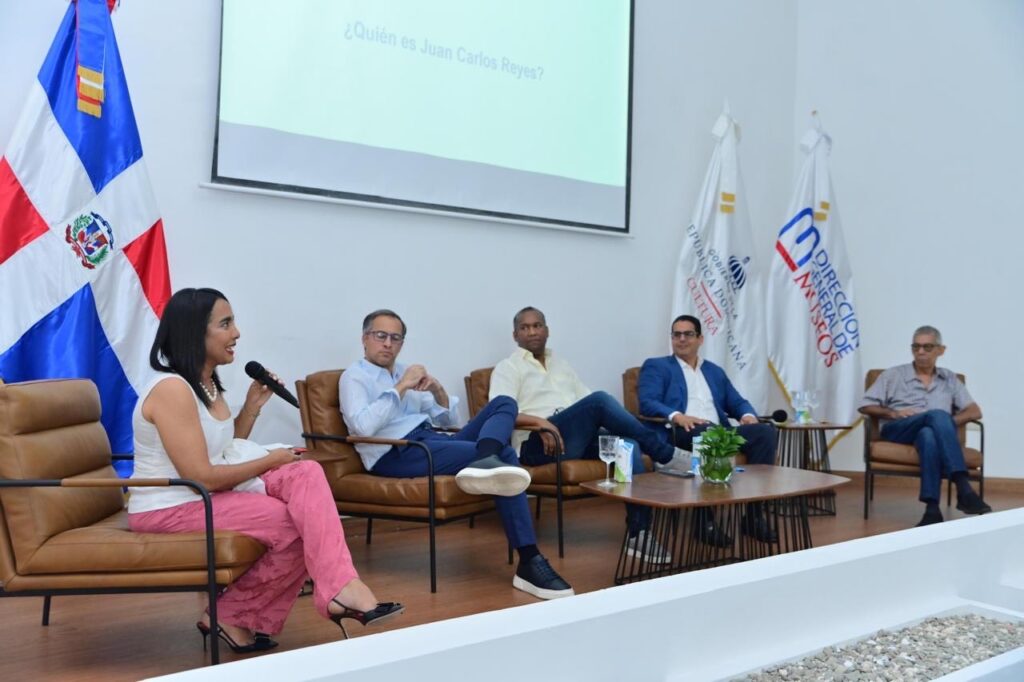
On Tuesday, April 1st, the "Management Team Conversation" brought together Juan Carlos Reyes himself, cultural manager Edwin Espinal, patron Ludwig García, and curators Nelson Ceballos and Lilian Carrasco. In this session, Espinal reflected on cultural management as a central axis for turning ideas into tangible projects, while Ludwig García offered anecdotes that illustrate the transformative role of patronage in the artist's career. Juan Carlos Reyes, for his part, shared his beginnings and his journey from Santiago de los Caballeros to Santo Domingo, engaging in dialogue with the visions of his curatorial allies. Nelson Ceballos and Lilian Carrasco, in turn, presented the museographic and curatorial criteria that gave narrative coherence to the exhibition, evidencing the meticulous —technical and conceptual— work that has sustained this exhibition as a milestone for Dominican art.
Parallel activities: education, childhood and collective participation
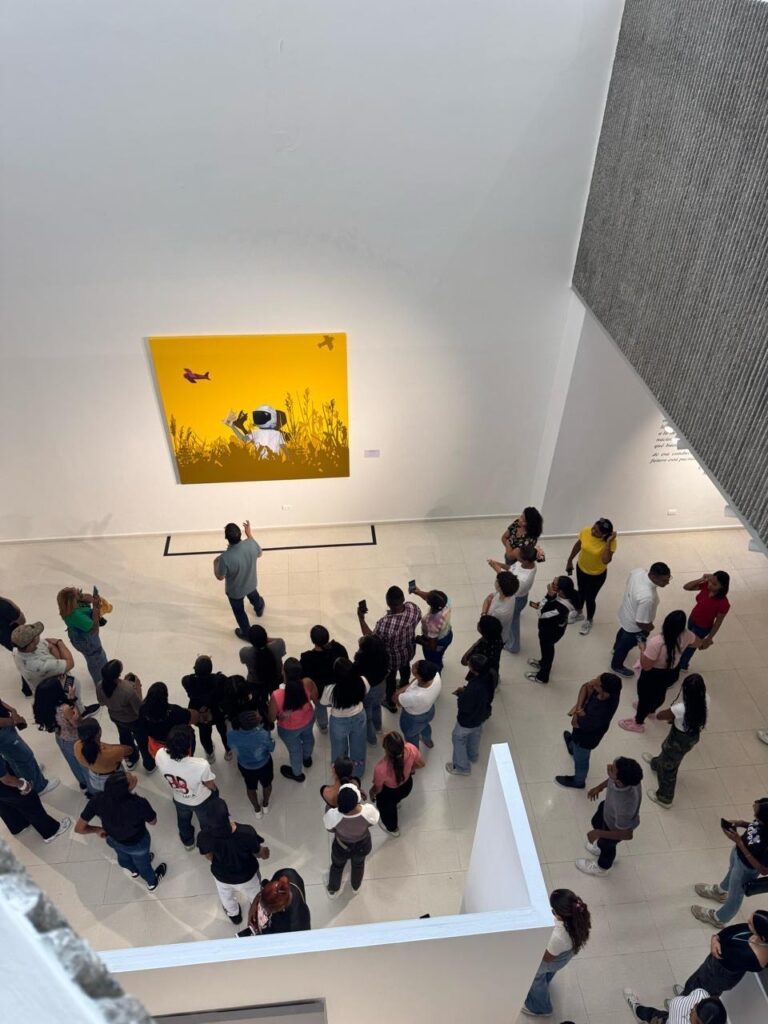
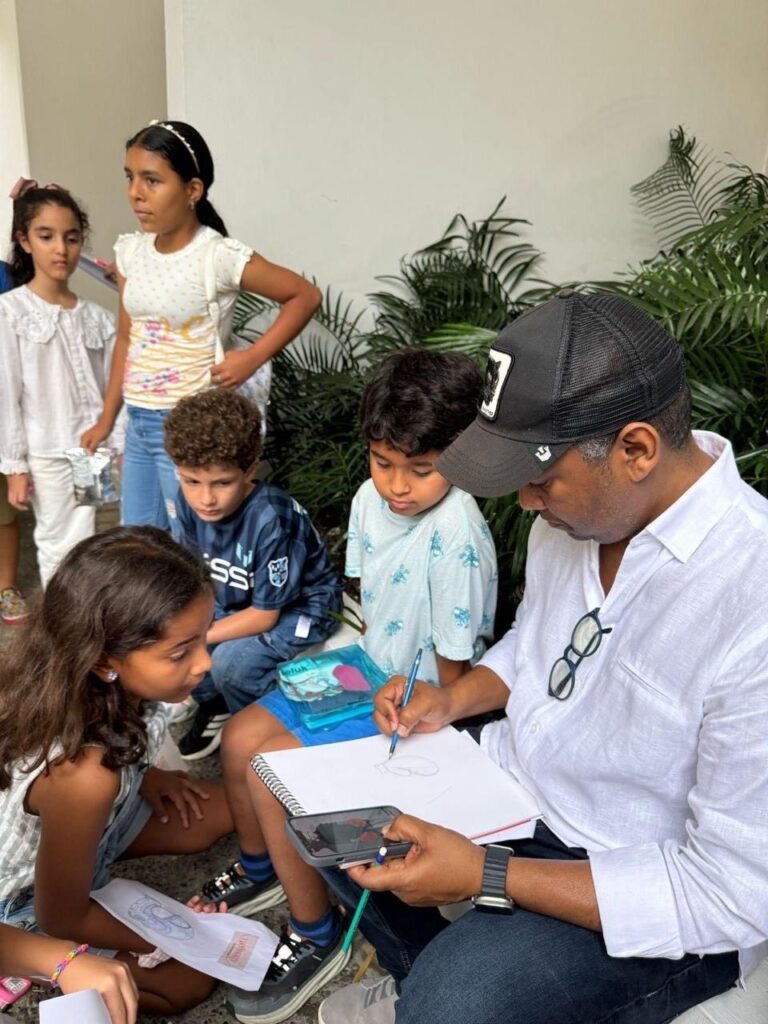
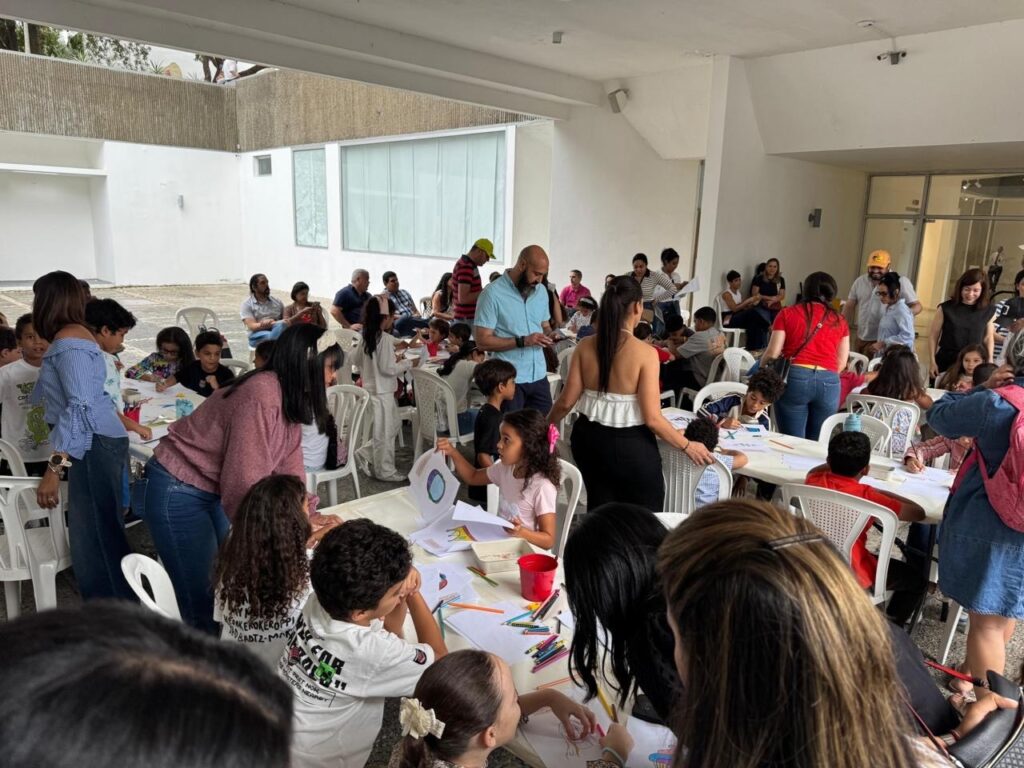
As an integral part of the exhibition experience, a robust educational program was developed with guided tours that allowed visitors to deeply understand the artist's symbolic universe journey.Among the most outstanding activities is the children's workshop “Let's Paint with Juan Carlos Reyes!”, which brought together boys and girls between 5 and 12 years old in a creative meeting guided by the artist himself. This playful space allowed the little ones to explore artistic techniques, stimulate their imagination and connect with contemporary art through play, color and emotion. It was also a space for generosity, as each child received a sketch of their favorite element in the work of Juan Carlos Reyes made in situ and signed by the artist.