
 Spanish

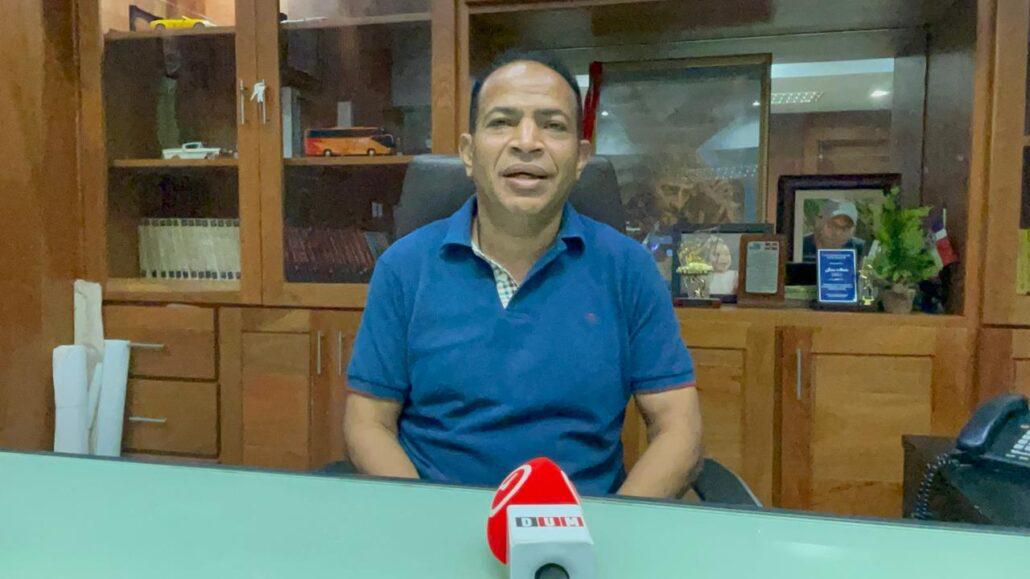

Santiago, D.R. – The president of the National Confederation of Transport Workers (CNTT), Juan Marte, considered the alternation of schedules for workers in the public and private sectors as a viable solution to the mobility problems in the country, a measure that, in his opinion, would significantly contribute to improving traffic and transportation in cities such as Santo Domingo, Santiago, San Cristóbal, San Francisco de Macorís, Moca and San Pedro de Macorís, among others.
Marte expressed his hope that this and other actions contemplated within the 120 points announced by the Government's Transportation Cabinet will translate into real improvements for the transit system in the Dominican Republic.You may be interested in: Fallen poles removed from the 17th bridge; traffic flows normally
The transport leader emphasized that the sector could improve immediately if the authorities focus on implementing efficient regulatory measures, instead of limiting themselves to inspection, which, according to him, has not yielded the expected results. He recalled that the Dominican Republic, with a territorial extension of just 48 thousand square kilometers, already has more than 6 million motor vehicles, which makes it urgent to implement structural measures, including the construction of tunnels, overpasses and underpasses, to adapt the infrastructure to the growing vehicle fleet. Likewise, Juan Marte criticized the lack of sustainable policies in transit matters by the different governments, pointing out that no administration has given real priority to transportation, limiting itself to promoting projects that have failed. Among them, he cited the “Guaguas Banderitas”, Onatrate, Microbuses Pollitos, Garcitas, Plan Renove and OMSA Buses, programs in which he assured the State has invested more than RD$400 billion pesos without obtaining concrete results. He also mentioned the case of the extinct Dominicana de Aviación airline, which, in his opinion, was looted and driven to bankruptcy. Marte questioned the current millionaire investments in works such as the Metro to Los Alcarrizos, the Santiago Monorail and the RD$6,544 million of the Santiago Cable Car, as well as the close to RD$9 billion in tax exemptions to the transportation sector and other investments without a clear audit in the TRAE program. He concluded by pointing out that while these projects are being executed, the Dominican Republic continues to suffer the consequences of an anarchic, dispersed, and chaotic transit and transportation system, which requires concrete and sustained actions to achieve a real transformation.




