
 Spanish

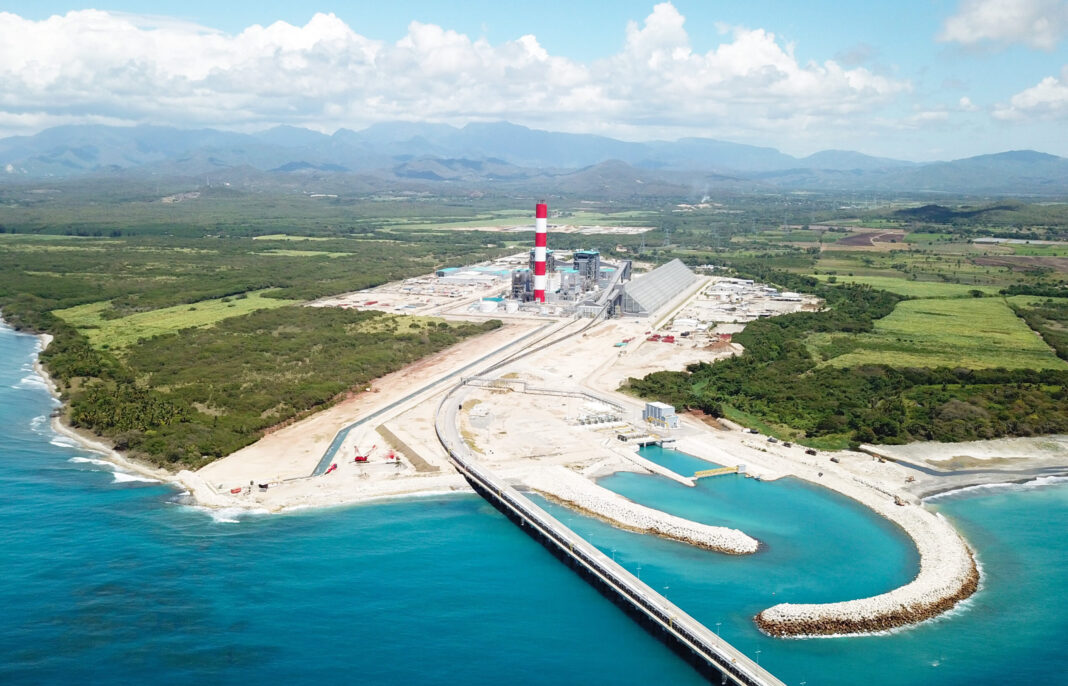
The Punta Catalina thermoelectric plant, operated by the Empresa de Generación Eléctrica Punta Catalina (EGEPC), closed the 2025 fiscal year —as of December 3— with transfers to the Dominican State for US$258.4 million, consolidating itself as one of the public assets with the greatest cash generation capacity.
With this result, the company's accumulated contribution between 2023 and 2025 amounts to US$562.9 million, channeled through public debt amortization, dividends, and taxes. The 2025 figure represents the largest annual effort since the plant's entry into operation and marks a turning point in its role within public finances.
The 2025 exercise was, simultaneously, the most demanding and the most revealing for Punta Catalina. In a context of fiscal restrictions, the plant assumed a significant financial burden, becoming de facto an instrument of fiscal stabilization, indicates a report for the press prepared by the company.
During the year, US$141 million was allocated to debt payments to the Ministry of Finance, reflecting the use of the company's cash flows to meet liabilities associated with the project itself and the electricity sector as a whole. In addition, US$59 million was distributed in dividends, a sign of operational profitability.
The third component of the 2025 contribution was the payment of US$58.4 million in taxes, consolidating Punta Catalina as one of the most relevant contributors within the public business sector. Together, these flows confirm that the company has reached a phase of financial maturity, with the capacity to simultaneously sustain fiscal, patrimonial, and operational obligations.
The performance of Punta Catalina contrasts with the structural situation of the Dominican electricity system. While the distributors continue to register technical and commercial losses that force the State to maintain recurrent transfers, the plant generates surpluses that allow financing part of that same fiscal effort.
In an institutional statement, the executive vice president of EGEPC, Celso Marranzini, pointed out that "the results of 2025 confirm that Punta Catalina has ceased to be just an energy project to become a strategic asset of public finances, with measurable and sustained contributions to the State."
According to the report, the 2025 performance reinforces the idea that Punta Catalina is one of the few state assets capable of generating net fiscal value. At the same time, it raises questions about the sustainability of a model in which a profitable company compensates, via its flows, the persistent inefficiencies of the distribution chain.
About Punta Catalina
The Punta Catalina Electric Generation Company (EGEPC) is a state-owned company. Composed of two 360 MW electric generation units, for a total of 720 MW, synchronized in the National Interconnected Electrical System (SENI) and whose efficiency contributes to the reduction of the average variable generation cost.
EGEPC generates energy from the clean burning of pulverized coal. Punta Catalina includes all support facilities such as: a ship reception dock with a maximum capacity of 80,000 tons, fully enclosed unloading systems and covered coal storage with a capacity for 216 thousand tons, a modern ash deposit that uses geotextile meshes that guarantees no contamination to the environment.





