



73 years of the first broadcast of La Voz Dominicana

  • aplicacion - banner 728px

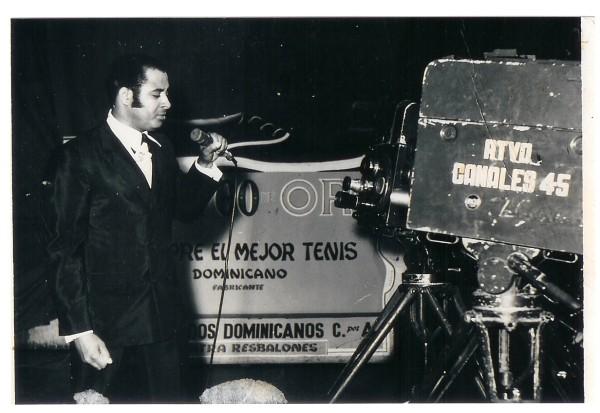
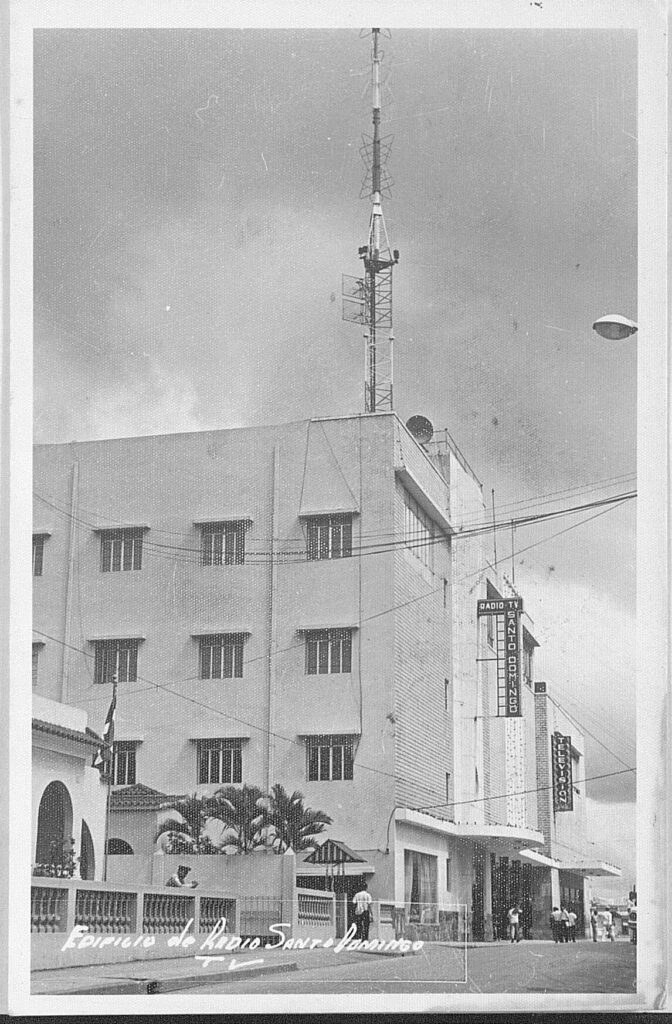
73 years ago the Dominican Republic experienced a historic moment, when television first arrived in the country's homes. It was at noon on August 1, 1952, when the cameras of La Voz Dominicana were turned on, on Doctor Tejada Florentino street, where what is now Radio Televisión Dominicana (RTVD) still operates.
73 years of the first broadcast of La Voz Dominicana | De Último Minuto English
María Cristina Camilo

The first image transmitted marked the beginning of a new era in communications, when the announcer María Cristina Camilo (Maíta), welcomed the audience and presented the program “Romance Campesino”, starring Toña Colón (Felipa) and Luis Mercedes Miches (Macario), and that's how María Cristina became the first presenter of national television.

The project was conceived by José Arismendi Trujillo (Petán), brother of the dictator Rafael Leónidas Trujillo, and evolved from radio. Petán had founded the radio station La Voz del Yuna in Bonao in 1943, which was later moved to Ciudad Trujillo (now Santo Domingo), and converted into La Voz Dominicana when television was integrated in 1952. From the so-called Radiotelevisor Palace, figures who would later mark the national culture debuted, such as Elenita Santos, Casandra Damirón, Bullumba Landestoy, and Monina Solá. The investment of the Trujillo regime made the country become the third Latin American nation, after Mexico and Cuba, to have a television station.
Evolution and changes

In 1965, the channel changed its name to Radio Televisión Dominicana (RTVD). Years later it was renamed Televisión Dominicana, and then it reverted to its original name. In 2003, through a law, it became the State Corporation of Radio and Television (Certv), grouping channel 4 together with stations such as Quisqueya FM, Dominicana FM and Santo Domingo AM.


The rise of private television began in 1959 with the creation of channel 7, Radio HIN Televisión (Rahintel), founded by engineer Pedro Pablo Bonilla. It was followed by Color Visión, inaugurated in 1969 in Santiago by the Bermúdez family, and moved to the capital in 1971, becoming the first color television station in the country.

In 1972, José Semorile launched Tele Inde on channel 30 (UHF), later authorized on channel 13, which eventually became Telecentro, part of the Telemicro Group. The channel 11, Telesistema, arrived in 1978, conceived by the broadcaster Waldo Pons, and in 1979, after the passage of Hurricane David, the Ornes family launched Teleantillas (channel 2), then considered the most modern medium. The arrival of Telecable Nacional in 1982 marked the beginning of the accelerated expansion of television, and in 1986 Telemicro emerged, which eventually migrated from channel 6 to channel 5 with the new Telecommunications law in the 90s.
73 years later, a legacy that lives on


Today, August 1, 2025, Dominicans proudly celebrate the 73rd anniversary of national television, in a context dominated by digital platforms, streaming content, and technological advances, but without forgetting the path traveled since that first black and white broadcast that united the country in front of a new window to the world.

In the spotlight

  • aplicacion - banner 300px

  • banner altices 300x250 junio 2025

Explore more

Kast, the far-right politician who wants to gain power by only talking about security

Santiago de Chile.- With an almost monothematic campaign, focused on combating crime and irregular migration, the far-right former deputy José Antonio Kast came second in the presidential elections this Sunday, with the xxx of the votes, and managed to pass to the second round of December against the leftist Jeannette Jara. "We are not just […]

Jara, the communist who will face the far-right in the presidential elections in Chile

Santiago de Chile.- At the head of the broadest progressive coalition in the country's history, former minister Jeannette Jara made history this Sunday by becoming the first communist to win the first round of a presidential election in Chile, but did not get enough votes and will seek to stop the far-right José Antonio Kast […]

¿Who is Rodrigo Paz Pereira, the new president of Bolivia?

Rodrigo Paz Pereira was born in September 1967 in Santiago de Compostela, Spain, during the exile of his father, former President Jaime Paz Zamora (1989-1993). He comes from a family historically linked to Bolivian politics, as his paternal grandfather was a first cousin of former President Víctor Paz Estenssoro. He is a professional economist with […]

Get to know the career of Aura Celeste, new General Manager of CNSS

SANTO DOMINGO.- The President of the Republic, Luis Abinader, appointed this Friday the lawyer and academic Aura Celeste Fernández Rodríguez as the new General Manager of the National Council of Social Security (CNSS), a position from which she will lead the supervision and modernization of the social security system in the country. Fernández Rodríguez has […]

Kelvin Cruz Biography

Santo Domingo. Kelvin Cruz, the current Minister of Sports of the Dominican Republic, has been a key figure in the development and promotion of sports in the country. With an outstanding career in the sports and political fields, Cruz has demonstrated his commitment to the promotion of physical activity and sporting excellence. Brief Biography Kelvin […]

"Series 50": a picturesque corner that combines art, gastronomy, and history in Jarabacoa

Santo Domingo. – Located two hours and seventeen minutes from the capital, in the heart of the Dominican Republic's mountains, there is a place that seems taken from a doll's tale. It is “Serie 50”, a picturesque space in Jarabacoa that combines art, gastronomy, and color in every corner. The first impression upon arrival is […]


