
 Spanish

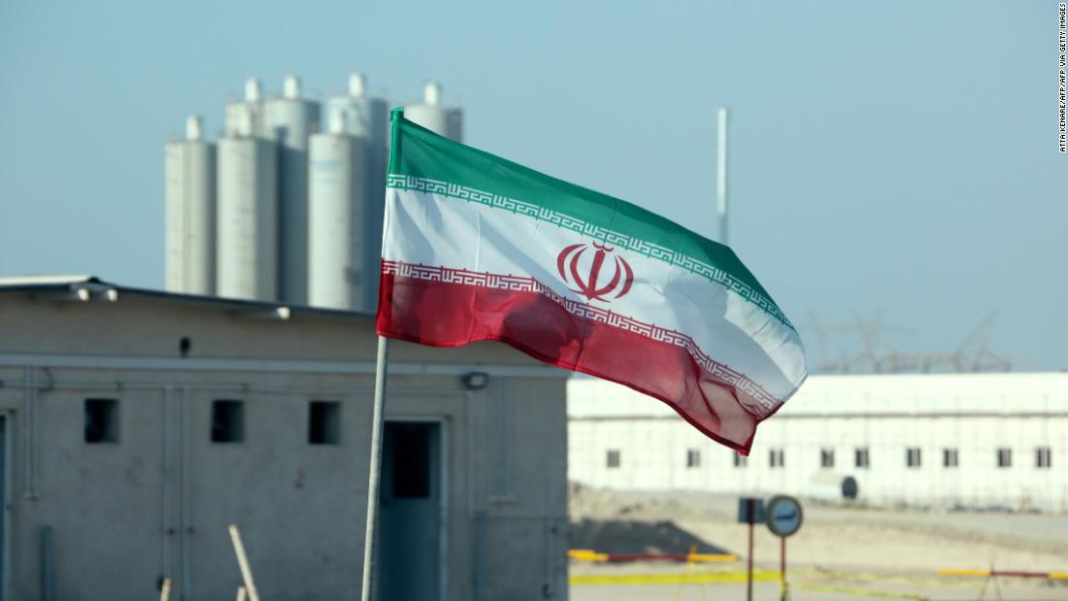

The regime of Iran will continue to enrich uranium "with or without an agreement" with world powers, declared the Persian Foreign Minister this Sunday, amid negotiations on its nuclear program.
The Western powers, led by the United States and Israel, considered by experts to be the only nuclear power in the Middle East, denounce that Tehran wants to acquire the nuclear weapon. The Islamic Republic, meanwhile, rejects these accusations, defending its right to nuclear energy for civilian purposes.
Iran and the United States have been negotiating since April 12, indirectly and with the mediation of Oman, a new agreement to regulate the Iranian nuclear program.
These negotiations represent the highest level of commitment between both parties since Washington unilaterally withdrew in 2018 from the international agreement on the Iranian nuclear program reached three years earlier.
“If the United States is interested in ensuring that Iran will not have nuclear weapons, an agreement is within reach,” Iranian Foreign Minister Abas Araqchi stated on X on Sunday.
“We are willing to have a serious conversation to reach a solution that guarantees that result forever. However, enrichment in Iran will continue with or without an agreement,” the minister added.
High-ranking U.S. officials have repeatedly expressed their opposition to Tehran's uranium enrichment, while Tehran continues to reiterate that its nuclear program has no military purposes.
On Friday, Iran held talks in Turkey with European powers about its nuclear program, following a fourth round of indirect talks on May 11 with the United States, in which no progress was announced but cautious optimism was expressed.
Araqchi indicated that Tehran was willing to “open a new chapter” with European countries at a time when they threaten to reimpose sanctions against Tehran.
“We want Europe to play its role (in the nuclear talks), even though it has downplayed its role,” he added.
On Saturday, the president of Iran stated that the country will continue talks on its rapidly advancing nuclear program with the United States.
“We are negotiating, and we will continue to negotiate. We are not seeking war, but we do not fear any threat,” Masoud Pezeshkian stated in a speech to Navy officers broadcast on state television on Saturday.
“It's as if they think that if they threaten us, we will give up our human rights and legitimate rights,” the president added. “We will not retreat, we will not easily give up military, scientific, and nuclear honor in all fields.”
The negotiations have reached the "expert" level, which means that Washington and Tehran are trying to agree on the details of a possible agreement.
Trump has repeatedly threatened to launch air strikes against the Iranian program if an agreement is not reached. Iranian officials are increasingly warning that they could develop a nuclear weapon with their reserves of uranium enriched to near weapons-grade levels.
The U.S. president said on Friday that the Islamic Republic had received a proposal during the talks, but did not offer further details.
During his trip to the region this week, Trump insisted in almost every event he attended, that Iran cannot be allowed to obtain a nuclear bomb, something that according to U.S. intelligence agencies Tehran would not be actively seeking, although its program is on the verge of being able to develop weaponry.
For its part, Israel has threatened to attack Tehran's nuclear facilities on its own if it feels threatened, further complicating tensions in the Middle East, already exacerbated by the war between Israel and Hamas in the Gaza Strip.





