
 Spanish

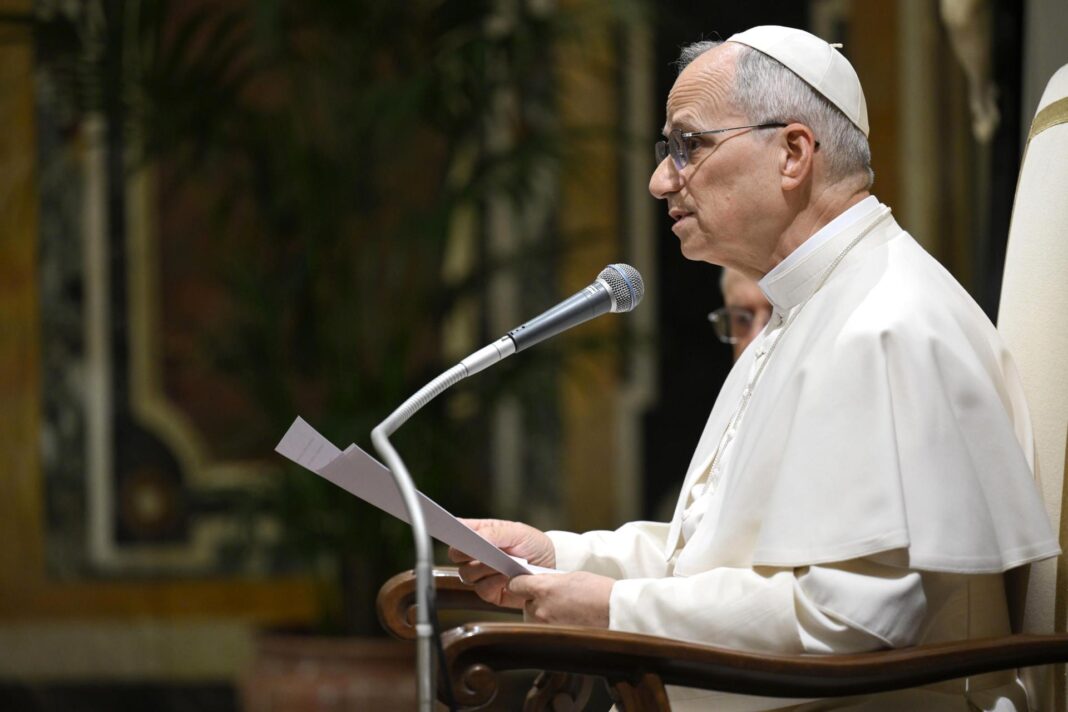

Vatican City.- Leo XIV affirmed this Friday that the perspective of the victims is "essential" to build peace and "denounce the injustices of a system that kills and is based on the culture of discard", upon receiving in the Vatican the movements and associations of the "Arena of Peace" of Verona.
The pontiff recalled the meeting a year ago of this group in the Italian town of Verona with the presence of his predecessor, Pope Francis, and reiterated his message that "the construction of peace begins by siding with the victims, sharing their point of view".
Read more: Leo XIV and Vance discussed peace negotiations in conflict zones
This is an "essential perspective to disarm hearts, gazes, minds and denounce the injustices of a system that kills and is based on the culture of waste," he added, before recalling the symbolic gesture of friendship between an Israeli and a Palestinian affected by the violence, pointing to it as "a sign of hope.""We cannot forget the brave embrace between the Israeli Maoz Inon, whose parents were killed by Hamas, and the Palestinian Aziz Sarah, whose brother was killed by the Israeli army, and who are now friends and collaborators: that gesture remains as a testament and a sign of hope. We thank them for wanting to be present today as well," he said.
The American Pope emphasized that "the path to peace is communal, it involves the care of just relationships between all living beings" and "in an era like ours, marked by speed and immediacy, we must rediscover those long times necessary for these processes to take place."
"There is too much violence in the world, in our societies. Faced with wars, terrorism, human trafficking, and widespread aggression, children and young people need experiences that educate in the culture of life, dialogue, and mutual respect," he emphasized.The Pope appealed to "non-violence as a method and as a style that should distinguish our decisions".
"When those who have suffered injustices and the victims of violence are able to resist the temptation of revenge, they become the most credible protagonists of non-violent peacebuilding processes," he asserted.
And he highlighted the need in that context for "peace institutions", not only "political, national or international institutions, but it is the set of institutions – educational, economic, social – that is called upon to intervene" to promote fraternity.





