
 Spanish

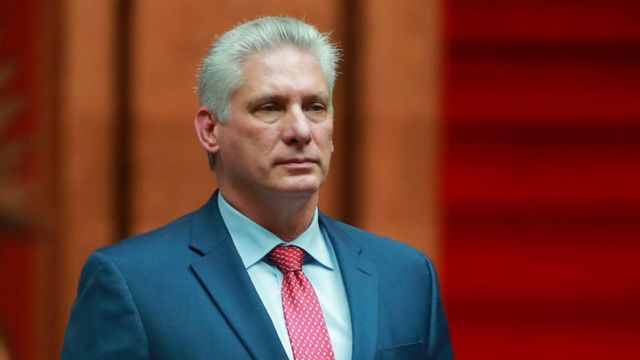

The United States government announced this Friday sanctions for the first time against Cuban dictator Miguel Díaz-Canel on the fourth anniversary of the anti-government protests of July 11, 2021, according to the State Department. The measures also affect other key officials of the regime, in the context of the repression of the historic demonstrations that left more than 1,400 detainees.
Secretary of State Marco Rubio detailed in a statement that the designation of Díaz-Canel and other officials —such as Defense Minister Álvaro López Miera, and Interior Minister Lázaro Alberto Álvarez Casas— responds to their involvement in “serious human rights violations.”
According to the same communication, the sanction is based on "Section 7031(c)", which implies the prohibition of their entry into the United States. In addition, the measure includes their respective families.
Rubio explained that "four years ago, thousands of Cubans took to the streets to demand a free future," indicating that the regime responded with violence and repression, arresting thousands, including more than 700 who remain incarcerated. He also accused it on his official X account of "torturing Cuban dissident José Daniel Ferrer", demanding an "immediate proof of life".
As part of the same package, the United States applied new visa restrictions to judicial and prison officials who, according to the administration, participated in the detention and torture of protesters. The White House also added 11 Cuban hotels, including the new 42-story Torre K hotel in Havana, to its list of restricted accommodations and companies linked to the regime and the GAESA military consortium. According to the statement, the objective is "to prevent US funds from reaching the island of the repressors."
Cuban Foreign Minister Bruno Rodríguez denounced the decision from his X account and attributed it to Donald Trump's government. "The United States is capable of imposing migratory sanctions against revolutionary leaders and maintaining a prolonged economic war, but it cannot break the will of this people or its leaders," Rodríguez stated.
The US pronouncement qualifies the 11J demonstrations as the largest recorded on the island since 1959, with 1,400 detainees, one death and dozens injured. The State Department maintains that many of those arrested were “unjustly detained” and continue to suffer abuse in prison.
The sanction against Díaz-Canel and the strengthening of economic restrictions are part of the policy adopted in the June 30 memorandum announced by Trump, focused on ending practices that, according to the White House, disproportionately benefit the Cuban government, the armed forces, and intelligence agencies. The United States also prohibits direct or indirect financial transactions with entities controlled by the Cuban military and reiterates the legal prohibition of American tourism to the island.
The measures coincide with the social unrest in Cuba, triggered by the covid-19 pandemic, the scarcity of food and medicine, and the widespread rationing, factors that motivated the 2021 protests.





