
 Spanish

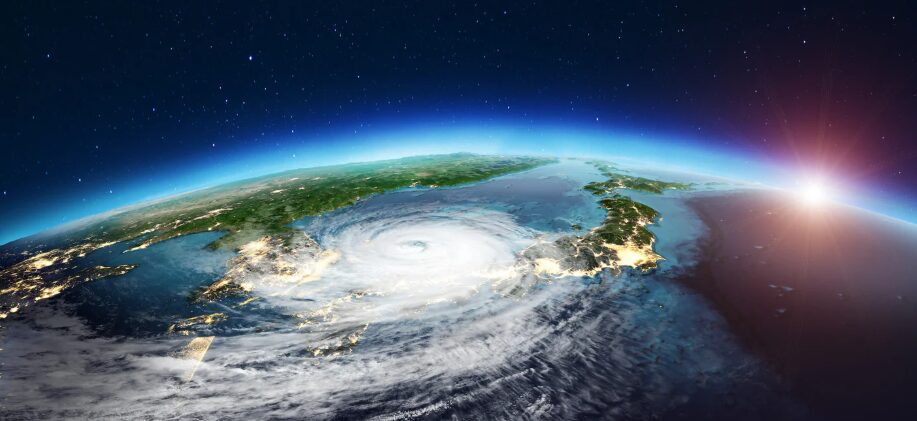

Reliable prediction of the Earth system is essential for mitigating natural disasters, and artificial intelligence has proven promising for improving it. The journal Nature publishes this Wednesday details of Aurora, a model trained with over a million hours of diverse geophysical data.
Developed by Microsoft, this artificial intelligence (AI) tool can surpass -according to the scientific publication- existing forecasts about the Earth system, allowing for a more accurate and effective forecast of air quality, the trajectories of tropical cyclones and the dynamics of ocean waves, as well as high-resolution weather prediction.
Microsoft already unveiled this model last year; today it publishes its characteristics in Nature.
Earth system forecasts provide information on a range of processes, such as weather, air quality, ocean currents, sea ice, and hurricanes, and serve as comprehensive tools for providing early warnings of extreme phenomena.
These are based on complex models developed from decades of data, which require a great deal of computing effort and often require supercomputers and complete teams for their maintenance.
Recent advances in AI have shown promise in terms of performance and predictive efficiency; however, its use in forecasting the Earth system has not been thoroughly explored, notes Nature.
Paris Perdikaris, from the University of Pennsylvania (United States), and his team have developed Aurora, an AI model trained with over a million hours of geophysical data - obtained from satellites, radars and weather stations, simulations and forecasts-.
Aurora, which generates forecasts in seconds, surpasses existing models in air quality, ocean waves, tropical cyclone trajectories, and high-resolution meteorology with a computational cost lower than that of current forecasting methods.
"With the ability to be precisely adjusted for various applications at a moderate cost, Aurora represents a notable step towards the democratization of accurate and efficient predictions of the Earth system," the authors write in their article.
Best results
The researchers, also from Microsoft Research and the universities of Amsterdam and Cambridge, among others, report that the model performed better than seven forecasting centers in the predictions of cyclone trajectories at 5 days in 100% of the measured targets and in 92% of the targets for weather forecasts at 10 days.
The experiments needed to train Aurora lasted between 4 and 8 weeks, compared to the years currently needed to develop benchmark models. The authors point out that this timeframe was only possible thanks to the data previously accumulated with traditional approaches.
You may be interested in: Artificial intelligence, present in the first acts of Leo XIV
Researchers indicate that this AI is a base model for the Earth system and could be adapted for other uses besides weather forecasting.
A base model, Microsoft explains on its website, is a large-scale AI model trained with a wide variety of data. Aurora is unique because it is not limited to weather forecasting with AI, but is only one of the functions it offers.
What distinguishes Aurora is that it is initially trained as a base model and, subsequently, can specialize through adjustments to go beyond what is considered traditional weather forecasting, such as forecasting air pollution, the company adds.
During its development, researchers adjusted the model to various prediction capabilities, including those of ocean waves and tropical cyclones, which demonstrates -Microsoft emphasizes- its capacity as a base model for the Earth system, rather than just for the atmosphere.
Microsoft is not the only company that has developed an AI of this type. For example, at the end of 2023 Google published in the journal Science its machine learning-based model, GraphCast, capable of making a weather forecast "faster and more accurate" up to 10 days in advance.
Google also said that its AI outperformed traditional systems "significantly" and that it serves to offer earlier alerts about extreme weather phenomena.





