
 Spanish

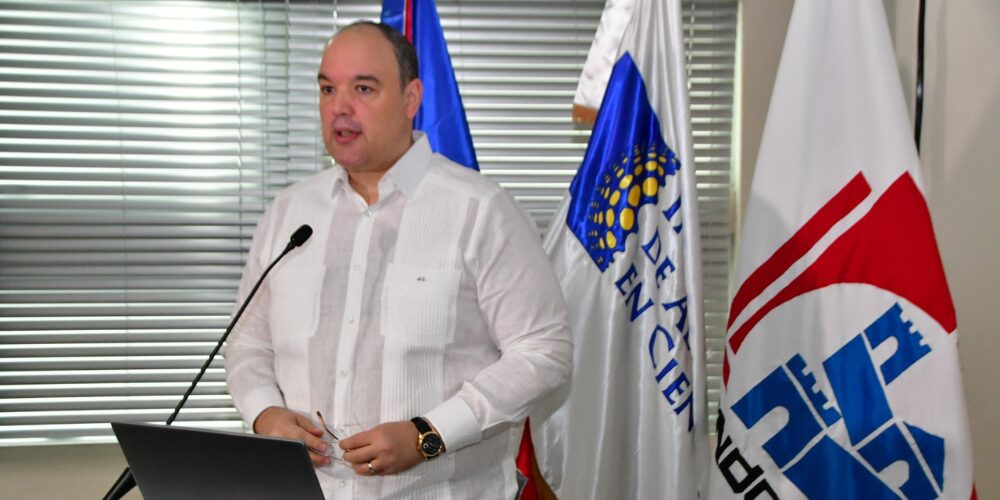

Santo Domingo, D.R. — The Dominican Republic could face economic losses exceeding one billion dollars if the United States decides to apply a tariff on remittances, warned former Minister of Industry and Commerce, José del Castillo Saviñón, during his participation in the panel “The WTO and China's Entry,” held within the framework of the international workshop “China, the United States, and the Trade War.”
The event was organized by the Dominican Center for Studies on China (Cendoesch) and the Global Institute of Advanced Studies in Social Sciences (Iglobal), a meeting that brought together economists, diplomats, and national and international academics to analyze the current challenges of global trade.
Del Castillo argued that the trade conflict between the world's two largest economies has been marked by a US tariff response to a Chinese model of state planning, and attributed much of the tension to the relocation of US companies in Chinese territory and mass production at low cost. "Today, China dominates key sectors such as footwear, textiles, technology, and electric vehicles, thanks to a qualified workforce and the accelerated development of its own technology," he explained.The former official also emphasized that while the United States accounts for only 2% of China's foreign trade, the latter has diversified its exports and strengthened its domestic market. "China has gone from being the country that produced cheaply, to producing with quality, consolidating itself as the big winner of trade liberalization and as the main player in global trade," he concluded.
GATT, WTO and the rules of the game
During the first panel of the event, titled “The GATT and the Foundations of Trade Globalization”, economist Guarocuya Félix and former director of the Internal Revenue Directorate (DGII), offered a historical account of the General Agreement on Tariffs and Trade (GATT), from its creation in 1947 to its transformation into the current World Trade Organization (WTO) in 1995. Juan Ramón Mejía, economist and consultant, also participated in the same panel, contributing reflections on the evolution of the multilateral trading system and the current challenges it faces in a context of growing protectionism.
Félix recalled that the Dominican Republic has been a signatory of GATT since 1950 and a founding member of the WTO. He highlighted the country's active participation in treaties such as DR-CAFTA and the Economic Partnership Agreement (EPA) with the European Union.“International trade needs clear and stable rules, especially in times of geopolitical tensions and renewed protectionism. The solution is not in unilateral imposition, but in multilateral cooperation,” he said.
The second panel, focused on China's entry into the WTO, also included analysts Daris Javier, economist and university professor, and Melanio Paredes, former Minister of Industry and Commerce and of Education, who addressed the impact of the Asian giant on the global trade order and the challenges posed by its growing influence. Both agreed that China has already won the trade war.
In the third and final panel, titled “The global impact of the trade war, the dollar and the digital yuan,” economists Daniel Toribio, former administrator of the Reserve Bank, and Mercedes Carrasco, university professor, participated, under the moderation of Manolo Pichardo, president of Cendoesch.
Carrasco, a specialist in innovation and digital economy, presented revealing figures on the progress of the digital yuan, which already covers 38% of world trade in just three months, thanks to the support of ASEAN member countries. He pointed out that this system, based on blockchain technology, allows payments to be completed in just seven seconds, compared to the three to five days it takes for an international transfer via the SWIFT system.You may be interested in: Chu Vásquez expresses concern about the proposed 3.5% tax on Dominican remittances in the US
“In addition to being faster, the cost of a transaction using digital yuan is reduced to 0.12%, compared to 4.9% of the traditional system. We are talking about a silent revolution that could redefine the rules of international trade,” said Carrasco.
The academic conference was inaugurated by Josefina Pimentel, rector of IGLOBAL, who valued rigorous analysis as a key tool for understanding global economic challenges.
The closing was led by the president of Cendoesch, Manolo Pichardo, who thanked the panelists for their participation, reaffirmed the institution's commitment to the study of international phenomena that impact the present and future of the Dominican Republic, the region, and the world.





