
 Spanish


Santo Domingo.- At some point, life can change in the blink of an eye... more and more people depend on a transfusion to save their lives, which represents a race against time, without donors, nor blood available in the banks. Accidents, surgeries and serious illnesses depend on something so simple, but at the same time so scarce in our country, such as donating blood.
In Dominican Republic, the culture of voluntary donation is practically non-existent. While the World Health Organization (WHO) recommends that at least 5% of the population be donors to ensure a stable supply, here we barely reach 1%.The director of the National Blood Bank Network of the Dominican Red Cross, Dr. César Matos Moronta, states that, although there are active donation campaigns throughout the year, most of the processed blood comes from "replacement and not voluntary donation".
Every time someone needs a transfusion, their family faces a distressing race against time. Finding donors, paying for expensive tests, and hoping it's available at the hospital is a process that, in many cases, puts patients' lives at risk.
Despite the high demand for blood, the country still relies almost entirely on replacement donation. This means that, in emergency situations, family members must desperately mobilize to find donors. Furthermore, the screening process, which ensures the safety of blood, has a high cost, which is currently only covered by the National Health Insurance (SeNaSa), representing an additional obstacle for those who need it and leaving thousands of people without access to safe blood. According to Dr. Matos, meetings have been held with different organizations of the Social Security System to analyze the possibility of including blood in the coverage of the Health Risk Administrators (ARS). However, an agreement has not yet been reached, which continues to affect patients who need it, he emphasized. The Dominican Red Cross plays a fundamental role in the blood supply in the country and has approximately more than 50% of the country's reserve. Health experts insist on the urgent need for reform in the Dominican health system to include blood screening within the coverage of the Dominican Social Security Plan. Without this measure, many patients will continue to expose their lives to unnecessary risks. The lack of public policies and the limited health insurance coverage force thousands of Dominicans to depend on the goodwill of others to survive. "Access to safe blood should not be a privilege, but a guaranteed right for all," stated the director of the National Blood Bank Network of the Dominican Red Cross.What really happens to each bag of blood after donating?
To understand the importance of the process, we took a tour of the Dominican Red Cross National Blood Bank Network.
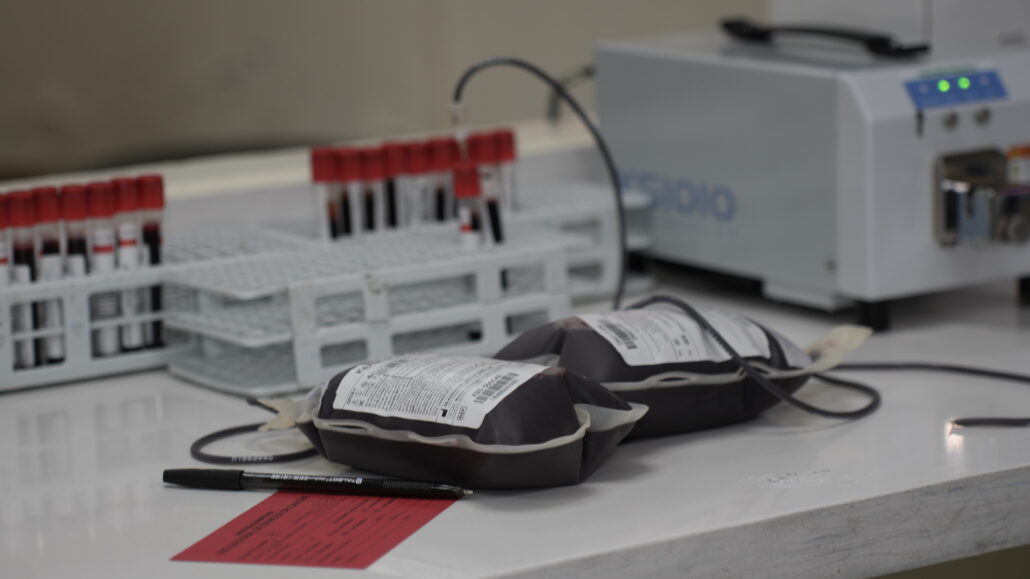
Everything begins with a voluntary donor, whose generosity makes the difference. Before the extraction, doctors perform an evaluation to ensure that the person is in optimal condition to donate. If everything is in order, 450 ml of blood are extracted, enough to save up to three lives. After donation, the blood undergoes strict testing to rule out diseases such as HIV, hepatitis B and C, and syphilis. Then, it is separated into its essential components: red blood cells, plasma, and platelets, each with specific uses in medical treatments. The Blood Bank of the Red Cross is the largest in the country and distributes units to public and private hospitals, especially in emergencies such as accidents, surgeries, and complicated childbirths. Despite high demand, the culture of voluntary donation remains low. According to the Red Cross, 99% of donations in the country are made by replacement, that is, when a family member or friend urgently needs blood. To change this reality, it is essential that more people join the small percentage of volunteer donors. "Each drop of donated blood is a hope for life."







