Spanish


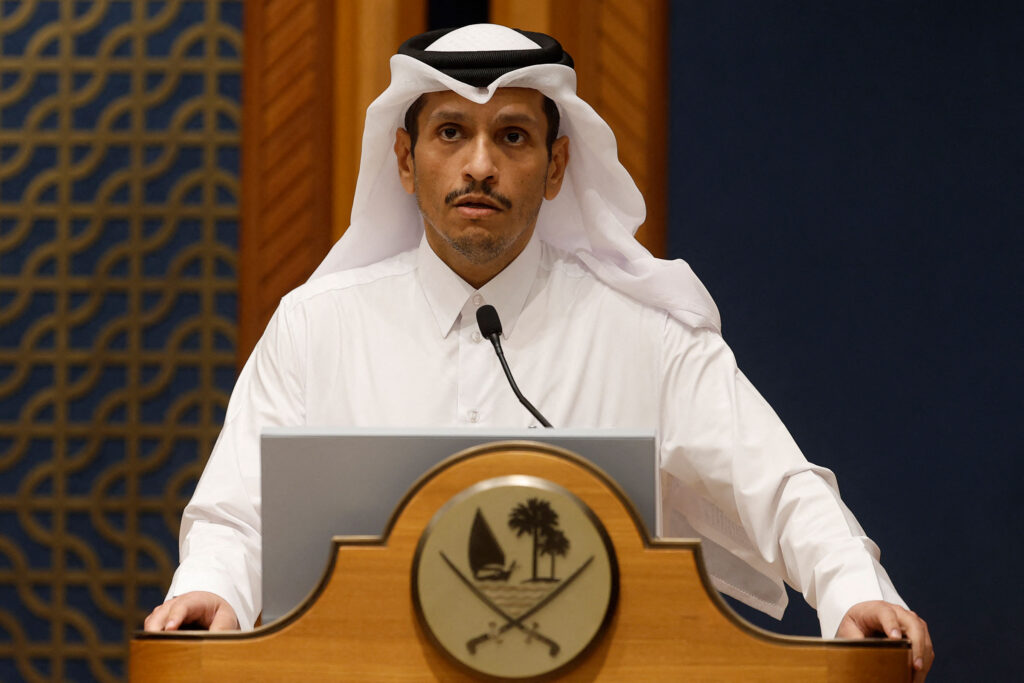
Doha,- The Foreign Minister of Qatar, Mohamed bin Abdulrahman, warned his Iranian counterpart, Abás Araqchí, on Saturday about the consequences that the continuation of the blockade in the Strait of Hormuz could generate for the world supply of energy and food.
The warning was made during a telephone conversation between both officials, in which they discussed the progress of diplomatic negotiations and international efforts to avoid an escalation of the conflict in the Persian Gulf, according to the Qatari Ministry of Foreign Affairs. During the dialogue, Doha reiterated its support for mediation initiatives aimed at achieving a peaceful resolution to the crisis and called for the cooperation of all parties involved to reduce the risk of a further deterioration of the regional situation.We recommend reading: UN warns that the blockade of the Strait of Hormuz threatens to cause a global recession
Bin Abdulrahman insisted that freedom of navigation constitutes a "fundamental and non-negotiable" principle, warning that the closure of the strait or its use as a mechanism of pressure would further aggravate the crisis and affect strategic interests of the countries in the region. Furthermore, the Qatari official warned of the "negative repercussions" that the situation could provoke in the global supply of oil, gas, fertilizers and other essential goods, in addition to affecting the stability of markets and global supply chains. In recent days, the Secretary-General of the United Nations, António Guterres, also expressed concern about restrictions on navigation in the area, noting that these already impact sectors such as energy, transportation, industry, and food.We recommend reading: Merkel calls on Iran to negotiate and free the Strait of Hormuz
For his part, Araqchí has maintained contacts with several Gulf countries amid uncertainty about a possible agreement between Iran and the United States. US President Donald Trump recently stated that the latest Iranian proposal in the negotiations is "unsatisfactory." According to press reports, Tehran would have proposed, through Pakistan as a mediator, the reopening of the Strait of Hormuz in exchange for the lifting of US restrictions on Iranian ports and vessels. The parties agreed on April 8th an initial two-week truce after 39 days of clashes, a measure that was subsequently extended indefinitely to facilitate talks between Tehran and Washington. However, negotiations remain stalled due to tensions related to control of the strait.We recommend reading: U.S. asks the UN to create a coalition to guarantee the passage of ships through the Strait of Hormuz
In another context related to the regional crisis, the authorities of the United Arab Emirates announced this Saturday the full restoration of normal air operations in its airspace, following the restrictions applied after the start of military offensives between the United States, Israel, and Iran. The General Civil Aviation Authority of the Emirates reported that the decision was made after a comprehensive assessment of operational and safety conditions, although it clarified that permanent surveillance will be maintained to ensure air safety.