
 Spanish

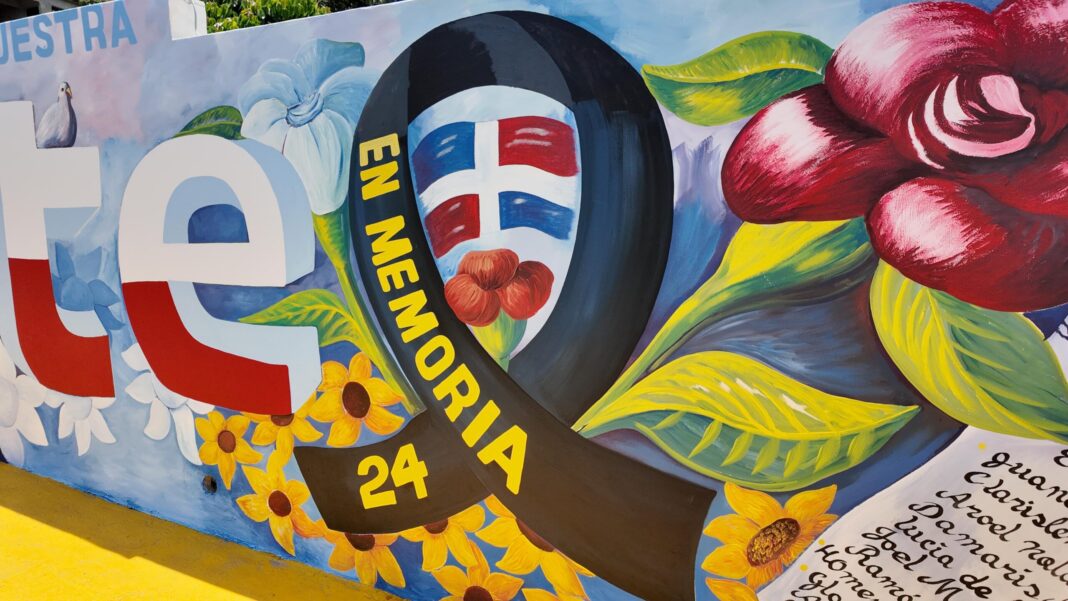

Tomás Rojas, one of the residents of the sector and participant in the mural's creation, explained that along with an artist and two other people, they began painting after requesting authorization from Sedesa to use the wall. "We did it since Holy Week. We spent more than a month and a half. We did it with our soul, with a broken heart. I live right in front and knew many of the victims, like Milagros, Andrés, and a couple who lived on the same street," he recounted, moved.
The mural includes flowers, doves, a black ribbon with the Dominican flag, and a list with the names of the deceased, surrounded by symbols of life and hope. “We are proud of what we did, but also very sorry. This is our way of paying tribute to them,” added Tomás, while they were finishing the details of painting and beautifying the sidewalks.
Art can also be protest, memory, and solace. Amidst the pain for the lives lost, the demand for justice and truth grows, as there are no individuals held responsible for the tragedy so far. The mural, now a symbol of collective resistance, will remain as a testament to what happened and as a promise that they will not be forgotten.




