
 Spanish

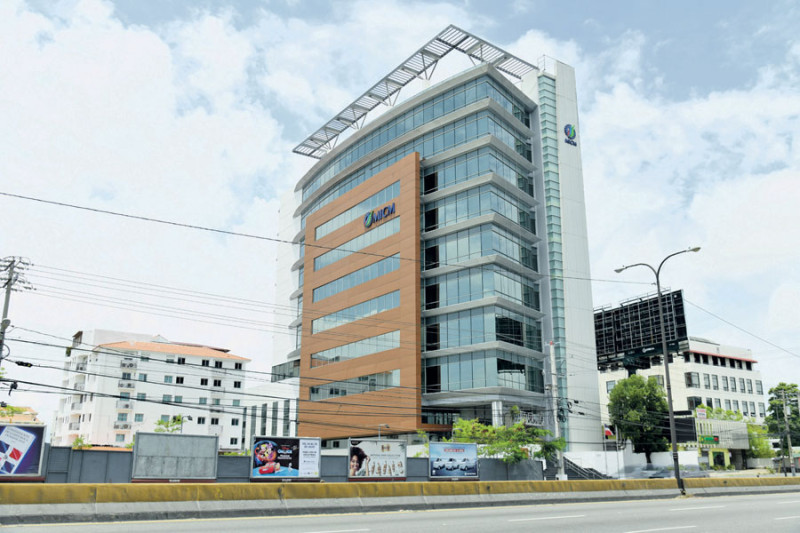

The audit conducted by the Chamber of Accounts of the Dominican Republic to the Ministry of Industry, Commerce and Mipymes (MICM) for the period 2015-2019, reveals that the building that currently houses the offices of that entity, was purchased in January 2017 for RD$650 million pesos more expensive than what is established by an appraisal of the Banco de Reservas carried out a month before the lease with option to buy.
A report from the General Directorate of Administration and Risk Control of the Reserve Bank reflected an appraisal carried out on December 16, 2016, of RD$840,838,000 pesos, following a market investigation to study the value of the land and study the project budget.
Then in the same report, another appraisal is cited to determine the value by the replacement method of RD$814,495,488.
However, the property was purchased by the same Banreservas 33 days later for an amount of US$31 million dollars, equivalent to RD$1,464 million pesos, calculated at RD$47.25, the exchange rate at that time.
After being purchased by Benreservas, the building was leased by the MICM with a contract until December 31, 2036, in a contract signed between the MICM represented by Juan Temístocles Montás and Banreservas, represented by former administrator Simón Lizardo.
“The difference can be quantified at RD$650,154,512, without there being any justification for the amount of RD$1,464,750,000 established in the contract between the bank and Diseño Integral,” states the audit published this Monday.
Then an appraisal report from the General Directorate of Administration and Risk Control was verified, with an appraisal of RD$1,468,601,033.90, made on May 15, 2017, four months after the first appraisal for RD$814,595,488.88 and three months after the signing of the contract.
To these questions from the Chamber of Accounts, former ministers Juan Temístocles Montás and Nelson Toca Simó responded through communication that the Banco de Reservas was a mortgage creditor of the building, which had overdue debt pending payment, therefore it was of utmost interest for the bank to define the fate of the aforementioned property.
They also opposed the arguments of the Chamber of Accounts regarding a violation of Law 340-06, as the Banco de Reservas was an autonomous entity of the State with its own assets and therefore is covered by the exclusions of Law 340-06.However, the Chamber of Accounts believes that the Reserve Bank was used to benefit a third party and concluded that the financial lease of the building in question was carried out without observing Law 340-06 on Public Procurement and Contracting and its modifications and without the principles of equity, publicity and efficiency that should govern public purchases.





