
 Spanish

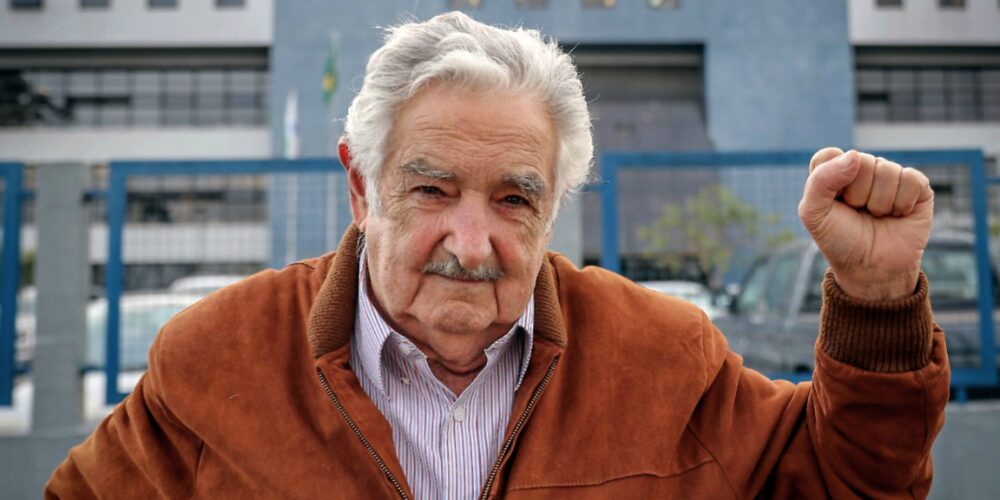

José Alberto Mujica Cordano, also known as "Pepe" Mujica, was a former guerrilla, politician, and farmer born in Montevideo, Uruguay on May 20, 1935. He served as president of the Oriental Republic of Uruguay from March 1, 2010 to March 1, 2015.
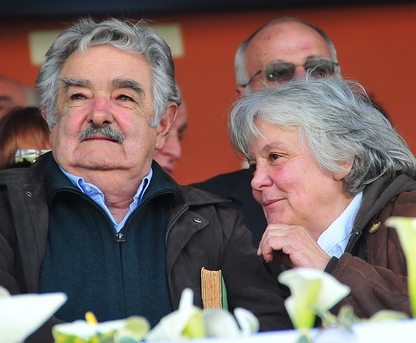
Son of Demetrio Mujica Terra and Lucy Cordano Giorello. Mujica was born into a family with scarce resources and grew up in a neighborhood on the outskirts of Montevideo. His father was a small landowner who went bankrupt shortly before he died, in 1940, when Mujica was six years old.
He attended primary and secondary school at the public school and high school in the neighborhood where he was born. After completing the basic cycle, he entered high school at the Alfredo Vásquez Acevedo Institute, a cycle that he did not manage to finish.
José "Pepe" Mujica is married to Lucía Topolansky, former member of the Tupamaros and the 17th Vice President of Uruguay since September 13, 2017. They married in 2005 after many years of living together. They have no children.
Globally known for his austere lifestyle, his honesty, and his humanist discourse.
Stage as a Guerrilla Fighter
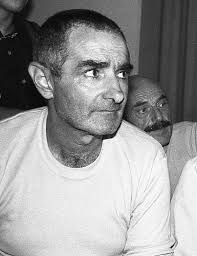
In his youth, he was a militant of the National Liberation Movement-Tupamaros, a left-wing guerrilla group that fought against the Uruguayan government in the 60s and 70s. In armed confrontations he was wounded by six bullets. He was arrested four times and, on two occasions, he escaped from the Montevideo prison of Punta Carretas.
He was arrested several times and spent almost 15 years in prison, much of it in extreme conditions and isolation, during the military dictatorship (1973–1985). He was one of the Tupamaros leaders that the civic-military dictatorship took as "hostages", which meant that they would be executed if their organization resumed armed actions.
Political Life
After the return to democracy, Mujica was released, benefiting from Law No. 15,737 of March 8, 1985, which decreed an amnesty for political, common, and military crimes related to these, committed from January 1, 1962.
Some years after the democratic opening, he created, together with other referents of the MLN and other left-wing parties, the Movimiento de Participación Popular (MPP), within the Frente Amplio. In the 1994 elections he was elected deputy for Montevideo for the XLIV Legislature. In the 1999 elections he was elected senator. Then he went on to hold the position of Minister of Livestock, Agriculture and Fisheries between 2005 and 2008.
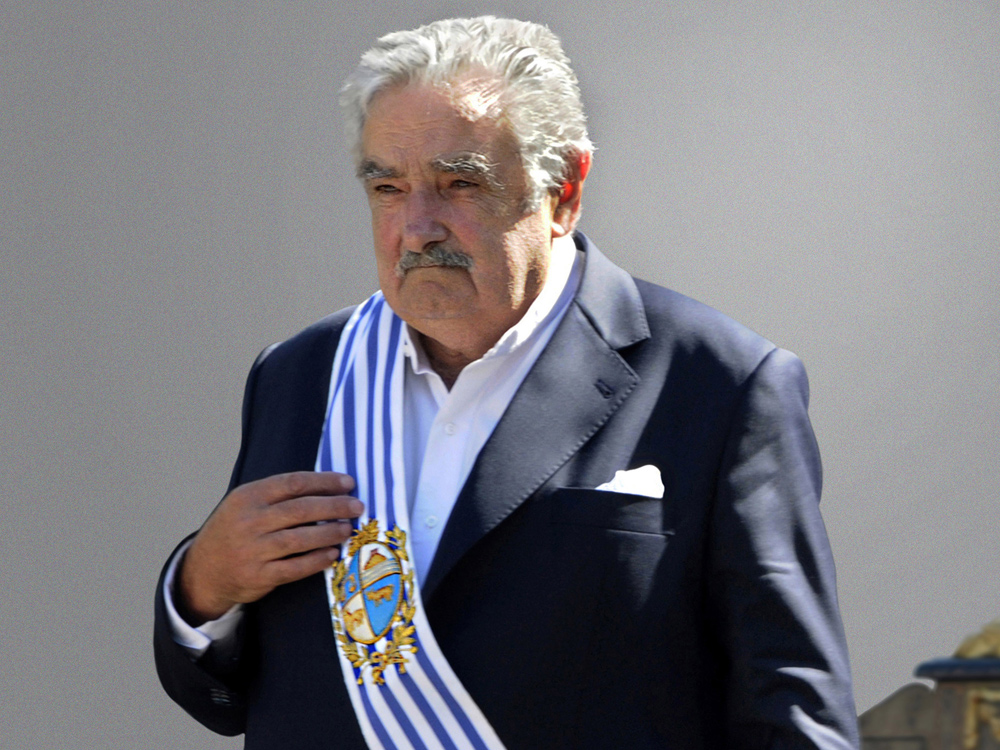
In 2010 he was elected president of Uruguay, a position he held until 2015. Mujica assumed the presidency of Uruguay on March 1, 2010, becoming the 40th president of the Oriental Republic of Uruguay.
It was a campaign focused on the continuity of progressive policies, with an emphasis on social justice, education, and civil rights. His election symbolized strong support for the Uruguayan left and a turn towards a more humane policy, simple and far from the traditional privileges of power.
His presidency was marked by progressive social reforms, such as the legalization of same-sex marriage, the regulation of cannabis, and the promotion of public education.
The axes he defined during this period were education, security, environment and energy, and the opposition political parties with parliamentary representation were convened to integrate working commissions for the elaboration of policies.
Legacy of Pepe Mujica
Pepe Mujica retired from active politics in 2020 due to health reasons (mild multiple sclerosis). His thinking has been studied and cited in universities, social movements, and political speeches worldwide.
The former Uruguayan president has been admired worldwide for living simply: he rejected the luxuries of the presidential office, donated most of his salary, and lived on his modest rural farm. His figure remains a symbol of coherence, honesty, and ethical leadership.
He was nicknamed “the world's poorest president”, although he said:
“Poor is not the one who has little, but the one who needs infinitely more.”
Death
Former President Mujica passed away on Tuesday, May 13, 2025, in Montevideo at the age of 89, a year after a malignant tumor was discovered in his esophagus. In his farm in Rincón del Cerro, he received palliative care to cope with the pain.
His death was confirmed by President Yamandú Orsi on his X account.





