
 Spanish

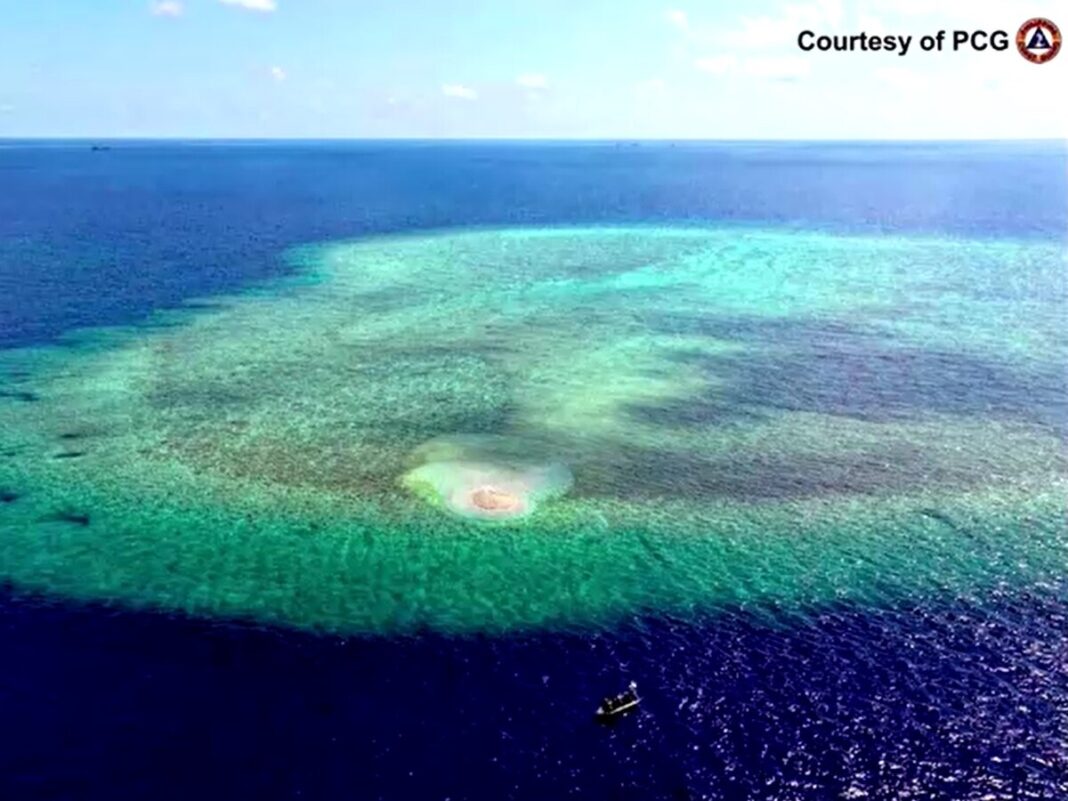

Beijing.- China has deployed a new floating barrier in Scarborough Shoal, a disputed territory with the Philippines in the South China Sea, according to satellite images analyzed by experts and released by space observation companies, amid growing tensions between the two countries.
The image, captured by the geospatial company Satellogic and distributed by the American firm SkyFi, shows a structure that blocks the entrance to the reef lagoon, known as Huangyan in China and Bajo de Masinloc or Panatag Shoal in the Philippines.
Neither the Chinese Ministry of Foreign Affairs nor the Philippine Coast Guard immediately responded to inquiries about the incident, according to the Hong Kong newspaper South China Morning Post, which released the information this Wednesday.
"New satellite imagery shows an illegal floating barrier installed by the People's Republic of China at the mouth of Scarborough Shoal," said Luke Fischer, CEO of SkyFi, on social media.
You can read: Pentagon will give access to journalists from conservative media
According to Ray Powell, maritime security expert and director of the SeaLight project, who analyzed the high-resolution images, the photograph dates from October 8th. "It's not the first time China has installed a barrier on the reef; the intention seems to be to restrict access to the lagoon," he said. The reef, located about 220 kilometers west of the Philippine island of Luzon, has been under Beijing's control since a naval standoff with Manila in 2012 and has been a recurring scene of clashes between coast guards of both countries. Last week, China claimed to have "expelled" two Philippine reconnaissance aircraft near the atoll, a day after Manila denounced "aggressive interference" by a Chinese helicopter and fighter jet during a routine flight. Furthermore, in September, Beijing announced its intention to declare Scarborough Shoal a nature reserve, a move rejected by the Philippines, which considers the enclave to be within its exclusive economic zone. The Chinese think tank South China Sea Strategic Situation Probing Initiative defended on social media that the new installation would be "a response to the provocative behavior of the Philippines" and that "China has the right to act within its sovereignty." Manila and Beijing maintain sovereignty disputes in the South China Sea, through which around 30% of global trade circulates and which houses 12% of the world's fishing grounds, in addition to having potential oil and gas deposits. Despite the 2016 ruling by the Permanent Court of Arbitration in The Hague, which favored the Philippines in its fight for sovereignty over some of the disputed islands and reefs, Beijing continues to claim almost the entire sea. Since the arrival of Ferdinand Marcos Jr. to power in 2022, the Philippines has shown more firmness in the defense of its territory, against the claims of practically the entire sea by China, airing its complaints about the frequent clashes between ships of both countries.




