
 Spanish

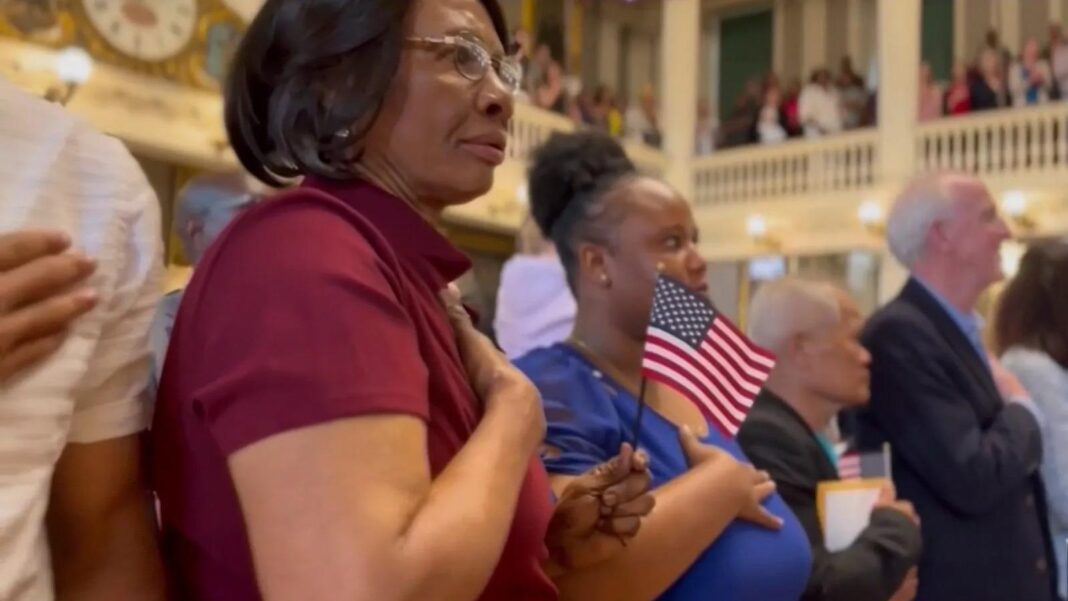

New York. — What should have been a reason for tranquility for thousands of naturalized immigrants in the United States, has today become a new source of uncertainty. A memorandum issued by the Department of Justice has awakened widespread fears in migrant communities, particularly in New York, where more than 2.7 million naturalized citizens reside.
The provision, announced in mid-June by the Trump administration, establishes new guidelines for investigating and potentially revoking citizenships acquired through naturalization, in cases involving serious crimes, omissions during the process, or risks considered relevant by the authorities.
"This is an attempt to silence those of us who fight for a more just city. But we will not back down," said Mamdani. For many, U.S. nationality was the last step to leave behind years of legal vulnerability. Today, that status seems to be under review. Experts agree that although revocation procedures are complex, lengthy, and require solid evidence, the mere possibility already affects thousands of people emotionally and psychologically. The lawyers' recommendation is clear: do not take unnecessary risks, seek professional guidance before starting or continuing any immigration process, and do not renounce the exercise of acquired citizen rights. KEY FIGURES
25 million naturalized citizens in the U.S. 2.7 million reside in New York 818,500 new naturalizations in fiscal year 2024 300 revocation cases from 1990 to 2017 10.6% of new citizens in 2024 were from New York
You may be interested in: http://Trump says he is following the situation in Venezuela «with great interest» and does not want «its oil»
José M., originally from Ecuador, fondly remembers his oath as a U.S. citizen in Brooklyn last year. After nearly two decades living in the country, married to an American and father of two children born here, he felt that his life had finally achieved stability. However, the recent federal measure has him on alert. "I have complied with everything, but now I wonder if past mistakes, such as having lost my status at the beginning or having worked without papers, can be used against me," he expressed. "I no longer have the confidence to leave the country. I canceled my vacation for fear of not being able to return." María López, a permanent resident of Dominican origin, began her citizenship application two months ago. She thought that taking that step would be a way to protect herself from immigration changes. But now she doubts if it was the right decision. “I am concerned that any detail or misunderstanding in my application could become an excuse to disqualify me. One feels that even as a citizen one is not safe.”Although denaturalization has historically been a rare process —with an average of just 11 cases annually for almost three decades—, the new approach of the Republican administration introduces a broader margin of interpretation that worries experts and human rights defenders.
Immigration lawyer Andrés Santamaría Cortés, from the organization Make the Road NY, warns that this memorandum could open the door to a "discretionary hunt", in which minor or old backgrounds are used to justify revocation procedures. “The most dangerous thing about the text is that it allows for the evaluation of ‘other cases’ that the government considers relevant. That leaves a lot to the discretion of the prosecutors, and can lead to abuses or arbitrary decisions,” he explains. However, he clarifies that these criteria have not yet been applied in practice, and that it is essential to avoid falling into collective panic. Federal policy prioritizes investigating citizenships granted to individuals linked to activities such as terrorism, human rights violations, fraud, sexual abuse, financial crimes, or membership in criminal organizations. However, the memorandum leaves open the option of acting in "other cases" considered relevant, an ambiguity that has already been criticized by the National Association of Criminal Defense Lawyers. The fear, activists point out, is not only based on the legal implications, but on the political message it represents: the idea that even those who have complied with the entire process can be considered "conditional citizens". Local leaders and migrant advocates have reacted firmly. The state's attorney general, Letitia James, has vowed to use all legal tools to protect the immigrant community. "Citizenship is not a revocable privilege. It is an acquired right that must be respected," she stated in recent declarations. Voices are also raised from social organizations. Arlette Cepeda, from La Colmena, assured that fear has increased and that misinformation can amplify the vulnerability of those who already live in tension. "We ask the community to inform itself, to rely on reliable organizations and not to make decisions without legal advice." New York City mayoral candidate Zohran Mamdani has been one of the most direct critics of this policy. He himself was naturalized seven years ago, and claims to have been singled out by Trump himself as a "target for detention and deportation" for his stances against ICE and in defense of immigrants."This is an attempt to silence those of us who fight for a more just city. But we will not back down," said Mamdani. For many, U.S. nationality was the last step to leave behind years of legal vulnerability. Today, that status seems to be under review. Experts agree that although revocation procedures are complex, lengthy, and require solid evidence, the mere possibility already affects thousands of people emotionally and psychologically. The lawyers' recommendation is clear: do not take unnecessary risks, seek professional guidance before starting or continuing any immigration process, and do not renounce the exercise of acquired citizen rights. KEY FIGURES
25 million naturalized citizens in the U.S. 2.7 million reside in New York 818,500 new naturalizations in fiscal year 2024 300 revocation cases from 1990 to 2017 10.6% of new citizens in 2024 were from New York





