Spanish

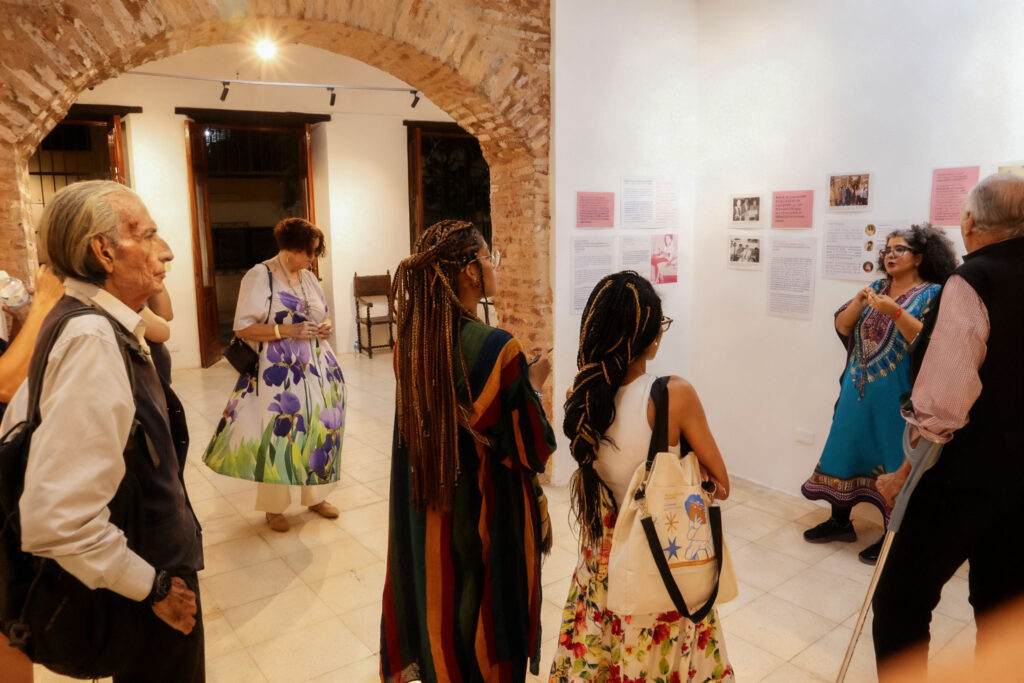
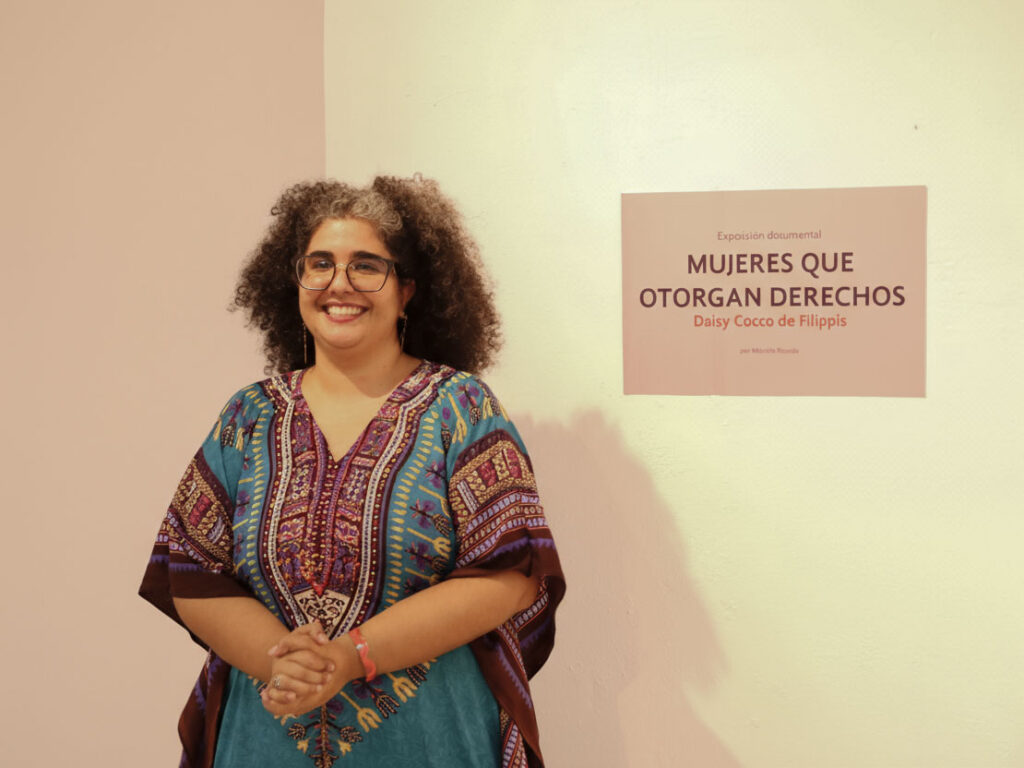
The itinerant and ephemeral exhibition Mujeres que otorgan derechos (Women Who Grant Rights) is presented at the Silvano Lora Public Workshop, a documentary exhibition that highlights the life and legacy of the Dominican academic Daisy Cocco de Filippis, carried out as part of Michelle Ricardo's research work at the Dominican Studies Institute of City College of New York.
The proposal starts from a key premise: the defense of human rights is not always exercised from street activism. It is often built from unsuspected spaces such as educational, academic, and cultural ones, where lives are also transformed, public policies are influenced, and paths of justice are opened. Although Daisy Cocco de Filippis does not define herself as an activist, her career as an academic, literary critic, writer, teacher, and university president has led to concrete milestones in the defense of fundamental rights. Her migrant status shaped her sensitivity towards social justice and her commitment to the community. Inspired by her grandmother, Cocco de Filippis began as a professor of Spanish and Latin American Literature at York College and later took on high-impact positions such as president of Naugatuck Valley Community College (2008-2020) and current president of Hostos Community College in New York.You can also read: AGN and the Instituto Duartiano inaugurate Duarte's documentary exhibition and present a book | De Último Minuto
During her tenure at Naugatuck Valley, she transformed the campus with projects that expanded access to African-American and Latino students, promoted literature-inspired gardens as spaces for learning and reflection, implemented student transportation services, established daycare centers so that single mothers could access higher education, and also ensured that the city built roads and sidewalks that facilitated access for students with limited resources, given that the university campus was located on a remote piece of land with difficult access, so that only middle and upper-class students could access it, thus raising graduation rates above a thousand students annually, plural students in gender, ethnicity, and social class.The exhibition argues that by rescuing and disseminating Dominican women writers marginalized from the "national parnassus," as well as their work in favor of access to higher education, Cocco de Filippis has upheld principles of the Universal Declaration of Human Rights (UDHR), such as: Article 2: equality without distinction of race, sex, or place of birth. Article 18: Freedom of thought and conscience. Article 19: Freedom of opinion and expression. Article 27: right to participate in culture, art, and science. Article 26: Right to Education. The exhibition recalls that the Dominican Republic is a historical cradle of the defense of human rights in the continent, with examples such as the Advent sermon of Fray Antón de Montesinos or the struggle of the Mirabal sisters. Currently, in the face of harassment towards defenders in the country, this exhibition proposes a counter-narrative: "defending rights is also educating, investigating, giving voice to those who have been invisibilized, expanding the scope of access opportunities and strengthening communities." The exhibition had its first stop at the library of City College of New York, it is currently in Santo Domingo and will continue its tour in different parts of the country and abroad. Michelle Ricardo's research will include in 2026 new exhibitions dedicated to other Dominicans residing in the United States, such as Estela Vásquez and Ilka Tanya Payán, completing a cycle of memory and recognition of women who, from different fields, have granted rights. With Women Who Grant Rights, the figure of Daisy Cocco de Filippis is recognized not only as an academic, but also as a reference for how education, literature, and cultural management become legitimate and powerful forms of defense of human rights. Michelle Ricardo joins the Alliance of Defenders of Human Rights of the Dominican Republic, whose purpose is to articulate efforts, strengthen capacities, and establish effective protection mechanisms for those who face direct risks for their work."I have based my life on giving voice and treating fairly the work of authors who are not studied enough," she expressed in one of her interviews.