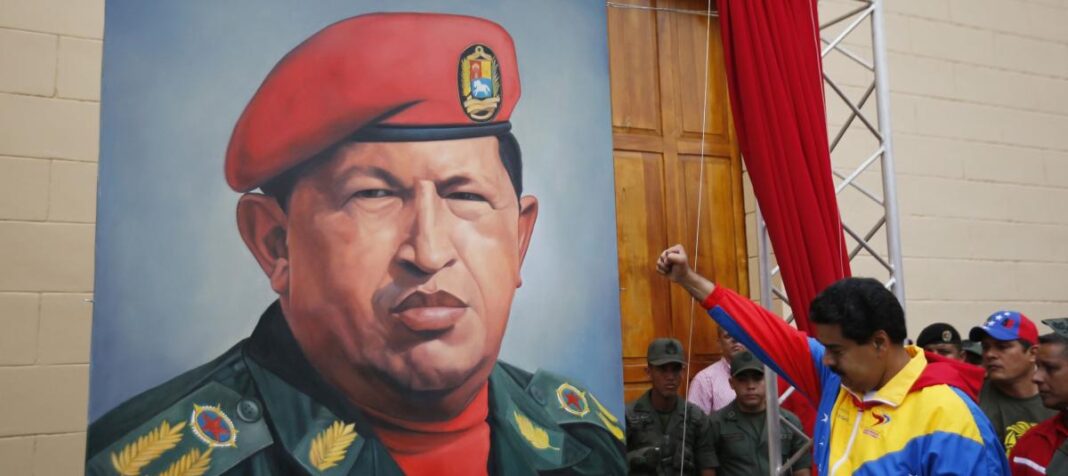
Caracas.– Chavismo has marked the political history of Venezuela for more than two decades, from the irruption of Hugo Chávez on the public scene to the complex scenario of national and international tension that is being experienced in 2026. Below, a tour of the main milestones that defined this political process.
Origins of Chavismo
In 1992, Hugo Chávez, then a lieutenant colonel in the Army, led a failed coup against President Carlos Andrés Pérez. Although the attempt failed, his phrase “for now” projected him as a national figure.
Six years later, in 1998, Chávez won the presidential elections with 56% of the votes, promising a profound transformation of the Venezuelan political system.
Arrival to power and consolidation
In 1999, Chávez assumed the Presidency, promoted a Constituent Assembly and promoted a new Constitution that changed the country's name to Bolivarian Republic of Venezuela.
He was re-elected in 2000, already under the new constitutional framework, consolidating the power of the Executive. In 2002, he faced a coup that removed him from power for 48 hours, an episode that deepened political polarization.
In 2003, an oil strike paralyzed PDVSA for more than two months, after which the government fired thousands of workers from the state-owned company.
Re-elections and 21st century socialism
Chávez survived a revocation referendum in 2004 and was re-elected in 2006, announcing the deepening of "21st century socialism." In 2007, he lost his first election when a constitutional reform failed, although in 2009 he managed to eliminate the limits on indefinite re-election.
In 2012, he won his fourth presidential election, already affected by a cancer he kept secret.
Chavism without Chávez
Hugo Chávez died in March 2013, and Nicolás Maduro won the elections by a narrow margin. From 2014, anti-government protests left dozens dead.
In 2015, the opposition obtained the majority in the National Assembly, which led to a confrontation between powers. In 2016, the Supreme Court limited the functions of Parliament and blocked a recall referendum.
Institutional crisis and international isolation
In 2017, the government convened a National Constituent Assembly, unrecognized by the opposition and several countries. The protests of that year left more than a hundred dead.
Maduro was re-elected in 2018 in questioned elections, which led to a tightening of international sanctions. In 2019, the deputy Juan Guaidó proclaimed himself interim president, being recognized by the United States and other countries, although Chavismo maintained control of power.
Migration and Political Stagnation
Between 2020 and 2022, Chavismo regained control of Parliament, while the UN estimated that more than 7 million Venezuelans had migrated. Signs of partial economic stabilization were recorded, without resolving the humanitarian crisis.
In 2023, the opposition held primaries, won by María Corina Machado, who remained disqualified. The 2024 elections took place amid questioning and adjustments to sanctions by the United States.
2025–2026: Critical Point
By 2025, 26 years after Chávez came to power, Chavismo maintained institutional control, although analysts warned of signs of exhaustion of the model and the absence of a clear democratic transition.
In 2026, the scenario escalated dramatically after a military intervention by the United States, according to preliminary reports. Nicolás Maduro and his wife would have been arrested, with the collapse of presidential command and a climate of high internal tension being recorded. International organizations have called for containment, protection of civilians and a political solution to the conflict. 
 Spanish