
 Spanish

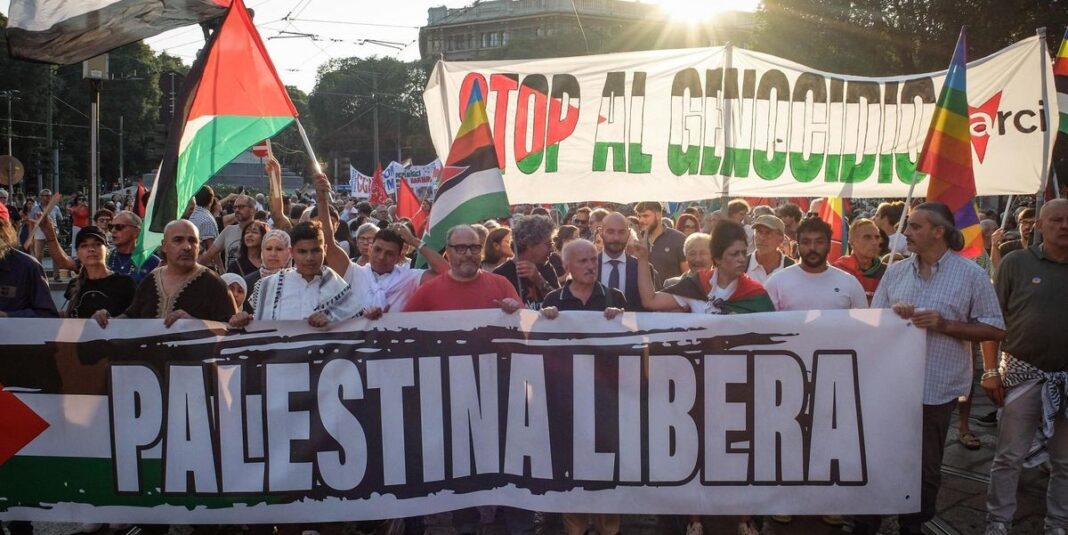
The strike called this Monday throughout Italy to protest the situation in Gaza is causing delays and cancellations in public transport, while thousands of people are protesting in more than 70 cities in the country, marches that have also been joined by student groups.
Several unions have organized this 24-hour nationwide strike that is affecting public transport, schools, universities, and port workers, who have stopped work and taken to the streets to become "a tide" that "breaks with the terrorist state of Israel," according to the organizers.
"There is an urgent need to stop operations, protest against the ongoing genocide in Gaza, the complicity of the Giorgia Meloni government with the State of Israel, and stop the war and the arms race," explained the USB union, one of the organizers.
The strike also affects rail traffic, which has led to changes in schedules or train cancellations, but without major problems.
In Rome, the metro lines are operating normally and only at Termini station is closed by police order in anticipation of the demonstration called by the USB in which about 20,000 people are participating, according to official sources.
Also, line 4 of the Milan metro (north) is closed, but the rest of the lines are running normally, although there will be traffic problems due to the closure of some streets due to the demonstration.
In Naples (south), the metro is running normally, but regional trains have suffered several cancellations with workers who have occupied the tracks to prevent the circulation of some for several minutes.
Some pro-Palestinian student associations have joined the strike and lessons are expected to be suspended in some universities, such as in Turin (north), where the entrance to the Eianudi university campus has been blocked.
Student marches are also going through the city of Genoa (north), while some 600 workers from the Genoese port, one of the most important in Italy, are blocking access to the port area, from where the main demonstration of the protest will depart this afternoon.
The unions have not yet provided data on the strike, but the Minister of Transport, Matteo Salvini, has already assured that "it has had a very low participation."
"There were no cancellations on Intercity trains, while four or five cancellations were reported on Frecciarossa (high-speed) trains, and less than 20% on regional trains," he added.





