


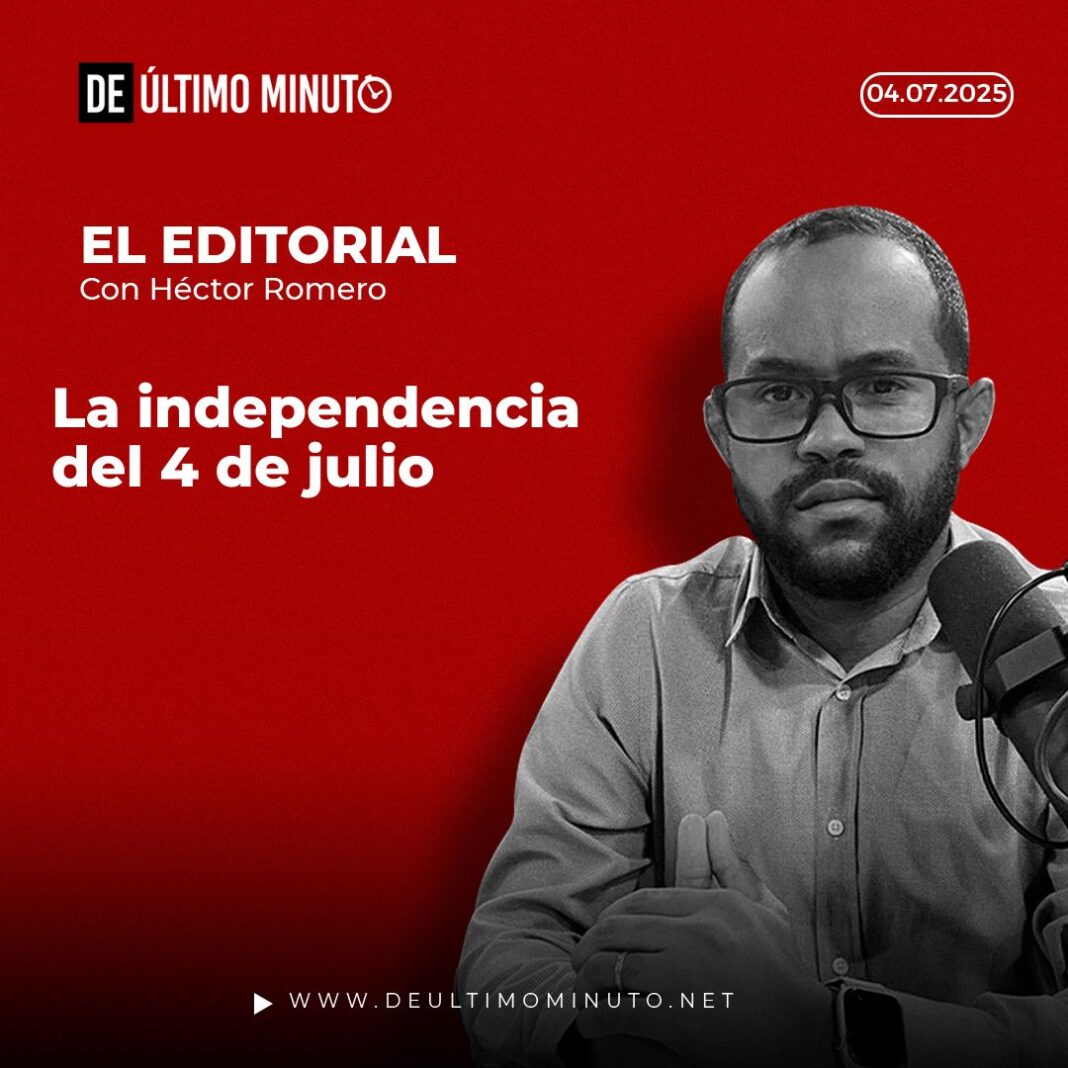

The Independence of July 4th

This July 4th, the United States commemorates the 249th anniversary of its independence, a date that marks the beginning of a nation forged in the fight for freedom, civil rights, and self-determination. Since then, this feat has been celebrated in multiple cultural expressions that exalt patriotic pride and the sense of national belonging.

However, on this new anniversary, millions of citizens inside and outside U.S. territory face a celebration laden with uncertainty and contradiction. The immigration policies implemented in this last year, especially during the current administration of President Donald Trump, have generated deep divisions about what it really means to be American.

Migrants who have built their lives with effort and sacrifice, contributing to the economic and cultural development of the country, today live with the constant fear of being deported or separated from their families. Many of them wonder if the path taken to achieve an American dream that seems increasingly unattainable was really worth it.

Throughout the 50 states, including those residing abroad, this celebration no longer represents a reason for joy for everyone. For many, it is a painful reminder of policies that have affected the emotional, economic, and family stability of entire communities.

The United States was founded on principles of equality, liberty, and justice. But today, those words must be more than a historical quote: they must be translated into concrete actions that include, protect, and recognize all who call this nation their home, regardless of their origin.

This July 4th forces us to reflect. Not only on the past that is celebrated, but on the present that is lived and the future that is built. Because true independence is not only what was won in 1776, but what is defended every day with humanity, dignity and solidarity.

In the spotlight

  • aplicacion - banner 300px

  • banner altices 300x250 junio 2025

Explore more

When corruption is not protected by the presidential band

In the Dominican Republic, presidents don't fall because of the opposition. They fall because of something more intimate and devastating: their own family. When corruption shares the same last name as the presidential band, it ceases to be a case and becomes a sentence. It's not a contract that is judged: it's the entire credibility […]

We have a permanent constitutional back and forth

In 2015, an internal crisis within the Dominican Liberation Party (PLD) forced the leadership of that organization to promote a constitutional reform to enable President Danilo Medina, who had been elected in 2012 through a constitution that prohibited consecutive re-election. Medina was eligible to try to return in 2020, that is, after a period, a […]

When the slander is coordinated and clumsy

For days, Leonardo Aguilera has been the target of a campaign as evidently coordinated as it is poorly executed. Defamation, slander, and half-truths circulate on networks and certain media with suspicious synchronicity. Who's sending them? Who's biting their nails? The formula is old: fabricate scandals where they don't exist, repeat lies until they seem like […]

The TV changed in DR

In 2025, live news streaming via YouTube on smart TVs leaves traditional television behind and transforms news consumption in the Dominican Republic.By: Pavel De Camps Vargas Who's dominating your home screen today? It's not traditional television. In the Dominican Republic, YouTube has taken over the television in this 2025, redefining the map of news consumption. […]

¿To govern or campaign? Abinader made it difficult

"I am a tolerant and democratic president, but everything has a limit... We will continue to govern for the people and, for that reason, I say to all pre-candidates and their coordinators: proselitizing acts to officials are not allowed. If they want to campaign, they must leave their positions." Thus spoke the head of state, […]

Development for the border

If anything has been highlighted by the prolonged Haitian crisis, it is the historical debt that the Dominican Republic has with its own border. The provinces that guard that line of more than 390 kilometers not only face the direct consequences of the collapse of the Haitian state, but have also been, for decades, forgotten […]


