
 Spanish

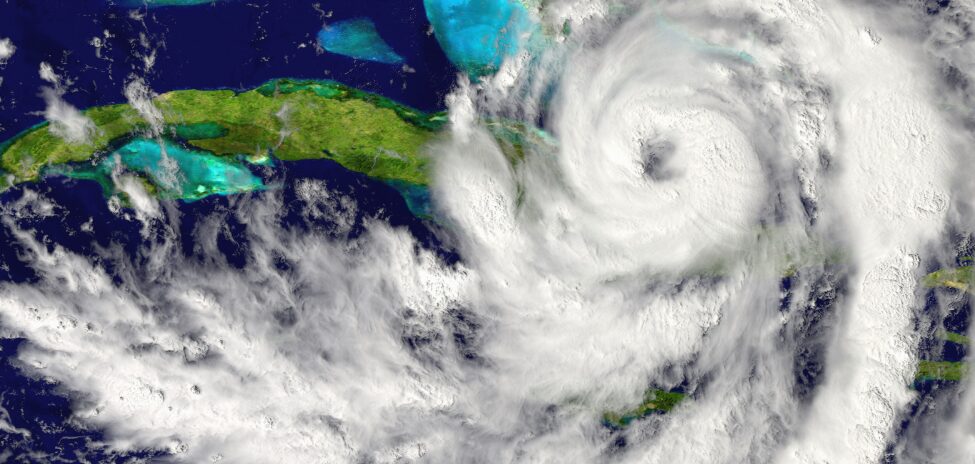

Havana.- The Cuban Institute of Meteorology (Insmet) forecasts a 2026 hurricane season "less active than normal", with the possible formation of five hurricanes in the Caribbean and with a 40% probability that one will affect the island.
According to an Insmet report, that value is slightly higher than the average climatological hazard for the Caribbean country, which is 35%, while the possibility of a tropical storm affecting Cuba reaches 75%.The Cuban forecast center indicates that during the hurricane season in the Atlantic, the Gulf of Mexico and the Caribbean Sea 2026 - which runs from June 1st to November 30th - the formation of 11 tropical cyclones is forecast throughout the North Atlantic basin.
Of those meteorological phenomena, five could reach hurricane category and of them, only two could be considered of great intensity (category 3 or more out of a total of 5 on the Saffir-Simpson scale), according to the report. Cuban meteorologists also point out that of the total number of predicted tropical cyclones, eight will develop in the Atlantic Ocean area, two in the Caribbean Sea, and one in the Gulf of Mexico. On the other hand, it points out that the possibility of at least one hurricane originating and intensifying in the Caribbean is high, with a 65% probability, while the chances of one from the Atlantic penetrating the Caribbean are 40%. Those forecasts are related to conditions such as the sea surface temperature in the tropical strip of the North Atlantic, which has registered a certain cooling during the last weeks, which does not favor the increase of cyclonic activity, although warm anomalies are currently observed in the Caribbean Sea.You may be interested in: 2025 cyclone season ends slightly below average in number of named cyclones
The last hurricane that hit Cuba was Melissa, in November 2025, which crossed the east of the island as a category 3, with winds of 200 kilometers per hour and rainfall of up to 400 millimeters in some parts of the country. According to the Cuban government, its passage did not leave any fatalities, but it did cause extensive material damage to more than 116,000 homes, 600 medical infrastructures, 2,000 educational centers and about 100,000 hectares of crops, in addition to affecting transport, telecommunications, electricity and water supply infrastructures. Other meteorological agencies, universities, and institutions have also offered the first estimates of the 2026 hurricane season activity and indicated that it will be somewhat below average in its initial forecast with forecasts of about 13 named storms.





