Santo Domingo,.- The National Police affirmed this Thursday that it dismantled a criminal structure dedicated to assaulting taxi drivers who provide their services through digital platforms, after arresting two of its members during an operation carried out in Santo Domingo Este, where a non-lethal pistol was also seized. The detainees were identified as Raulín Daniel […]
Santo Domingo.– The Senate of the Republic approved this Thursday in a single reading and turned into law the legislative project that creates the National Intelligence Directorate (DNI) and regulates the National Intelligence System, an initiative that now goes to the Executive Branch for its promulgation or observation. This is the second time the National […]
Santiago.– National Police agents arrested this Thursday a young woman accused of physically assaulting her mother during an incident that occurred on 7th street in the Cienfuegos sector, in the Santiago Oeste municipality. The affected woman, identified only as Flor, reported that her daughter maintains a violent behavior on a recurring basis, both against her […]
Puerto Plata.– In the midst of pain and outrage, Carlos Manuel Genao, father of the 13-year-old girl Brianna Genao González, demanded this Thursday that the authorities bring to justice and punish with the full weight of the law the two men who allegedly confessed to taking the life of his daughter, who had been missing […]
Santo Domingo.- The National Institute of Forensic Sciences (Inacif), a dependency of the Attorney General's Office, used fire to destroy 616 kilograms, 941 grams, and 785 milligrams of cocaine, marijuana, ecgonine, crack, ecstasy, heroin, hashish, and methamphetamine, seized so far this year. The substances, previously analyzed in the laboratories of the Inacif, included 421 kilograms, […]
Sports Writing (EFE).– British cyclist Simon Yates, member of the Visma | Lease a Bike team, announced this Tuesday his retirement from professional cycling at the age of 33, ending a successful career in which he conquered the Giro d'Italia 2025 and the Vuelta a España 2018, among other important achievements. You may be interested […]
Santiago Rodríguez.- The Minister of Sports, Kelvin Cruz, begins the year 2026 working from this province, where he announced the complete renovation of its sports pavilion, which has already exhausted its useful life of more than 20 years and presents an advanced state of deterioration and leaks in times of rain. You may be interested:Alberto […]
Sports Writing (EFE).- The capture of Nicolás Maduro in Caracas during a United States military operation provoked, since January 3, a wave of reactions in the international sports arena, with pronouncements from athletes of different disciplines and nationalities, as well as direct consequences on the Venezuelan sports calendar. You may be interested inr:Venezuelan Baseball League […]
Santo Domingo.– The renowned audiovisual producer and director Alberto Zayas was officially presented as the General Producer of the opening ceremony of the XXV Central American and Caribbean Games Santo Domingo 2026, whose opening is scheduled for July 24, 2026 at the Félix Sánchez Olympic Stadium. The announcement was made by "Colí", who welcomed Zayas, […]
WASHINGTON (EFE).– There is a before and after Tiger Woods in the history of golf. As he turns 50 this Tuesday, the American celebrates a career that revolutionized the sport, expanded its global reach and turned it into an unprecedented cultural phenomenon, although also marked by injuries, personal scandals and a high physical cost. You […]
Writing.- LG Electronics (LG) today unveiled its "AI in Action" approach at LG World Premiere, the annual event the company holds in Las Vegas before CES. The company highlighted the three fundamental pillars of its strategy: affective intelligence, which has evolved into action-oriented AI; industry-leading products based on technological excellence; and a perfectly coordinated ecosystem […]
Madrid.- Artificial intelligence continues to advance by leaps and bounds and 2026 will be the year in which this technology goes from being a tool capable of assisting those who use it to leading autonomous systems capable of taking operational control in many processes and executing critical tasks without direct human intervention. It also begins […]
Beijing.- China declared this Thursday that the dispute over the operation of the TikTok video application in the US must be resolved "through cooperation" and "in accordance with Chinese laws and regulations". The spokesperson for the Ministry of Commerce, He Yongqian, spoke out after information emerged about the platform's agreements with three investors to create […]
Science Writing- An Ariane 6 rocket from the European Space Agency (ESA) has taken off from the spaceport in French Guiana with two new satellites on board that will join the Galileo constellation and provide greater robustness to the European navigation program, which serves more than half of the world's population. At 5:01 (GMT), as […]
New York .- The technology OpenAI has denied being responsible for the suicide of a 16-year-old who took his own life after interacting with ChatGPT for months, and has attributed his case to an "improper use" of the tool. "The injuries and damages alleged by the plaintiffs were caused or contributed (…) by the misuse, […]
The demonstrations in the city of Minneapolis against the agents of the U.S. Immigration and Customs Enforcement (ICE) have escalated rapidly, following the death of a woman at the hands of one of them this Wednesday. "We are going to find them, and we are going to kill them to hell. They are going to […]
Washington,.- Agents from the Immigration and Customs Enforcement (ICE) shot at two civilians this Thursday, leaving them injured in Portland in a residential area, according to local police. Police officers in the city of Portland, in the state of Oregon, were notified about an unidentified man and woman injured by projectiles, and upon arriving at […]
Panama City.- Copa Airlines announced this Thursday the resumption, starting next Tuesday, and in a phased manner, of its flights to and from Caracas "following the improvement in operational conditions in the airspace", flights that it had suspended since last December 4 amid tensions between the United States and Venezuela. "Copa Airlines informs that, following […]
Mexico City.- Mexico registered an increase of 118 accumulated cases of screwworm in livestock (GBG) between the first and second epidemiological weeks of 2026, going from 13,217 to 13,335 records, according to the monitoring dashboards published by the National Service of Health, Food Safety and Agri-Food Quality (Senasica) and the Ministry of Agriculture. Furthermore, the […]
Toronto (Canada),.- US military authorities have asked a Toronto sex toy store to stop selling one of its products to a US naval base in Bahrain, local media reported. One of the founders of the store Bonjibon, Grace Bennett, stated that the Pentagon included letters in two packages with sex toys (anal plugs) that were […]
The renowned television presenter Laura Bozzo spoke out publicly through a video released on her social media, in which she requested the direct intervention of the President of the Dominican Republic, Luis Abinader, in the face of the shocking case of Brianna, a three-year-old girl who was allegedly abused and murdered by two of her […]
Carolina Herrera, one of the most elegant and respected women in the fashion industry, celebrates her 87th birthday this Thursday, amidst success, recognition, and also the pain of losing her life partner. María Carolina Josefina Pacanins Niño, given name of the renowned Venezuelan designer and businesswoman Carolina Herrera, was born in Caracas, Venezuela, on January […]
Puerto Rico.- Puerto Rican singer Austin Santos, known as Arcángel, revealed today how he felt after quitting marijuana and reducing the amounts of alcoholic beverages he was drinking. "Since I quit smoking, I think more clearly. In fact, I feel faster than everyone around me. Now I find them slow, I don't drink as much, […]
The American rapper P. Diddy sent a letter to President Donald Trump asking for a pardon, according to the president claimed in an interview with The New York Times. However, the president indicated that he does not intend to yield to the musician's request, who was sentenced to 4 years and 2 months in prison […]
Santo Domingo, RD - The confirmation of the murder of the girl Brianna Genao at the hands of her uncles Rafael Rosario Núñez, 52 years old, and Reyes Rosario Núñez, 43, has caused a deep shock in Dominican society, generating reactions of pain, indignation and reflection from different sectors of the country and abroad. Figures […]
In the Dominican Republic, presidents don't fall because of the opposition. They fall because of something more intimate and devastating: their own family. When corruption shares the same last name as the presidential band, it ceases to be a case and becomes a sentence. It's not a contract that is judged: it's the entire credibility […]
In 2015, an internal crisis within the Dominican Liberation Party (PLD) forced the leadership of that organization to promote a constitutional reform to enable President Danilo Medina, who had been elected in 2012 through a constitution that prohibited consecutive re-election. Medina was eligible to try to return in 2020, that is, after a period, a […]
For days, Leonardo Aguilera has been the target of a campaign as evidently coordinated as it is poorly executed. Defamation, slander, and half-truths circulate on networks and certain media with suspicious synchronicity. Who's sending them? Who's biting their nails? The formula is old: fabricate scandals where they don't exist, repeat lies until they seem like […]
In 2025, live news streaming via YouTube on smart TVs leaves traditional television behind and transforms news consumption in the Dominican Republic.By: Pavel De Camps Vargas Who's dominating your home screen today? It's not traditional television. In the Dominican Republic, YouTube has taken over the television in this 2025, redefining the map of news consumption. […]
"I am a tolerant and democratic president, but everything has a limit... We will continue to govern for the people and, for that reason, I say to all pre-candidates and their coordinators: proselitizing acts to officials are not allowed. If they want to campaign, they must leave their positions." Thus spoke the head of state, […]
Shanghai (China).- The consumer price index (CPI), the main indicator of inflation in China, continued to accelerate in December to 0.8%, its highest in almost three years, thus ending the year 2025 at the same levels with which the previous one closed, according to official data released this Friday. The figures from the National Statistics […]
Santo Domingo.- The Central Bank of the Dominican Republic (BCRD) reported this Thursday that the consumer price index (CPI) registered a monthly variation of 0.84% in December 2025. This, according to a statement, largely explained by the combined lagged impact of adverse weather conditions on the production of some agricultural items, which were affected by […]
Santo Domingo - Dominican Republic received 11.866 billion dollars in remittances in 2025, a "record" figure and 10.3% higher than in 2024, the monetary authorities reported this Thursday. The Dominican Central Bank (issuer) said in a statement that the economic performance of the United States was one of the main factors that influenced the behavior […]
Caracas.- The state-owned Petróleos de Venezuela (PDVSA) confirmed this Wednesday that it is in a negotiation process with the United States for the sale of "volumes" of crude oil, after President Donald Trump assured that the Caracas Executive is willing to give them 30 to 50 million barrels of oil. The negotiation is carried out, […]
Madrid.- Oil prices, which had fallen for much of today's session, have changed trend and now show slight increases after the US intervention in Venezuela and after OPEC+ confirmed its decision to maintain the production level until April. According to data from Bloomberg collected by EFE, at 13:00 hours (12:00 GMT), Brent, the benchmark crude […]
Santo Domingo.- The National Press Workers' Union (SNTP) announced this Thursday its action plan for the year 2026, with a view to strengthening that organization and defending the labor rights of its members. Manuel Ureña, general secretary of the SNTP, said to strengthen ties with the union's bases, for which they propose to hold the […]
A place between the Loma and the Atlantic Ocean that becomes a refuge for the traveler's soul. There is a corner located on the north coast, caressed by the breeze that tastes of salt and nostalgia, where the Atlantic merges with the land and leaves its mark on every stone, every wave, every soul. That […]
Lawrence, Massachusetts.— The city's mayor of Lawrence, Brian De Peña, recognized journalist Stephanie Hilario Soto through a proclamation, for her commitment and contributions to the responsible practice of journalism, as well as for her performance in Dominican media. During the event, the mayor highlighted the academic preparation, professional ethics, and versatility of Hilario Soto, who […]
Santo Domingo.- The corporate volunteering program “United for a Dream” of Cementos Progreso Dominicana promoted the initiative “Golden Christmas with Purpose”, with a solidarity day that focused its efforts on raising resources and providing support to the elderly of the Don José María Foundation, in San Pedro de Macorís. Understanding the need to create support […]
While in several countries the last hours of 2025 are still being counted, other nations are already celebrating the arrival of New Year 2026. Due to time zones, the change of year does not occur at the same time all over the world. Below, it is shown how 2026 advances from the first territories to […]
If anything has been highlighted by the prolonged Haitian crisis, it is the historical debt that the Dominican Republic has with its own border. The provinces that guard that line of more than 390 kilometers not only face the direct consequences of the collapse of the Haitian state, but have also been, for decades, forgotten […]
Without a doubt, the tourism sector represents one of the greatest successes of the governments of President Luis Abinader, an area that he already knew well before his arrival at the Presidency of the Republic, due to his experience as a local businessman. Since his swearing-in in August 2020, the Tourism Cabinet was implemented, coordinated […]
This July 4th, the United States commemorates the 249th anniversary of its independence, a date that marks the beginning of a nation forged in the fight for freedom, civil rights, and self-determination. Since then, this feat has been celebrated in multiple cultural expressions that exalt patriotic pride and the sense of national belonging. However, on […]
Today we proudly and gratefully celebrate the fourth anniversary of De Último Minuto, a project that was born with the firm conviction of transforming the way information is reported in the Dominican Republic. In these four years, we have witnessed —and been protagonists— of a revolution in digital journalism, marked by immediacy, technological innovation, and […]
On the eve of celebrating the fourth anniversary of De Último Minuto, we reaffirm our commitment to innovation, technology and, above all, to you: our readers. We are driven by the constant desire to evolve, to do things differently and to keep up with the times. Therefore, today we present two new products that will […]
Santo Domingo.- The seven-year prison sentence against Alexis Medina Sánchez, brother of former President Danilo Medina, marks only the beginning of a much broader process. Experts warn that what will be decisive will not only be the sentence, but how the appeals are resolved and what signals this case sends about the real effectiveness of the judicial system against corruption.
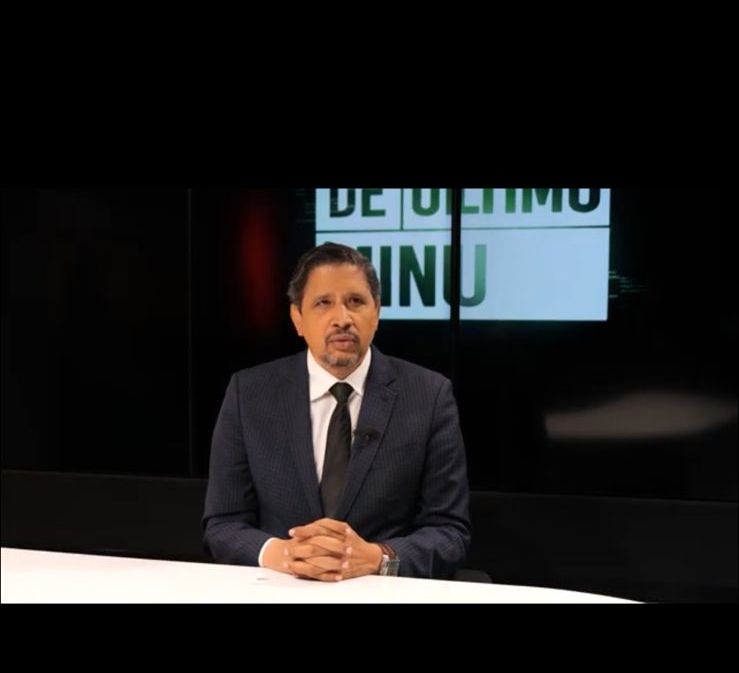
For criminal lawyer Valentín Peña, the real test of the case will be played out in the Court of Appeal, where the judges will have the power to confirm, modify, or even reverse the sentence.
“Let's assume these people are really guilty, which we don't know because they have a conviction that is not final; that is, they do not have the authority of the definitively and irrevocably judged thing”, explained Peña.
Valentín Peña, abogado penalista.
The Public Prosecutor's Office's Debt
Beyond the ruling against Medina, the criminal lawyer points out that the Public Ministry faces a greater challenge, dozens of corruption files still unopened, which raises doubts about the coherence of the anti-corruption discourse.
“They have lied to us, they have been telling us that what is sought with these cases is to proscribe corruption. However, the Public Ministry has approximately two hundred and something corruption cases, at least, pointed out as such from the current government that have not been opened,” recalled Peña.
This situation, the jurist warns, fuels the perception that justice in matters of corruption remains selective and partial, and that high-profile cases receive different treatment than ordinary files. Of more than 21 people linked, only seven were convicted, while the rest were acquitted.
Another critical point is the citizens' perception of the magnitude of the sanctions. For Peña, a part of the population considers that the penalties imposed do not reflect the real damage caused by the acts of corruption. “First, it sends the idea that the penalties, for example, do not meet the expectations of society. A part of society could see it that way,” the jurist pointed out.
With the sentence already issued, the case enters a critical stage. The Court of Appeals will evaluate the sanction and the responsibility of the convicted, with the possibility of reducing sentences, acquitting defendants, or ordering a new trial if procedural irregularities are found. Later, the Supreme Court of Justice could intervene through an appeal for cassation, finally defining the fate of the file.
This scenario keeps open the question of whether the case of Alexis Medina will be remembered as a real milestone in the fight against corruption or as another media episode that, despite the initial noise, ends up reinforcing the perception of impunity.
Real milestone or media episode?
Beyond the legal aspects, the great unknown remains in the social and political arena. The ruling against Alexis Medina may consolidate as a historic precedent in the fight against corruption or be recorded as another media episode that failed to transform the perception of impunity that persists in large sectors of the population.
What happens in the coming months will be decisive for citizens' trust in the justice system. If the courts uphold the ruling and strengthen it with solid arguments, the case could be remembered as a turning point. But if it crumbles on appeal, it will reinforce the idea that the major corruption trials in the Dominican Republic end up being more spectacle than consequence.
Santo Domingo,.- The National Police affirmed this Thursday that it dismantled a criminal structure dedicated to assaulting taxi drivers who provide their services through digital platforms, after arresting two of its members during an operation carried out in Santo Domingo Este, where a non-lethal pistol was also seized. The detainees were identified as Raulín Daniel […]
Santo Domingo.– The Senate of the Republic approved this Thursday in a single reading and turned into law the legislative project that creates the National Intelligence Directorate (DNI) and regulates the National Intelligence System, an initiative that now goes to the Executive Branch for its promulgation or observation. This is the second time the National […]
Santiago.– National Police agents arrested this Thursday a young woman accused of physically assaulting her mother during an incident that occurred on 7th street in the Cienfuegos sector, in the Santiago Oeste municipality. The affected woman, identified only as Flor, reported that her daughter maintains a violent behavior on a recurring basis, both against her […]
Puerto Plata.– In the midst of pain and outrage, Carlos Manuel Genao, father of the 13-year-old girl Brianna Genao González, demanded this Thursday that the authorities bring to justice and punish with the full weight of the law the two men who allegedly confessed to taking the life of his daughter, who had been missing […]
Santo Domingo.- The National Institute of Forensic Sciences (Inacif), a dependency of the Attorney General's Office, used fire to destroy 616 kilograms, 941 grams, and 785 milligrams of cocaine, marijuana, ecgonine, crack, ecstasy, heroin, hashish, and methamphetamine, seized so far this year. The substances, previously analyzed in the laboratories of the Inacif, included 421 kilograms, […]
Amidst tears, sadness, and a deep sense of sorrow, family and friends said their final goodbyes to the young Carlos Domingo Canela, who tragically lost his life while fishing at the Rincón dam, accompanied by several people. The burial took place in an atmosphere marked by shock and collective pain, where dozens of relatives gathered […]

 Spanish