
 Spanish

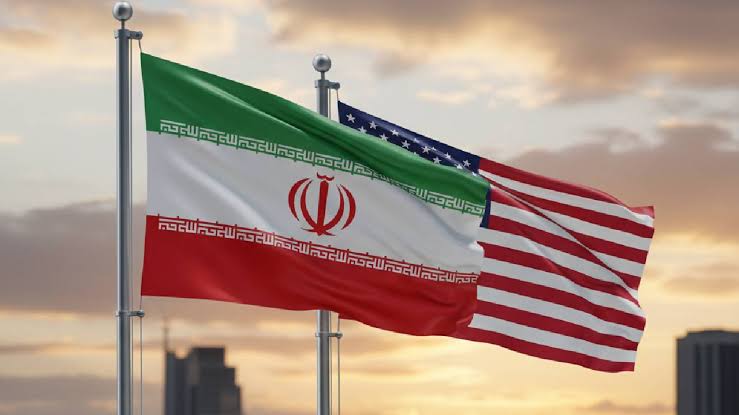

New York,. – Iran accused the United States on Saturday of obstructing the achievement of an agreement to avoid the restoration of sanctions against it at the UN, by rejecting some proposals from Tehran that had been well received by European countries.
"We presented various proposals. These were updated according to the course of the negotiations and all were based on fair and logical solutions. However, unfortunately, all of them were rejected by the other party; although some seemed to have been considered by certain European countries, they could not convince the United States," said Iranian Foreign Minister Abbas Araqchi.
You may be interested in: US House of Representatives
In a telematic interview with Iranian state television from New York, Araqchi said that "constructive, fair, and logical" proposals were presented to France, Germany, and the United Kingdom (E3) "to open a new path for negotiation and avoid an unnecessary crisis," but all were rejected by the American side. Araqchi indicated that Western powers sought to use the automatic snapback mechanism of UN sanctions against Tehran as a "tool of pressure and blackmail". The head of Iranian diplomacy acknowledged that the return of international punitive measures at 00:00 GMT this Sunday could have "some economic impact", but stressed that it is an overestimated resource to pressure Iran to hand over its nuclear materials in exchange for three or six-month extensions in the suspension of sanctions. "This was the height of greed and the most illogical and brazen behavior possible," he asserted. The Iranian Foreign Minister assured that, "despite the pressures, Iran will never accept humiliating conditions and will continue to defend its nuclear rights through political and diplomatic means." The President of Iran, Masud Pezeshkian, also denounced early this Saturday the "unreasonable" demands of the United States regarding its nuclear program and stated that his country prefers the restoration of UN sanctions to accepting "irrational demands". Before returning from New York to Tehran, Pezeshkian explained that the United States had demanded that Iran hand over the 440 kilos of uranium enriched to 60% —very close to the 90% needed for military use— in exchange for a three-month extension before restoring the sanctions imposed by the United Nations against Tehran, prior to the 2015 nuclear agreement. The Iranian leader emphasized that this request is "unacceptable" and said that the Islamic Republic prefers sanctions to giving in. These statements came after, on Friday, the United Nations Security Council rejected a draft resolution presented by Russia and China to grant a six-month extension to the restoration of international sanctions against Tehran, promoted by the E3 on August 28.




