
 Spanish

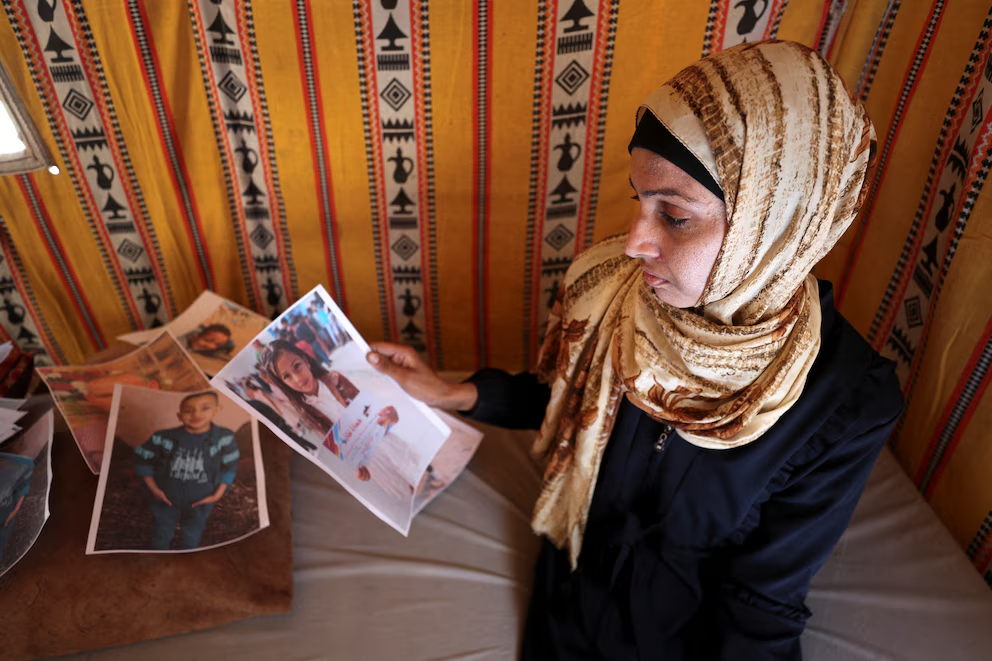

In every makeshift corner of Gaza City, among tents and rubble turned into shelter, families like that of Nizar Bakron fight a silent battle against death and oblivion every day. Nizar, thirty-eight years old, has not stopped moving since October 7, 2023. That day, after the attack that unleashed revenge and war, he fled the neighborhood of Shejaia. His itinerary has been a painful journey through names now turned into synonyms for flight: Al-Zahra, Nuseirat, Rafah, Khan Younis. In that map of uprooting, each stop has meant a desperate attempt to survive, as if distance could ward off danger.
Sometimes, life comes down to the logistics of survival: “We left Shejaia, went to Al-Zahra, then to Nuseirat, then to Rafah, to Al-Aqqad school, until we were ordered to evacuate Rafah. We returned to Nuseirat, then fled to Khan Younis and, again, to Nuseirat. We wanted to stay close, in case the way home opened up,” recalls Nizar, sitting by the fire, while his son hands him a bucket of water. “We returned to Gaza hoping that the truce would bring calm, but things only got worse. My sister, her husband and their children died. My children died and my father too. My wife, my mother and I are injured. Famine returned”.
On the makeshift table, Nizar's youngest son chews on a piece of bread as hard as his family's history. The cycle of violence offers no respite. One day in May, while most were sleeping, an explosion destroyed the Al-Barajuni building, right where they were taking refuge. "I lost two children: my eldest daughter, Olina, and then Rebhi. My father also died. And the youngest, less than two years old, has been in the hospital for fifty days," recounts Nizar with the heartbreaking voice of someone who has recounted too many endless nights. Next to him, Amal Bakron, his thirty-four-year-old wife, contemplates the sepia photographs of the children who are no longer here. “My life changed, I went from having everything to having nothing. We had to start from scratch, until we achieved the minimum to survive. Two of my children died”, says Amal, while the bandage on her hand recalls the still open wounds of the last attack.




