
 Spanish

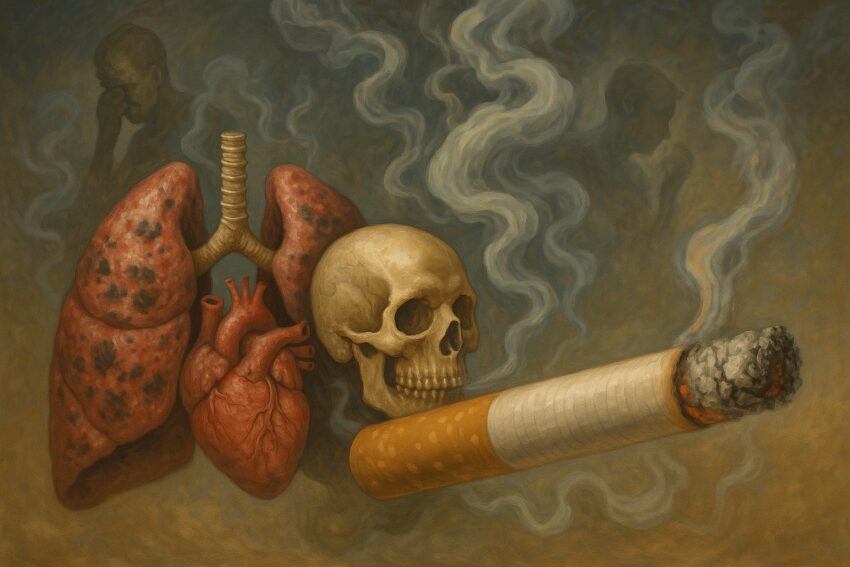

Every May 31st, the world commemorates World No Tobacco Day, a date proclaimed by the World Health Organization (WHO) to raise awareness about the dangers of tobacco consumption and promote effective public policies to reduce its use. In a context where cigarettes continue to be one of the main preventable causes of death, this day takes on special relevance as a call for reflection and action.
Globally, tobacco kills over 8 million people each year, of whom over 1 million are non-smokers exposed to secondhand smoke. In the Dominican Republic, the situation is also worrying: according to data from the Ministry of Public Health and the WHO, around 6,000 annual deaths in the country are related to diseases caused by smoking, with lung cancer, cardiovascular diseases, and chronic obstructive pulmonary disease (COPD) being the most common.
The impact of tobacco is not limited to the smoker.
Secondhand smoke seriously affects children and adults, causing everything from asthma to respiratory infections and increasing the risk of stroke in non-smokers. In the Dominican Republic, studies by the National Cancer Institute Rosa Emilia Sánchez Pérez de Tavares (INCART) show that 80% of diagnosed lung cancer cases are linked to tobacco use.
This day is key not only to highlight the dangers, but also to promote a culture of responsible use in specific cases, such as nicotine products with medical control for cessation of the habit. Although the ideal is to completely abandon their consumption, in cases where it is impossible, using safer alternatives or supervised treatments can be a first step towards harm reduction.
The benefits of quitting smoking are immediate: 20 minutes after quitting cigarettes, blood pressure decreases; in 24 hours, the risk of heart attack begins to decrease; and after a year without smoking, the risk of coronary heart disease is reduced by half. In addition, the air quality in the home improves and the health of loved ones is protected.
On this World No Tobacco Day, health authorities and social organizations call for prevention, education, and early intervention. The fight against smoking is not just a matter of individual health, but a collective responsibility to ensure healthier and more conscious generations. Because breathing should not be a privilege, but a right.





