




It's not rebellion, it's neurodivergence: pending rights and the lag in inclusion in the Dominican Republic

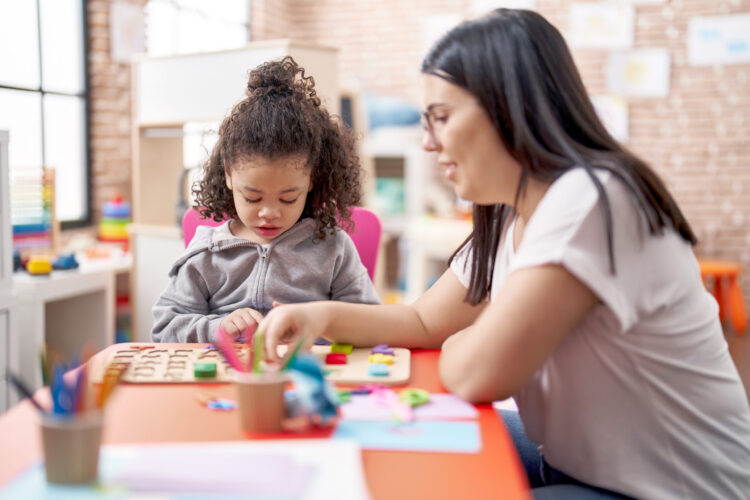
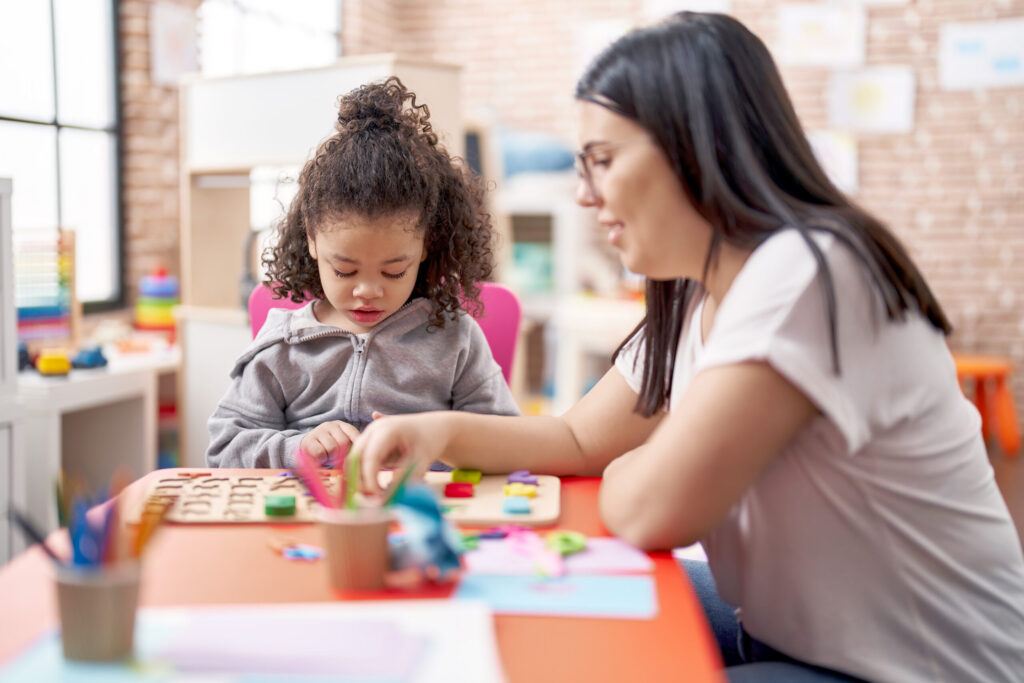
Santo Domingo. – When Mauro (fictitious name) was five years old, his world seemed like a confusing and foreign place. At school, his teacher pointed him out as "the rebellious child" who couldn't sit still, who spoke to himself in a low voice, and who didn't obey instructions. In every meeting with the teachers, harsh phrases were repeated: "That child doesn't obey", "he doesn't sit still". No one looked beyond those words, no one understood the silent storm that Mauro was experiencing inside. A year later, a diagnosis revealed that Mauro was not a problematic child: he had attention deficit hyperactivity disorder (ADHD) and mild dyspraxia; but, in a country that still does not understand or accept neurodivergence, his family faces misunderstanding, prejudice and invisible obstacles that hurt more than any diagnosis. In Dominican Republic there are many children like Mauro. Some learn to read more slowly than average; others avoid eye contact; some are easily overstimulated or simply seem to be in another world. Often, they are labeled as spoiled, inattentive, or problematic.
No es rebeldía, es neurodivergencia
In reality, many of them are neurodivergent children: their brains process information differently. What for some is a disorder, for others is simply a different way of being. However, what they all have in common is that they live in a country that is not prepared for them.

A growing phenomenon, without clear answers

In the last decade, educational psychologists, teachers, and child neurologists have noted a sustained increase (three out of every 25) in diagnoses such as ADHD, autism spectrum disorder (ASD), dyslexia, dyslalia, dyspraxia, sensory processing disorders, and language disorders. Most of the data comes from private centers or foundations, because the Dominican State still lacks a system of statistics on neurodivergence in the country, despite this increase. Specialists agree that cases have increased, but not because there is an epidemic, but because information is reaching more families and diagnostic criteria have been refined. The alarming thing is not the growth itself, but the structural inability of the country to respond with inclusion policies, teacher training and accessible support.

Classrooms Reflect Exclusion

The scene is repeated in many schools: a child who cannot keep up with the reading pace; a girl who constantly moves in her seat and cannot concentrate on the blackboard; a teacher with 35 students in the classroom, without tools or time to attend to particular cases. Some teachers choose to recommend parents take the child "to a psychologist" or, directly, request their transfer. In public centers, the so-called "curricular adaptations" are implemented discreetly; while in private schools, diagnostic evaluations and therapies usually cost between RD$40,000 and RD$100,000 per year, a sum unattainable for most families. These actions cause neurodivergent children to be pushed out of the system or remain within it without receiving the support they need to learn with dignity.

«It's not that they don't learn, it's that they learn differently»
No es rebeldía, es neurodivergencia: derechos pendientes y el rezago de la inclusión en RD
Marit, 11 years old, was diagnosed with dyslexia and ADHD. Her mother, an engineer, painfully recalls the years before the diagnosis: "We thought she didn't want to study, that she was rebellious. At school they only told us that she wasn't paying attention, and we had to do everything on our own. Although there are days when I feel like we don't fit in anywhere." Children with dyslexia don't read poorly because they are lazy, but because their brains process symbols differently. And those with ADHD are not necessarily disorganized or impulsive due to a lack of discipline, but because their neurological system operates with other rhythms and priorities. Also added: "We had to learn from scratch. The system didn't explain anything to us. We looked outside, invested what we didn't have, and it shouldn't be that way, because not all parents can do it."

Teachers on the Front Lines, Without Ammunition

Although neurodivergence is a growing reality in Dominican classrooms, most teachers still do not receive adequate training during their university studies. In fact, the curricula rarely address educational inclusion comprehensively. In recent years, optional diplomas and workshops on the subject have begun to be offered, mainly driven by non-governmental organizations and some academic institutions. However, these initiatives are still insufficient to prepare teachers for an increasingly complex situation. As a result, many teachers face the challenges of inclusion alone, fearing to act incorrectly or, in many cases, not knowing where to start.

This is how Daniela, a primary school teacher in Santo Domingo Norte, puts it: "I know there are different students. But I have no training for that. They ask us to integrate them, but how, if they don't even explain to us or tell us what to do if a child doesn't want to speak?"

No es rebeldía, es neurodivergencia: derechos pendientes y el rezago de la inclusión en RD
Similarly, Marcia Martínez, who was an early childhood teacher for years, acknowledges the structural limitations of the system: "There are no conditions to give them answers according to their needs. After exhausting the internal steps, what we do is refer to the center's guidance to assess whether the methodology or strategy needs to be changed. But without support, that remains on paper." In turn, students also suffer the consequences of this lack of preparation. Many spend years without being correctly diagnosed, which affects not only their academic performance, but also their self-esteem. As explained by Ms. Montero, a school psychologist: "Students reach adolescence feeling incapable, when in reality they just needed another way to learn. We teachers are alone, and often without support, not even from parents." Finally, Mariela, a classroom assistant in a public school, clearly summarizes the root of the problem: "It's not a lack of will, it's a lack of tools. Inclusion without resources is just words."

An absent State and an accumulated debt

Although there are laws such as the General Education Law (66-97), which speaks of inclusive education, and more recent regulations from the Ministry of Education of the Dominican Republic on curricular adaptations, the implementation has been poor. The country still does not have a national strategy that articulates health, education, and social protection around neurodivergence.

The Comprehensive Care Center for Disability (CAID) was a significant advance, but its scope is limited. It focuses mostly on ASD and early ages. Children with ADHD, dyslexia, language disorders, or high sensory sensitivity do not usually qualify as beneficiaries. The education system, for its part, continues to operate under rigid models, where those who do not fit the mold are left out.

Inclusion is not a favor, it's a right

One of the biggest mistakes of the system is to understand neurodivergence as a problem that needs to be corrected; but the modern concept, supported by neuroscientists and competent professionals, suggests that the human brain does not come in a single format. Some children learn with images; others, with movement; some need silence and others, constant stimuli. Inclusion, therefore, is not a favor: it is a right, based on the understanding that we all learn differently.

Dr. Pérez, a pediatric neurologist, explains: "We are seeing a clear increase in diagnoses of ASD, ADHD, dyslexia, and sensory disorders. This doesn't mean there are more "sick" children, but rather that we are learning to recognize neurological diversity. The real challenge now is how to respond from a public system that is still lagging behind." Neurodivergence is not a threat, but a reality that demands urgent responses. The longer action is postponed, the greater the social debt will be to thousands of children and families who today face a system that neither understands nor supports them. Inclusion is not achieved with speeches or laws alone, but with political will, trained teachers, accessible diagnoses, and committed school communities. The Dominican Republic is still in time to become a country that does not exclude those who learn differently, but the clock keeps ticking, and the cost of indifference will be too high.


In the spotlight

  • aplicacion - banner 300px

  • banner altices 300x250 junio 2025

Explore more

Microbiologist warns that not changing your socks daily could cause respiratory infections

A single pair of used socks can contain between eight and nine million bacteria Microbiologist Primrose Freestone, from the University of Leicester, warned that not changing your socks every day not only increases foot odor, but could also pose a risk to overall health. In that sense, he explained that the prolonged use of socks […]

¡Inevitable! At Christmas, people gain an average of between 1 and 3 pounds, according to studies

Gaining weight during Christmas seems almost an inevitable tradition. Abundant meals, sweets, drinks, and less physical activity fuel the feeling that the holidays leave lasting consequences on the scale. However, scientific evidence shows that the real impact is usually much less than what is believed. Various studies have analyzed how much weight people actually gain […]

From Christmas Village, values are promoted to strengthen family harmony

In the festive atmosphere that surrounds Villa Navidad, one of the most popular and anticipated spaces for Dominican families in the Juan Pablo Duarte Olympic Center, a silent but deeply significant work is carried out: the promotion of values that strengthen coexistence, harmony in the home, and the protection of women. Amidst lights, music, and […]

The colors that will make your outfit capture attention in the autumn-winter 2025/2026 season

Santo Domingo.- Each season brings a different vibe and colors are the easiest way to feel it. Knowing which tones will be trending is not just to "look fashionable", but to inspire you, refresh your closet and give your style a twist without complicating your life. The autumn-winter 2025/2026 palette arrives with a mix designed […]

Robotic dogs with Musk, Bezos, and Picasso faces grab attention at Art Basel

Miami (USA).- The American digital artist Beeple unleashed a "pack" of robotic dogs at the Art Basel Miami Beach fair with hyperrealistic heads of tech magnates and art legends such as Elon Musk, Jeff Bezos, Andy Warhol, Pablo Picasso, and Mark Zuckerberg. The installation titled 'Regular Animals' captured attention at the fair that was inaugurated […]

Health Mi Luz opens a new branch in Plaza Caribbean and marks a milestone in integral well-being

San Francisco de Macorís, RD. – On December 2nd, the Health Mi Luz brand celebrated the official opening of its new branch in Plaza Caribbean, in an event that brought together authorities, strategic allies, influencers and figures from the social sphere, marking a significant step in its evolution as a platform for integral well-being. The […]

