 Spanish

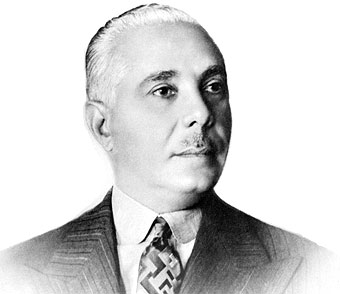

Rafael Leónidas Trujillo Molina (San Cristóbal, October 24, 1891 – Ciudad Trujillo, May 30, 1961) was a politician, military man, and dictator who ruled the Dominican Republic absolutely for more than three decades. His regime, known as the Trujillo Era, is considered one of the most repressive, personalistic, and long-lasting of the 20th century in Latin America.
Who was Rafael Leónidas Trujillo?
Son of José Trujillo Valdez and Altagracia Julia Molina Chevalier, Trujillo came from a large, mixed-race family. His childhood was spent between modest schools and a youth marked by criminal activities, including forgery, cattle rustling, and mail robbery. Despite his limited academic background, he was incorporated into the Dominican National Guard created by the United States during the occupation of 1916.His military career was meteoric: he rose rapidly thanks to his loyalty to American interests, his discipline, and his ability to control his subordinates through fear and reward.
Ascent to Power: Coup, Fraud, and Repression
In 1930, Trujillo participated in the insurrection that overthrew President Horacio Vásquez. Although he did not formally lead the coup, he controlled the army and agreed to his rise with the rebel leader Rafael Estrella Ureña. In fraudulent elections, Trujillo became president with 99% of the votes.
His regime began with repression and propaganda. Hurricane San Zenón devastated Santo Domingo weeks after he took power, allowing him to further centralize control of the State. In 1936, the Congress renamed the capital as Ciudad Trujillo, reflecting the beginning of the personality cult.
Iron-fisted Dictatorship and Cult of the Leader
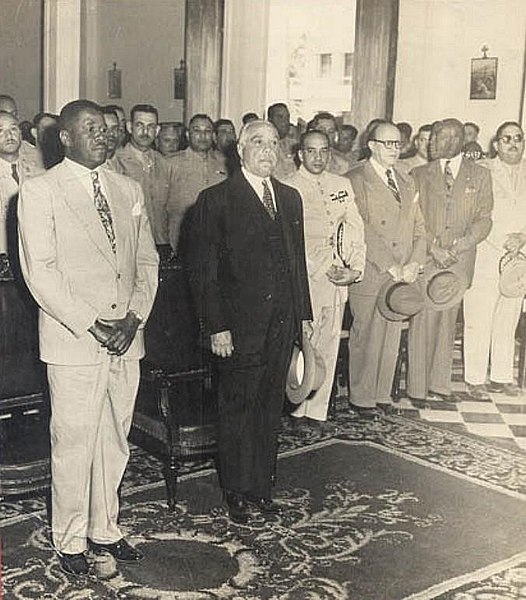
During his 31 years of control —direct and indirect through puppet presidents like his brother Héctor and Joaquín Balaguer— Trujillo abolished civil liberties, imposed terror as a system of government, and concentrated political, military, and economic power in himself.
He created the Dominican Party as the sole force, turned the press into a propaganda apparatus, and demanded public and private loyalty to his figure. Hundreds of statues, avenues, provinces, and even mountain peaks bore his name.Genocide and Repression: The Parsley Massacre
One of the most atrocious episodes of his regime was the Parsley Massacre in 1937, when he ordered the systematic murder of between 15,000 and 20,000 Haitians on the border. This act of ethnic cleansing caused international scandal and deteriorated relations with Haiti and the United States.
The regime murdered thousands of opponents, including union leaders, journalists, intellectuals, and ordinary citizens. The creation of the Military Intelligence Service (SIM), led by Johnny Abbes, institutionalized torture, espionage, and forced disappearances.
Economic Policy and Modernization
Trujillo promoted infrastructure development, industrialization, and economic self-sufficiency. He eliminated the external debt, founded the Banco de Reservas and the Banco Central, established the Dominican peso as currency, and nationalized customs.
However, this modernization was accompanied by the excessive enrichment of his family. Trujillo came to control more than 60% of the national economy, including sugar mills, banks, media, factories, land, insurance companies, transportation, and more than 111 companies.
Institutions created by Trujillo
| Nombre de la institución | Año de creación | Descripción |
|---|---|---|
| Partido Dominicano | 1931 | Único partido político legal durante el régimen; instrumento del poder trujillista. |
| Instituto Trujilloniano | 1952 | Encargado de difundir la obra del régimen y fortalecer el culto a la personalidad. |
| Servicio de Inteligencia Militar (SIM) | Finales de 1950s | Policía secreta encargada de la represión, vigilancia y tortura de opositores. |
| Junta de Planificación Económica | 1956 | Organismo para centralizar la planificación económica y obras públicas. |
International Relations and Conflicts
Although he maintained an anti-communist stance favorable to the United States, his criminal acts—such as the kidnapping of Jesús Galíndez or the attempted assassination against Rómulo Betancourt—caused a complete break with the international community and sanctions from the OAS.
Trujillo also intervened in the affairs of Cuba, Venezuela, and Haiti, supported dictatorships such as Franco's in Spain and Somoza's in Nicaragua, and promoted controlled migrations of Jews, Japanese, and Spaniards to strategic areas of the country.Fall and assassination
On May 30, 1961, Trujillo was ambushed and assassinated by a group of brave Dominicans, including Antonio de la Maza, Amado García Guerrero, and Antonio Imbert Barrera, with covert support from the CIA.
After his death, his family tried to maintain power, but was quickly expelled. In 1962, free elections were held and Juan Bosch was elected. Thus began the transition to democracy in the country.
Historical Legacy
Trujillo's dictatorship left deep marks: economic modernization, but at the cost of brutal repression, disappearances, exiles, corruption, and extreme concentration of power. Trujillo was idolized by his followers as the “Benefactor of the Homeland” and feared as “El Jefe” or “Chapita,” but also remembered by generations as the person responsible for one of the darkest periods in Dominican history. His legacy continues to be a subject of debate, analysis, and reflection in the country.State Institutions Created by Trujillo
| Nombre de la institución | Año de creación | Descripción |
|---|---|---|
| Banco de Reservas de la República Dominicana | 1941 | Primer banco estatal dominicano. |
| Banco Central de la República Dominicana | 1947 | Encargado de la política monetaria y la emisión del peso dominicano. |
| Superintendencia de Bancos | 1947 | Para regular el sistema financiero nacional. |
State-owned companies and national industries
| Nombre de la empresa | Sector | Descripción |
|---|---|---|
| Ingenio Ozama, Consuelo, Barahona, etc. | Azúcar | Nacionalizados o fundados por Trujillo; base de su monopolio en este sector. |
| Refinería Dominicana de Petróleo (Refidomsa) | Energía (control indirecto) | Controlaba la refinación y distribución del petróleo en el país. |
| Molinos Dominicanos | Alimentación | Procesamiento de granos y harinas. |
| Licorera La Altagracia | Bebidas alcohólicas | Producción y comercialización de ron y otros licores. |
| Sociedad Industrial Dominicana | Industrial | Agrupaba fábricas diversas de productos nacionales. |
| Industrias Nigua | Textil y manufactura | Producción de ropa, calzados, etc. |
| Industria Nacional del Papel | Papel | Encargada de suplir papel para el país. |
| Fábrica Dominicana de Cemento | Construcción | Producción de cemento para las obras estatales y privadas. |
| Fábrica de Vidrio | Construcción | Suministro de vidrio industrial. |
Other presidents in the history of the Dominican Republic
Luis Abinader (2020-present)
Luis Abinader is the current president of the Dominican Republic, in office since August 2020. An economist and businessman, he came to power representing the Modern Revolutionary Party (PRM), with an agenda focused on transparency, institutional reform, and economic recovery. He has promoted policies of innovation, social care, and improvement in public services.
Danilo Medina (2012-2020)
Danilo Medina was president of the Dominican Republic for two consecutive terms, from 2012 to 2020, as leader of the Dominican Liberation Party (PLD). His administration was noted for the implementation of extended school hours, advances in health and housing, as well as corruption scandals that marked his second term.
Leonel Fernández (1996-2000 / 2004-2012)
Leonel Fernández has been a key figure in the country's recent political history, leading three presidential terms. He was a pioneer in the modernization of the State, urban development, and international relations. Founder of the Global Democracy and Development Foundation (FUNGLODE), he currently heads the Fuerza del Pueblo party.
Hipólito Mejía (2000-2004)
Hipólito Mejía was president of the Republic between 2000 and 2004 for the Dominican Revolutionary Party (PRD). His government promoted agricultural and educational projects, but faced a severe financial crisis in 2003. Known for his direct language and charismatic personality, he has remained an influential figure in national politics.
Joaquín Balaguer (1966-1978 / 1986-1996)
Joaquín Balaguer governed the country for more than two decades between authoritarian and democratic regimes. Leader of the Social Christian Reformist Party (PRSC), he promoted extensive infrastructure work and urban reforms, although his mandate was marked by accusations of political repression. His legacy is one of the most debated in Dominican history.