
 Spanish

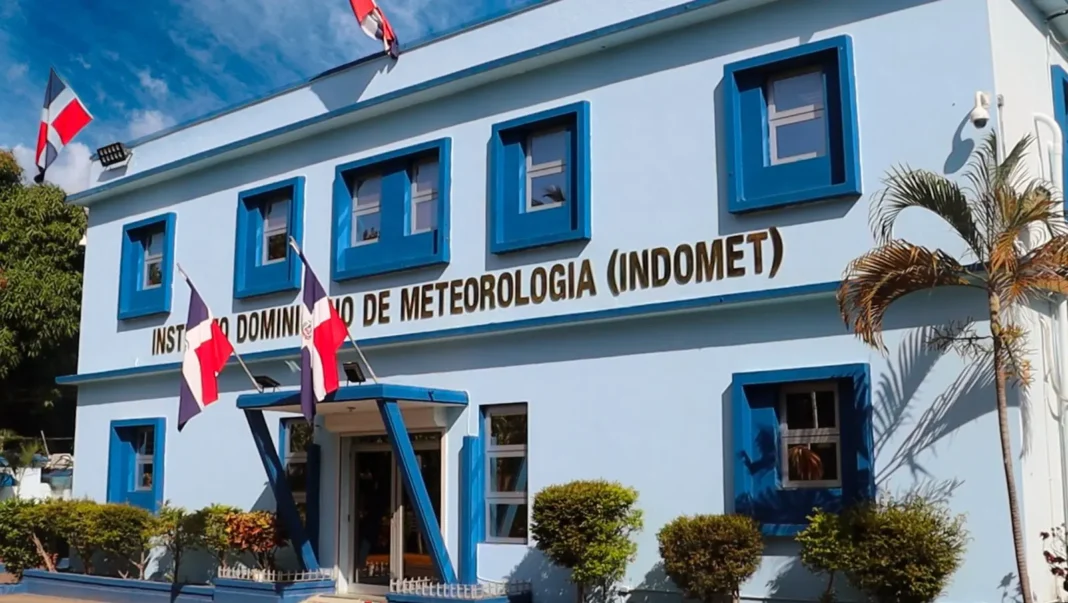

Beginnings of Meteorology in the Dominican Republic
The first meteorological observations in the country were recorded in 1871. In 1884, five climatological stations were established. The importance of these services grew significantly after the passage of Hurricane San Zenón in 1930, which boosted the expansion of the climate monitoring system.Institutional Consolidation
In 1954, the World Meteorological Organization (WMO) sent a mission led by Edward Miller and Fernando Huertas to train Dominican personnel. A year later, in 1955, the first meteorological forecast office for aviation and the general public was inaugurated, located at General Andrews Airport. Finally, in 1984 the National Office of Meteorology (ONAMET) was founded, the direct predecessor of the current INDOMET.Evolution towards INDOMET
For decades, the entity operated as a government dependency. Its professionalization advanced with the execution of international projects such as DOM-81-009 in 1981 and PRONAMET in 2000. Currently, the meteorological service has reached a high technical and scientific level, and its transformation into INDOMET reinforces its autonomy and specialization as a national meteorological surveillance center.Main functions of INDOMET
- Issue weather bulletins and early warnings.
- Monitor atmospheric phenomena such as hurricanes, troughs, and tropical waves.
- Support air and maritime navigation.
- Coordinate with emergency entities such as the COE and Civil Defense.
- Train technicians in meteorology and climatology.
- Study the impact of climate change on the island.
- Implement networks of automatic stations, radars, and numerical models.
Technological Modernization
The INDOMET has implemented technologies such as Doppler radars, satellite sensors, automatic weather stations and numerical prediction models. Likewise, it has strengthened its presence in digital media to disseminate accurate and real-time information to the population.Chronology of Directors of the Dominican Meteorological Service
1. Captain Francisco Castro Catrain (1915-1920)
2. Don Ramón Jansen (1920-1924)
3. Don Aurelio Ortori (1924-1935) – Installed key stations and alerted about the San Zenón hurricane.
4. Don Sebastián Robiou Valverde (1935-1948) – Introduced internal regulations.
5. Don Juan Moliné (1948-1956) – Considered the "father of Dominican meteorology", managed the arrival of international experts.
6. Don Juan Bautista Cambiaso Valdez (1956-1962)
7. Don R. Alberto Arvelo G. (1962-1963)
8. Don César de Windt Lavandier (1963-1965, 1966-1972)
9. Ing. Pedro Julio Suazo Tirado (1965-1966)
10. Ing. Petronio Mejía (1966-1967)
11. Frank W. Richardson Lugo (1972-1973)
12. Don Julio A. Rib Santamaría (1973-1979)
13. Ing. Fernando A. Schrils (1979-1982)
14. Don Danilo Rodríguez (1982-1986) – Promoted professionalization and proposed converting meteorology into an institute.
15. Ing. Antonio Cocco Quezada (1986-1997) – Modernized ONAMET, strengthened the technical area and received international donations.
16. Dr. Félix Abel Abreu (1997-1999) – Faced Hurricane Georges.
17. Teophrasis Arredondo (1999-2000)
18. Ing. José María Duquela (2000-2005) – Implemented the PRONAMET program.
19. Ing. Gloria Ceballos (2005-Present) – First woman to lead the institution, has focused her management on research and technical modernization.
INDOMET today
Currently, INDOMET operates as a modern institution with a scientific focus. Under the direction of "Gloria Ceballos", applied research, institutional strengthening, and regional and international integration have been promoted. In addition, it actively participates in the Caribbean Meteorological Services Network and in global climate change forums.Technical Sheet of INDOMET
Full name:
Dominican Institute of Meteorology (INDOMET)
Previous Name:
National Office of Meteorology (ONAMET)
Origin Date:
1871 (first meteorological observations)
1984 (creation of ONAMET)
Progressive transformation to INDOMET
Main Office:
Av. Las Américas, Sector Los Mameyes, Santo Domingo Este, Dominican Republic
Current Director:
Ing. Gloria Ceballos (since 2005)
Government dependency:
Ministry of Environment and Natural Resources (formerly from the Ministry of Agriculture)
Main areas:
- Weather forecast
- Hydrometeorology
- Climatology
- Agrometeorology
- Atmospheric observation
- Satellite monitoring
- Scientific research
Main functions:
- Issue daily weather bulletins and alerts for atmospheric phenomena
- Provide climate services for aviation, navigation, agriculture, and emergencies
- Coordinate with national organizations such as the COE and Civil Defense
- Participate in international meteorology forums and networks
- Train technicians and strengthen climate education
Infrastructure:
- Doppler weather radars
- Automatic weather stations
- Forecasting center at the AILA
- Digitized meteorological databases
- Active web platform and social networks
International Affiliations:
- World Meteorological Organization (WMO)
- Caribbean Meteorological Services Network
- UN Environment (UNDP, UNDRR)
Relevant historical projects:
- DOM-81-009 (1981): Strengthening of the meteorological system
- PRONAMET (2000): Technical and physical modernization of the institution
Key Contributions:
- Prevention of natural disasters through early warnings
- Studies on the impact of climate change in DR
- Support for national sustainable development with meteorological data





