
 Spanish

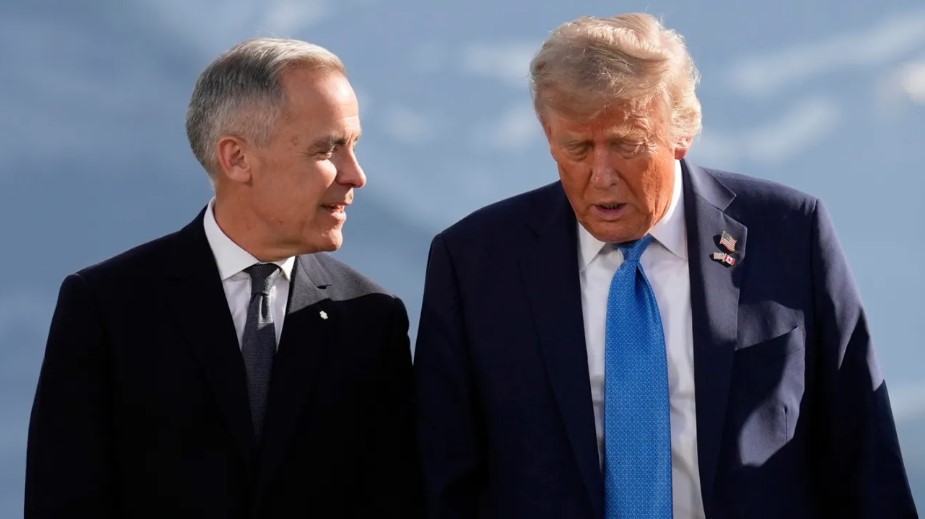

Washington, USA. – Former President Donald Trump announced the sending of an official letter to the government of Canada to notify the imposition of a new 35% tariff on products exported from that country to the United States, a measure that deepens the diplomatic and commercial gap between both historically allied nations.
This new levy represents a 25% increase over the already high tariffs applied in March by the same Trump, as part of his pressure strategy. According to his statements, the decision seeks to force Canada to toughen its policies against the smuggling of fentanyl across the common border, despite official data showing a relatively moderate flow of this drug from Canadian territory.
You may be interested in: Donald Trump launches Trump Mobile
In the sent letter, Trump also expressed his annoyance at the trade deficit with Canada, with special emphasis on the purchase of oil. "The flow of fentanyl is not the only problem. Canada maintains tariff and non-tariff policies that directly affect our economy," he wrote. If a new bilateral agreement is not reached, the new tariff will take effect on August 1, which could trigger new turbulence in international financial markets. In fact, this Friday morning, stock futures registered a fall in response to the growing uncertainty over Trump's trade measures, who in the past has been known to reverse controversial decisions shortly after announcing them. From Ottawa, Canadian Prime Minister Mark Carney responded that his country will continue to seek "a fair trade framework" with the United States and highlighted Canada's progress in the fight against fentanyl. "During the current negotiations, we have strongly defended our workers and businesses," he assured. Although other countries have also received notifications of new tariffs this week, Canada — as the second most important trading partner of the U.S. after Mexico — has been one of the main targets of Trump's economic rhetoric. The former president has even gone so far as to suggest that Canada could become the 51st state of the Union, amid an increasingly aggressive tone both politically and economically.




