
 Spanish

The Night of Trujillo's Execution
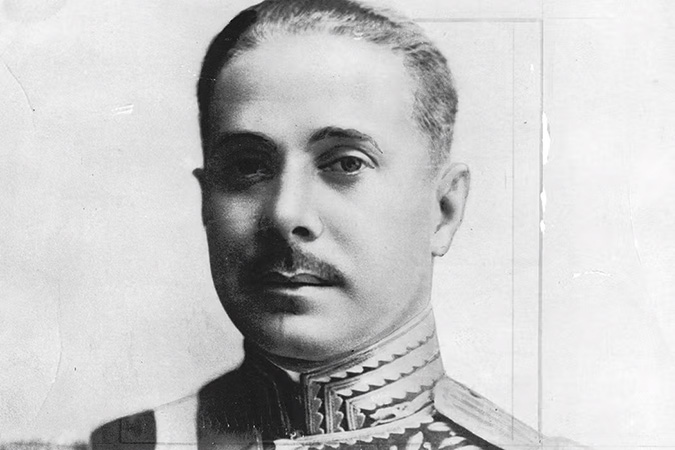
On the night of Tuesday May 30, 1961, at 9:45 p.m., Trujillo left his residence in the capital heading to San Cristóbal, his hometown. He was accompanied only by his driver Zacarías de la Cruz. While they were driving along George Washington Avenue, at kilometer 9 of the road south, they were ambushed by a group of brave Dominicans who, fed up with the crimes of the regime, decided to execute the dictator.
The conspirators had been stationed at the place since early in the morning, hidden among the bushes, and were alerted by Lieutenant Amado García Guerrero, who shouted the signal: “There he goes, there he goes!”. The group launched into action. They fired more than 60 times at Trujillo's vehicle, and at least seven bullets hit his body, causing his immediate death. His driver was injured, but survived, although he was declared dead by the attackers.
The assassins were Modesto Díaz, Salvador Estrella Sadhalá, Antonio de la Maza, Amado García Guerrero, Manuel “Tunti” Cáceres Michel, Juan Tomás Díaz, Roberto Pastoriza, Luis Amiama Tió, Antonio Imbert Barrera, Pedro Livio Cedeño and Huáscar Tejeda. Many of them would be pursued, captured and executed in the following days, while others managed to escape or were later honored as national heroes.

Immediate Consequences
After the operation, the conspirators tried to contact Lieutenant General José René Román Fernández (Pupo Román), a key figure within the regime who was part of the plot. However, as he did not answer their calls that night, those involved were forced to disband and seek refuge to protect themselves and their families.
The next day, the country awoke under a climate of tension. The lifeless body of the dictator was recovered by the authorities and, within hours, a manhunt was unleashed against those responsible. On June 1, 1961, the main media outlets of the country, still controlled by the regime, reported with reservations on the events, while raids, arrests, and massive operations were carried out throughout the national territory.
Funeral and Speech of Balaguer
On June 2, 1961, Rafael Leónidas Trujillo was buried in San Cristobal with honors of head of state. The then de facto president, Joaquín Balaguer, delivered the eulogy, assuring that they would defend his legacy. Thousands of citizens, summoned under pressure, paraded in front of the dictator's coffin who for more than three decades had controlled the public and private life of the country.
Trujillo, "The Boss" of a Kidnapped Nation
Trujillo assumed power on August 16, 1930 after a coup against President Horacio Vásquez. In a short time, he established an authoritarian regime that eliminated all civil liberties. He proclaimed himself “The Chief”, “The Benefactor of the Fatherland”, and imposed a cult of personality that encompassed education, media, art, religion, and daily life. He changed the name of Santo Domingo to Ciudad Trujillo, placed his face on coins, stamps, and official portraits, and demanded public adoration as if he were a sacred figure.During his dictatorship, more than 50,000 people lost their lives, according to historical calculations. The regime operated with a fierce repressive apparatus, led by the Military Intelligence Service (SIM). One of the worst atrocities was the Parsley Massacre in 1937, in which he ordered the assassination of thousands of Haitians on the Dominican-Haitian border. It is estimated that between 15,000 and 20,000 people were executed in a matter of days.
He was also identified as responsible for the assassination of the Mirabal sisters, a symbol of female resistance, the attempt on Rómulo Betancourt, President of Venezuela, and multiple crimes against opponents inside and outside the country.Economic power and total control
Trujillo not only dominated politics, but also the Dominican economy. His personal fortune was estimated at 800 million dollars, he controlled 60% of the sugar industry, and had more than 111 companies in his name, including banks, liquor companies, sugar mills, newspapers, hotels, shipping companies, and factories. Any asset that piqued his interest could be expropriated under threat. For many, the Dominican Republic became a personal estate of the dictator.
The Legacy of a Dictatorship
After his execution, the country entered a period of political turmoil. Although the Trujillo family tried to remain in power, they were expelled. Finally, in December 1962, the first free elections were held, with Juan Bosch being elected, initiating the fragile but irreversible transition towards democracy.
More than six decades after his death, Trujillo's figure continues to generate debate, between those who still highlight his infrastructure works and state order, and those who denounce the horrors of a tyranny based on repression, fear, and excessive ambition.
Today, the country honors the heroes of May 30th and the victims of the regime. The Dominican Resistance Memorial Museum, located on Arzobispo Nouel #210 street, in the Colonial City of Santo Domingo, preserves the memory of that dark and heroic chapter of national history, with the purpose of educating new generations about the importance of democracy and human rights.





