Spanish


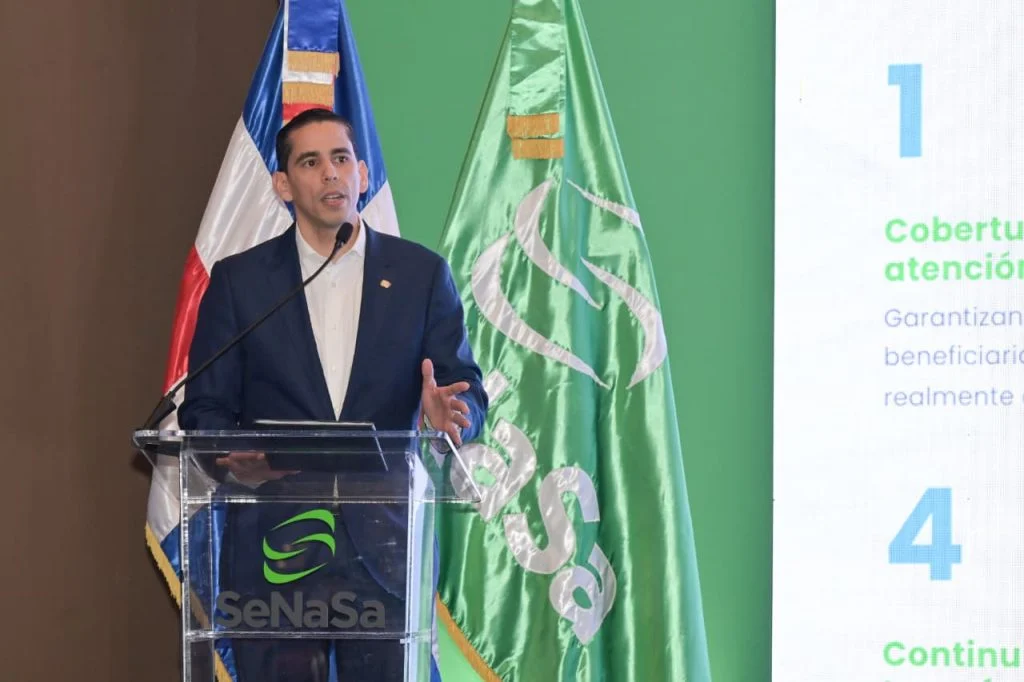
“This is a recognition to every child, young person, and adult who faces looks of incomprehension, who fights against prejudices, and who still keeps moving forward. It is for the families who learn a new language of love, one made of patience, small achievements, and hugs that mean the whole world,” said Edward Guzmán, executive director of SeNaSa.
For his part, Dr. Víctor Atallah, Minister of Public Health, highlighted that “today SeNaSa not only presents a program. Today it demonstrates that Dominican social security can transform a law into real services, with financial responsibility and technical rigor, and that deserves recognition”.
You can also read: Orthopedists will be able to obtain their SeNaSa code after agreement with the state insurer
In its initial stage, the program is aimed at affiliates aged 2 to 10, with a goal of 3,000 beneficiaries, prioritizing early childhood. The initiative has an annual budget of RD$200 million to guarantee the coverage and sustainability of the services.How to enter the program
The model contemplates a structured process that begins with the diagnostic evaluation, in accordance with the current national protocol, thus ensuring a timely diagnosis that allows for early intervention and better outcomes in the child's development. Once the diagnosis is confirmed, the next step is the registration of the affiliate in the National TEA Registry. Subsequently, the corresponding validation is carried out and an Individual Care Plan (PIA) is designed, giving way to the provision of services that include therapies, medication (according to medical indication) and continuous monitoring to ensure the evolution and well-being of the affiliate.Economic and Social Impact
The estimated average annual cost for a family without coverage can amount to RD$50,000 in diagnostics, RD$129,120 in medications, and RD$240,000 in therapies. With SeNaSa InTEgrA, the aim is to significantly reduce this economic burden, promoting family stability, therapeutic continuity, and social inclusion.
The launch of the SeNaSa InTEgrA program is part of a coherent public policy that takes as a reference the advances and guidelines in mental health developed by the Ministry of Public Health and the National Health Service, as part of the strategies established by the State to strengthen comprehensive care. With this initiative, SeNaSa consolidates an articulated vision that expands inclusion, guarantees access to specialized support, and reinforces the Dominican State's commitment to continuous, community-based, and people-centered care. With this action, the National Health Insurance reaffirms its commitment to equity, social protection, and effective access to health services for the most vulnerable populations, advancing towards a more inclusive and humane system.