
 Spanish

WASHINGTON.– The United States government announced this Wednesday a stricter policy against digital censorship promoted by foreign authorities, warning that it will deny visas to officials who interfere with freedom of expression on American technological platforms.
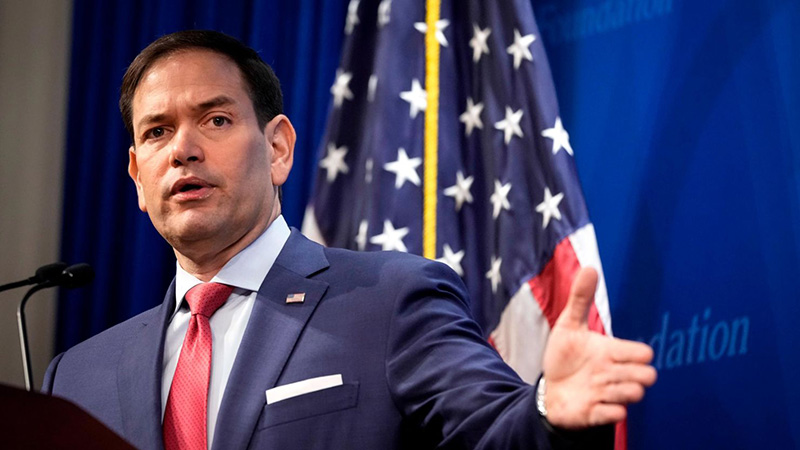
The decision was announced by Secretary of State Marco Rubio, who stated that this measure seeks to address what he called "flagrant acts of censorship" directed against companies based in the United States.
Rubio has been the target of criticism in recent weeks for revoking visas from activists who protested against the Israeli military offensive in Gaza, but now he is targeting cases where foreign officials —according to him— have gone beyond their legal powers.
"It is unacceptable for foreign officials to issue or threaten arrest warrants against U.S. citizens or residents for social media posts on U.S. platforms while they are physically in U.S. territory," Rubio said in a statement.He added that attempts to impose global content moderation policies on these platforms are also unacceptable, in an apparent allusion to regulations that, according to Washington, seek to censor users protected by the U.S. First Amendment.
Although the head of diplomacy did not reveal which officials would be sanctioned, he mentioned in a recent hearing before Congress that measures against the Brazilian magistrate Alexandre de Moraes are being evaluated. The judge, who heads the trial for the attempted coup against former President Jair Bolsonaro, has had strong disagreements with Elon Musk, owner of the social network X, by ordering the temporary blocking of the platform until it complied with the suspension of several accounts.
The State Department also expressed concern about laws adopted in Germany and the United Kingdom to combat hate speech, warning that they could have a chilling effect on freedom of expression if misapplied.Rubio defended the measure as part of an effort to protect the country's digital sovereignty and ensure that citizens and residents on U.S. soil are not persecuted by foreign authorities because of their online opinions.
In parallel, the Secretary of State has led a controversial visa revocation campaign. Among the most discussed cases is that of Rumeysa Ozturk, a Turkish doctoral student at Tufts University, arrested in Massachusetts after publishing a critique of her university's institutional position on the conflict in Gaza. The arrest, carried out by masked agents, was recently overturned by a judge following reports of procedural abuses.
With these measures, the United States seeks to send a clear message: it will not allow foreign interests to interfere with the constitutional rights of its citizens or to use digital platforms as tools of ideological control beyond their jurisdictions.





