
 Spanish



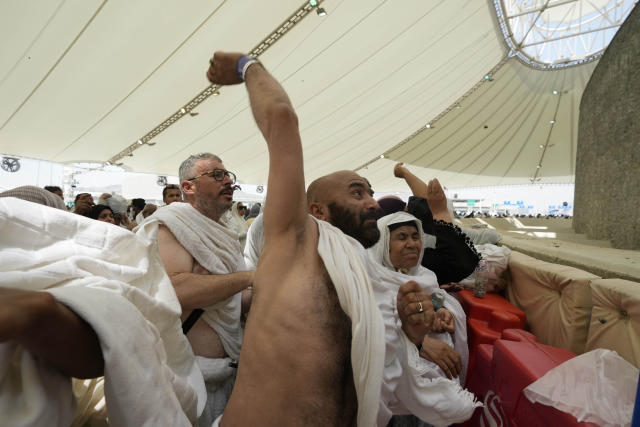
Riyadh.- Thousands of Muslim faithful continue this Saturday with the ritual of stoning the devil as part of the acts that make up the annual pilgrimage to Mecca or hajj, which this year takes place without noteworthy incidents and with reinforced precautions to prevent deaths due to high temperatures.
With the aim of streamlining the flow of pilgrims between the different zones designated for each of the rituals, the Saudi Ministry of Transport implemented a system with 100 buses, each with a capacity for 125 passengers, which allows the transfer of up to 20,000 people per hour between the camps in Mina and the Yaramat, the stoning facility, in a 20-minute journey.
The route, isolated to ensure safety and fluidity, has 200 misters that allow maintaining the temperature around 28 degrees Celsius compared to the 44 degrees Celsius outside in an attempt to prevent heatstroke that could lead to the death of the participants, many of whom are elderly.
In this way, the Saudi authorities try to avoid deaths during the pilgrimage, especially after around 1,300 people died last year from effects related to the high temperatures, which punctually reached 52 degrees.
So far, no incidents have been reported in this regard, although the Jordanian Ministry of Religious Affairs announced two days ago the death of a Jordanian citizen, about 70 years old, due to "common illness" during his pilgrimage, without providing further details.
The Saudi Ministry of Interior urged adherence to designated routes for the rituals and recommended not carrying personal belongings to places of worship, respecting schedules, and maintaining order. To this end, it also defined a color-coded signage system to guide pilgrims and facilitate their arrival at the camps.
To avoid fainting due to dehydration during long journeys in the hours of greatest sun exposure, the National Water Company distributed 904,941 cubic meters of water in the last 24 hours in the places of the rituals.
On the other hand, in the health sector, the spokesperson for the Ministry of Health, Khaled Ael Talea, assured that no epidemic cases have been registered and that the condition of the pilgrims who have required some type of medical assistance is stable.
"18 open-heart surgeries, 216 cardiac catheterizations, and over 125,000 medical services were performed," he stated in a press release, adding that the drone system is operational for transporting medications and ice to hospitals to treat heatstroke.You may be interested in: Dominican Embassy in the Kingdom of Saudi Arabia celebrates 181st anniversary of national Independence
"A notable case was that of a Moroccan pilgrim saved from a heart attack thanks to her smartwatch, which alerted the Mina hospital in time," he added in the note as an example of healthcare for the faithful.
After the stoning ritual, the pilgrims will return to Mecca to say goodbye by circling the Kaaba seven times, a cubic building in which a black stone is guarded, which Muslims consider a piece of paradise and is located in the courtyard of the Great Mosque of Mecca, where they began the pilgrimage with another seven laps.
About the ritual
The ritual of “stoning the devil” is a symbolic practice that is part of the Hajj, the annual pilgrimage to Mecca, one of the five pillars of Islam. This ritual is performed by millions of Muslims and takes place in Mina, near Mecca, in Saudi Arabia.
What is it about?
During the ritual, pilgrims throw stones (pebbles) against three stone structures called “Yamarat” that represent the devil. The act symbolizes the rejection of evil and the reaffirmation of faith. The ritual commemorates an episode of the prophet Ibrahim (Abraham), who, according to Islamic tradition, was tempted by the devil on three occasions to disobey God and not sacrifice his son. Ibrahim drove away the devil by throwing stones at him on each occasion.





