
 Spanish

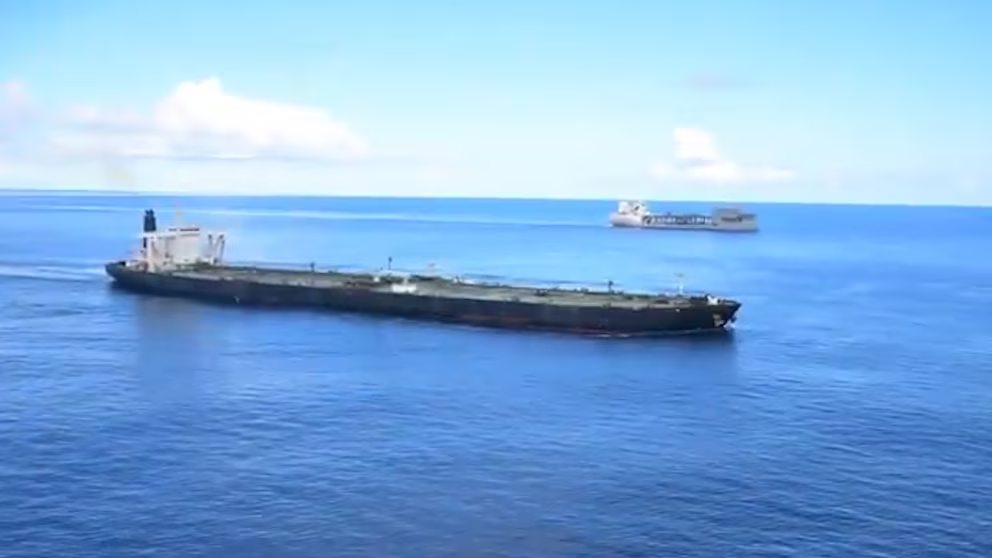

The Central Command of the United States announced that they have redirected a total of 48 ships since the beginning of the naval blockade against Iran, a measure implemented in the context of the escalating restrictions in the Strait of Hormuz, as specified by the United States Armed Forces Central Command (CENTCOM) in a statement on the social network X.
This measure aims to restrict the flow of Iranian vessels and limit the income of the regime's oil, directly affecting energy trade globally.
In the publication, also disseminated through social media, CENTCOM specified that the number of redirected vessels represents an increase compared to the 44 ships previously reported.The action is part of the US response to the partial closure of the passage, a decision made by Tehran after the military offensive developed by the United States and Israel at the end of February.
We recommend reading: The U.S. Office of Foreign Assets Control (OFAC) issued a formal warning to international shipping companies about the risk of sanctions if they decided to make payments to the regime of Iran to cross the Strait of Hormuz.The Strait of Hormuz is key to the transit of nearly 20% of the world's oil and natural gas trade (Reuters)
This alert reinforces the pressure in the confrontation for control of this strip, through which approximately one-fifth of the world's trade in oil and natural gas circulates. In parallel with the naval actions, the diplomatic situation remains tense. The President of the United States, Donald Trump, rejected a new proposal from the Iranian regime to end the conflict, stating that “it does not satisfy me, so we will see what happens”. The proposal had been delivered to mediators in Pakistan on Thursday night, but the American president decided to maintain pressure and announced that his government is also working on an alternative plan to reopen the passage in the strait. Trump maintains diplomatic and military pressure on Iran following the escalation of tensions (Reuters) In the internal Iranian sphere, the effects of the blockade and international pressure combine with other tensions. Iranian authorities executed two people convicted of spying for Israel, according to the judicial media Mizanonline. The executed, Yaghoub Karimpour and Nasser Bekrzadeh, were accused of providing sensitive information to an agent of the Mossad and of transmitting data on Iranian leaders and on the city of Natanz, which houses nuclear facilities targeted by previous attacks. The Norwegian Nobel Committee requested his transfer to Tehran to receive adequate medical attention (EFE) In recent weeks, more than a dozen people have been executed in Iran on charges of espionage and terrorist activities, in judicial proceedings that, according to human rights groups, are usually held behind closed doors and without adequate defense guarantees.Meanwhile, the health of Narges Mohammadi, activist and Nobel Peace Prize laureate, is at risk. According to the foundation that bears her name, the Iranian was transferred to a hospital in Zanjan, in the northwest of the country, and remains under observation due to serious health problems.