
 Spanish


Vatican City.- Artificial intelligence (AI) has been present in the first speeches of Leo XIV, a significant fact when he has only been in the Pontificate for a few days.
On May 8th, the American cardinal Robert Francis Prevost was elected on the second day of the conclave as the new head of the Catholic Church.
Read more: Why did the new pope choose the name Leo XIV?
Two days later, in a meeting with the cardinals present in the Vatican, he gave an explanation about the name he has chosen as pope, Leo XIV.
He admitted that among the reasons is to follow Leo XIII, who held his pontificate between 1878 and 1903 and who is the author of one of the most famous encyclicals, the Rerum novarum, from 1891, a pioneer in addressing the social question and the conditions of workers in the context of the first great industrial revolution.
"Today the Church offers to all its social doctrine heritage to respond to another industrial revolution and to the developments of artificial intelligence, which entail new challenges in the defense of human dignity, justice and work," he said on the 10th.
Vatican spokesman Matteo Bruni also confirmed this in a meeting with the press, when he pointed out that the choice of the pope's name is "clearly a non-random reference to working men and women in an age of Artificial Intelligence".
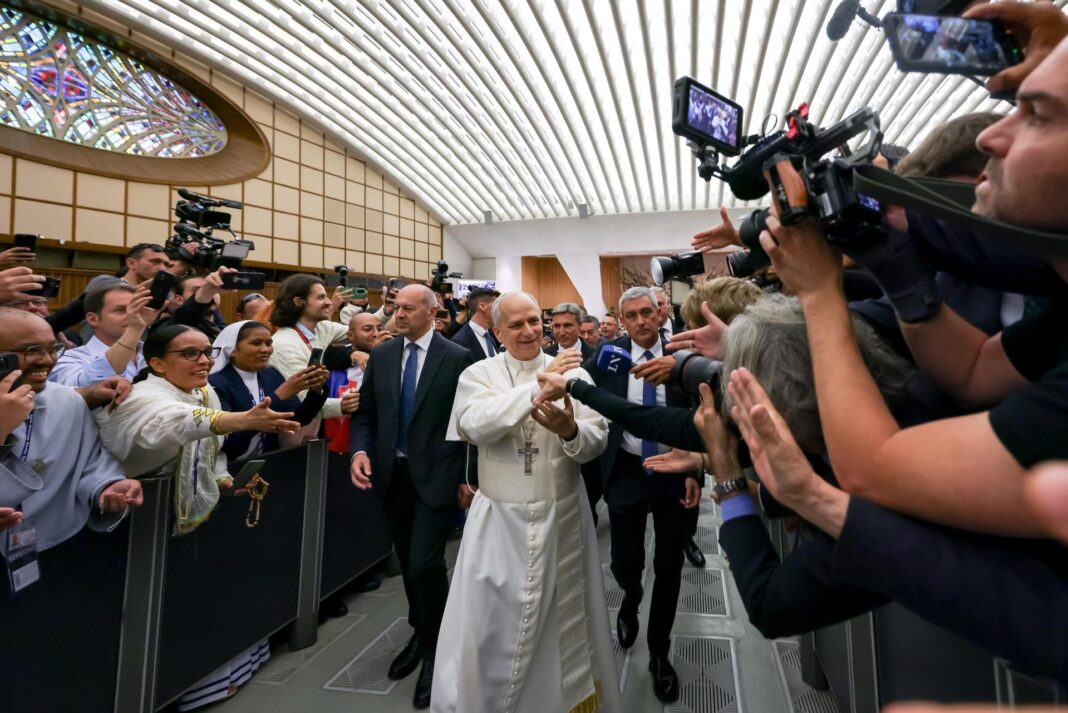
That first allusion to AI has continued this Monday when he has granted an audience to the usual media in the Holy See, as well as to those who in these weeks have come to the Vatican to report on the death of Francis and the entire subsequent process up to the conclave.
Leo XIV said in that audience that "communication is not just the transmission of information, but the creation of a culture, of human and digital environments that become spaces for dialogue and confrontation".
More specifically, he emphasized technological evolution and artificial intelligence, of which he stated that "with its immense potential, however, demands responsibility and discernment to guide the tools for the good of all, so that they can produce benefits for humanity."






