
 Spanish

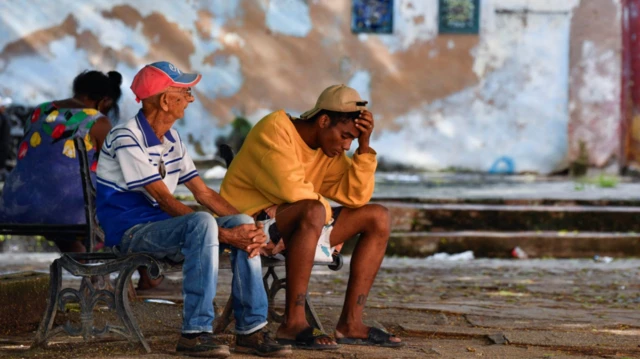

Simultaneous blackouts will affect more than half of Cuba (50.4%) this Tuesday during the hours of peak energy consumption in the afternoon-evening, amid the severe energy crisis facing the Caribbean island.
The situation has worsened since the middle of last year. Since then, there have been four national blackouts, the last one in last March.
Among the main causes of the constant blackouts are breakdowns in thermal power plants - with decades of accumulated operation - and the lack of fuel and foreign currency to import it, according to the Cuban government.
Interruptions to the service exceed 20 hours a day in cities like Santiago de Cuba and Holguín (east). In Havana, they have been extended to 10 hours a day. The UNE, attached to the Ministry of Energy and Mines, calculates for the "peak" time in the evening of this day a maximum electrical generation capacity of 1,930 megawatts (MW) for a demand of 3,750 MW. This represents a deficit (the difference between supply and demand) of 1,820 MW and an estimated impact of 1,890 MW, although it is common for the actual values to exceed the official forecast. Currently, seven of the 20 thermoelectric production units (distributed across seven power plants) are out of service due to breakdowns or maintenance. Likewise, 52 distributed generation plants (engines) are out of service due to lack of fuel (diesel and fuel oil). Cuban thermoelectric plants are mostly obsolete, after decades of exploitation and a chronic deficit of investment and maintenance; while there are engines out of service due to the country's lack of foreign currency to import fuel. Independent experts point out that the energy crisis is due to chronic underfunding of this sector, completely in the hands of the Cuban state since the triumph of the revolution in 1959. The Cuban government, for its part, highlights the impact of US sanctions on this industry and accuses it of "energy asphyxiation". Various independent calculations agree in estimating that the Cuban government would need between 8,000 and 10,000 million dollars to revive the electrical system, an amount that Havana does not have. Power outages are a heavy burden on the national economy, which contracted by 1.1% in 2024 and has accumulated a fall of 11% in the last five years, according to official data. ECLAC also predicts that its gross domestic product (GDP) will be negative this year. The cuts also fuel social discontent in Cuba and have been linked to the main protests that have occurred in the country in recent years, such as those in July 2021.




