
 Spanish

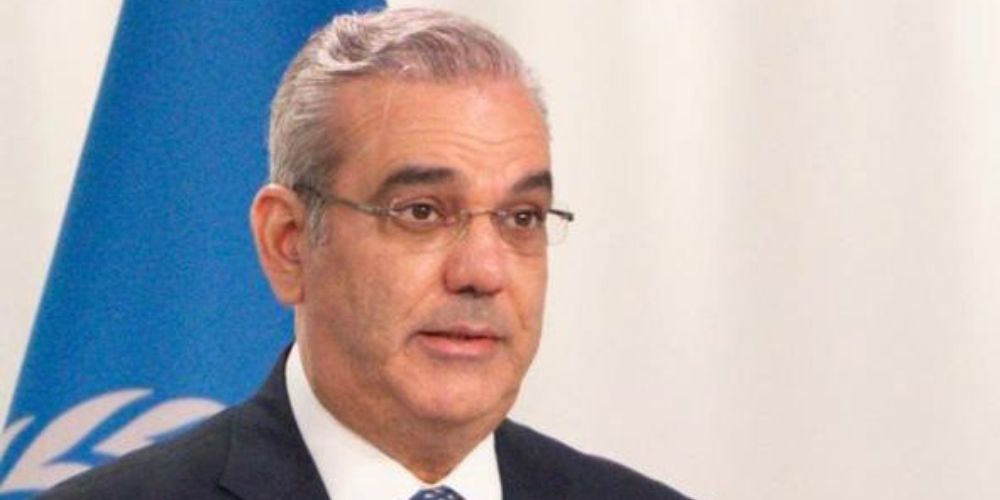

Nice, France.— President Luis Abinader, reiterated this Monday before world leaders his call for the United Nations General Assembly to recognize and urgently address the proliferation of sargassum in the Caribbean, calling it an environmental, economic, and health crisis that requires a global and coordinated response.
Within the framework of the United Nations Ocean Conference (UNOC3), President Abinader recalled that the Caribbean island nations are being severely hit by the effects of climate change, and warned that the sargassum phenomenon has ceased to be seasonal and has become a structural threat.
“We need this threat to be recognized for what it is: a regional emergency. We must act as the community we are, with shared responsibility and active solidarity. The sea that unites us as a region also calls us to a collective response. Therefore, we reiterate our call for the United Nations General Assembly to acknowledge and urgently address this situation, and for a global and coordinated response to be activated,” stated the Dominican president.
Read more: President Abinader backs CESDN's 2025-2027 strategic plan
Dominican Leadership in Ocean Protection
In his speech, the Dominican ruler also presented to world leaders his country's efforts to move towards sustainable management of the maritime space.
Among the main actions, it was highlighted that the Dominican Republic has already protected 30% of its marine territory, achieving a key goal of the Kunming-Montreal Global Biodiversity Framework.
Furthermore, he announced that the country is developing a National Maritime Strategy, a comprehensive tool that will guide the protection and sustainable use of its waters, and promoting a National Oceanographic Data Platform, with free access, which is already used by fishermen, researchers, state agencies, and tour operators.Coastal communities as allies of the sea
The Dominican head of state also emphasized the importance of coastal communities as central actors in ocean governance. “Caring for those who care for the sea is a direct path towards a fairer and more responsible management of our resources,” he stated.
In that sense, he mentioned as an example the promotion of sustainable aquaculture, the development of aquaponic systems for the reproduction of macroalgae, the promotion of responsible fishing under international standards, and nautical tourism.Likewise, it reported that the Dominican Republic is working on a National Manual for the construction of climate change-resilient maritime infrastructures, which will allow reducing the impact of coastal works on marine ecosystems.
Climate Change, Plastics, and Ocean Justice
During his speech, President Abinader warned that the situation of the oceans is at a critical point: “Climate change, the loss of biodiversity, and pollution threaten to transform our oceans, turning them from sources of life into epicenters of devastation.”
He also referred to the negotiation of the global plastics treaty, warning that it must be “ambitious but also fair”, recognizing the differentiated capacities of developing countries.
Regarding the Biodiversity Beyond National Jurisdiction (BBNJ) Agreement, Abinader called for its prompt implementation, along with an international financial architecture that facilitates equitable access to technology and resources.“Developing countries cannot protect if we do not have the means to monitor. The transfer of technology, scientific development and innovation are not favors: they are shared rights that must be made effective as soon as possible,” he emphasized.
A Call to Global Action
Upon concluding his presentation, President Abinader reaffirmed the Dominican Republic's commitment to Sustainable Development Goal 14 (Life Below Water) and to the 2030 Agenda.
“The ocean unites us. It unites us in its fragility. But also in the beauty of its waters, in the strength of its currents, in the memory of its voyages. Let's make history by being the generation that ensured that this healthy relationship with the ocean never ends. The time to act is now,” he pointed out.





